The four astronauts currently hurtling toward the moon at twenty thousand miles per hour are facing a problem that no amount of orbital mechanics can solve. They are halfway to their destination, trapped inside a pressurized titanium shell, and the toilet has failed. It is a visceral, biological reality that clashes violently with the sleek, high-tech imagery NASA promotes. While the Artemis II mission represents a historic leap for deep-space exploration, the reported "smelly" conditions on board reveal a critical vulnerability in the Orion spacecraft’s Environmental Control and Life Support System (ECLSS). This is not just a plumbing mishap. It is a warning that our hardware for long-term survival in the vacuum is still precariously balanced on the edge of failure.
Spaceflight is often sanitized for public consumption. We see the heroic slow-motion walks to the launchpad and the crisp high-definition feeds from the lunar surface. We rarely talk about the stench. But for the crew of Artemis II—Reid Wiseman, Victor Glover, Christina Koch, and Jeremy Hansen—the stench is now a primary mission variable. When waste management systems fail in microgravity, liquids and solids do not stay put. They migrate. They linger in the ventilation. They become a health hazard as much as a psychological burden.
The Engineering Behind the Odor
To understand why the Orion toilet is failing, one has to understand the sheer complexity of managing human biology in a weightless environment. On Earth, gravity does the heavy lifting. In space, every gram of waste must be actively managed by airflow and mechanical separation. The Universal Waste Management System (UWMS) used in the Orion capsule is a $23 million piece of hardware designed to be smaller and lighter than previous versions used on the International Space Station (ISS).
The UWMS operates on a pressure-differential principle. It uses a powerful fan to create suction, drawing waste away from the body. This air is then filtered to remove particulates and odors before being recirculated into the cabin. If the crew is reporting a persistent smell, it indicates one of three things: a mechanical failure in the fan assembly, a saturation of the activated charcoal filters, or a breach in the containment seals.
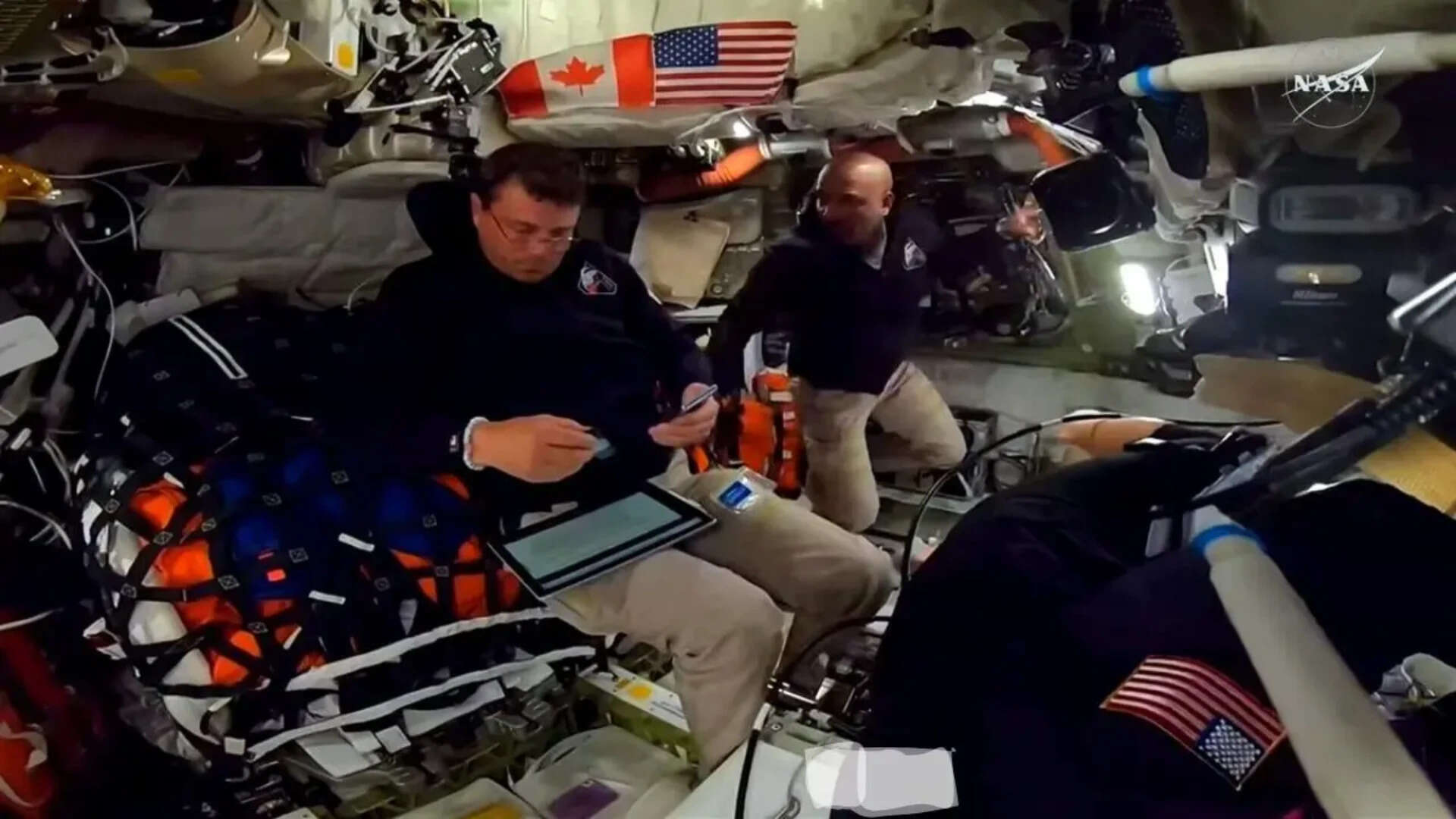
Early reports from the capsule suggest the issue may lie with the brine processing or the moisture separators. In the cramped quarters of the Orion—which offers roughly the interior volume of a small SUV—there is nowhere to run from a malfunction. Unlike the ISS, which has multiple modules and high-capacity air scrubbing systems, Orion is a closed loop with very little margin for error. When the filters fail to strip out ammonia and organic compounds, the air quality degrades rapidly.
The High Cost of Weight Reduction
NASA’s push for "faster, better, cheaper" has always been a tightrope walk. With Artemis, the constraint was weight. Every ounce of mass added to the life support system requires more propellant to escape Earth's gravity and more to perform the lunar injection burn. To save weight, the Orion’s waste system was stripped of the redundancies found on the space station.
There is no backup toilet.
This design choice reflects a calculated risk. For a ten-day mission like Artemis II, engineers assumed the crew could "tough it out" if the primary system encountered issues. But "toughing it out" in a confined space filled with floating particulates and the concentrated smell of four humans' biological waste is a recipe for cognitive decline. High levels of CO2 and trace contaminants are known to cause headaches, irritability, and a decrease in fine motor skills. In a mission that requires precision piloting for a lunar flyby, a smelly toilet is a genuine safety risk.
Historical Precedent for Orbital Failure
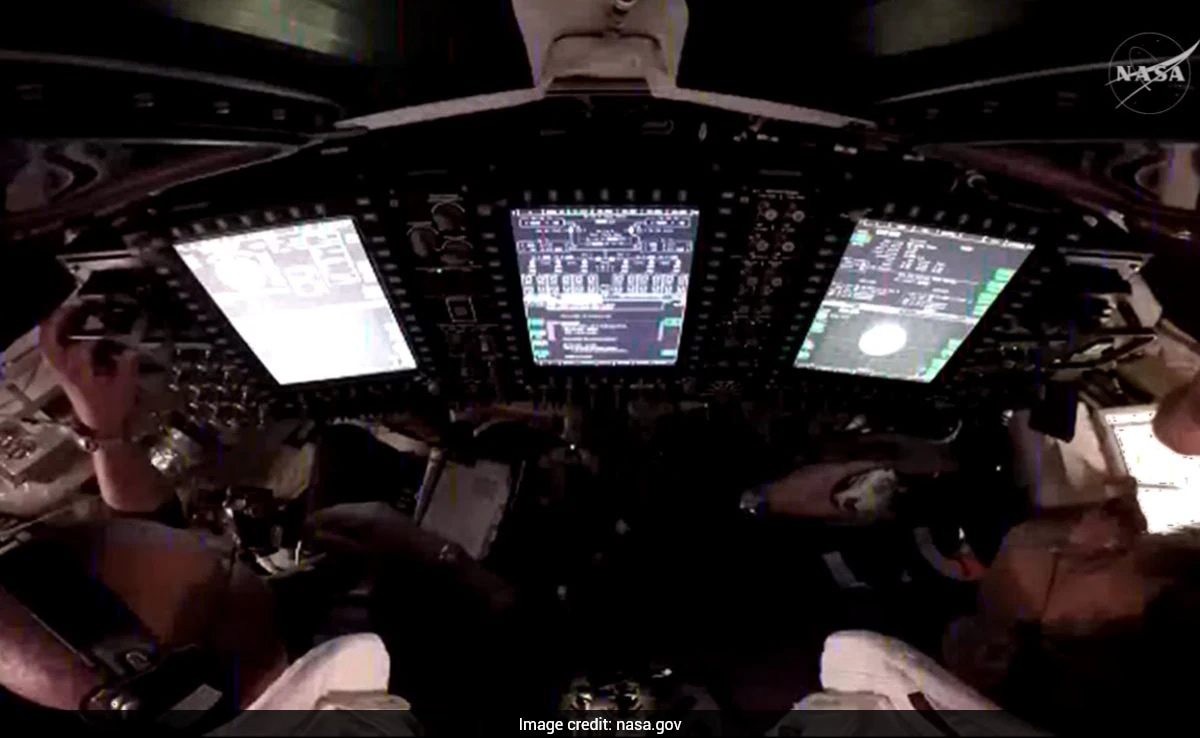
This is far from the first time NASA has struggled with the realities of the human gut. During the Apollo era, the "waste management system" was little more than a plastic bag taped to the buttocks. It was messy, degrading, and frequently resulted in "escaped" waste floating through the cabin. Apollo 10 famously had a moment where an errant piece of waste drifted across the command module, leading to a frantic and somewhat comedic scramble by the crew to claim it wasn't theirs.
We haven't moved as far from the Apollo days as the shiny touchscreens would suggest. While the UWMS is a marvel of fluid dynamics, it remains prone to clogging. The "brine" produced by the urine recovery process is highly acidic and corrosive. If the seals in the piping degrade, even slightly, the resulting leaks are not just smelly—they are toxic. The fact that we are seeing these issues on the very first crewed flight of the Orion hardware suggests that ground testing did not accurately simulate the rigors of multi-day, multi-person use in a high-stress environment.
The Psychological Toll of the Void
The psychological impact of living in filth cannot be overstated. Astronauts are trained to be the most resilient humans on the planet, but they are still biological entities. The constant presence of foul odors triggers a primal "disgust" response that is difficult to suppress. This creates a feedback loop of stress.
In a high-stakes environment where you are performing complex calculations and monitoring life-critical systems, any distraction is dangerous. A persistent smell is a constant reminder of the fragility of your life support. It whispers that if the toilet isn't working, what else might fail? Is the CO2 scrubber next? Is the water reclamation system compromised?
The crew is forced to spend valuable time troubleshooting a toilet instead of focusing on the primary scientific objectives of the mission. This is the hidden cost of hardware failure. It burns "mental bandwidth," a finite resource that is just as important as oxygen or fuel.
The Lunar Legacy and Future Risks
As Artemis II continues its loop around the moon, the focus remains on the safe return of the crew. However, this incident must force a reckoning for the planned Artemis III mission, which intends to land humans on the lunar surface. If the Orion capsule cannot maintain a sanitary environment for a ten-day flyby, the prospects for longer-duration missions to the Gateway station or a lunar base are grim.
The current strategy involves "consumables" to mask the problem—more filters, more deodorizing wipes, more chemical treatments. This is a stopgap, not a solution. True deep-space habitation requires a waste management system that is as reliable as the heat shield. We are currently asking astronauts to fly in a multi-billion dollar machine that has the plumbing reliability of a neglected festival portable.
The physics of the mission are working perfectly. The trajectory is true, the engines have performed flawlessly, and the heat shield is ready for the 25,000 mph reentry. Yet, the mission’s success is being overshadowed by a failure of basic hygiene engineering. It is a stark reminder that while we can map the stars and calculate burns to the millisecond, we are still tethered to our own biology.
Engineers at Johnson Space Center are likely working around the clock to provide the crew with "workarounds"—likely involving the use of backup waste collection bags similar to those used in the 1960s. It is a humbling regression. To conquer the moon, we must first conquer the mundane challenges of the human body. The stench in the Orion cabin isn't just an inconvenience; it is a signal that our technology is not yet as robust as our ambitions.
The crew will likely survive this discomfort and return as heroes, but the hardware must be gutted and redesigned before another human steps inside. If we cannot manage a four-person crew for a week, the dream of Mars is a fantasy. Space is cold, silent, and unforgiving, but right now, for four people, it is also incredibly small and very, very foul.
The fix isn't more perfume; it's better pumps.