The buzzing of a pair of electric clippers in a tiled bathroom is an ordinary sound. It is mundane, almost boring, until you realize what is falling onto the porcelain sink is a carefully constructed shield.
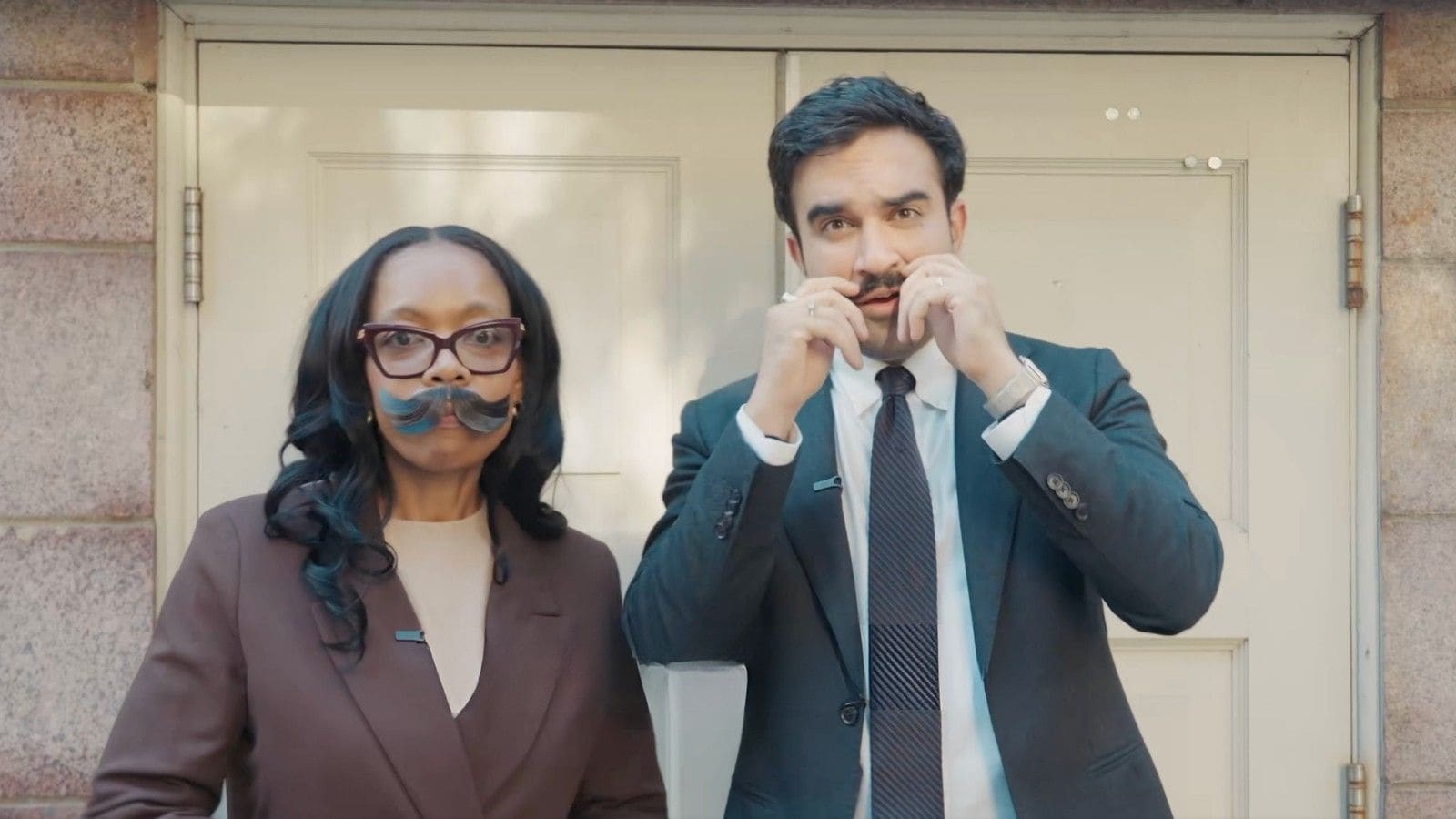
For years, Zohran Mamdani’s beard was a fixture of New York politics—a neat, familiar frame around a face that became synonymous with grassroots insurgency, Queens storefronts, and eventually, the towering weight of City Hall. Politicians do not change their faces lightly. Every millimeter of hair, every cut of a suit, is focus-grouped, photographed, and scrutinized by millions of eyes looking for a sign of weakness or vanity. So when the Mayor of New York City took a razor to his cheeks this November, leaving behind only a stark, unmistakable moustache, the internet did what it always does. It made jokes. It compared him to 1970s cinema icons. It debated the aesthetics of his upper lip while completely missing the blood on the floor beneath the conversation. If you enjoyed this article, you should read: this related article.
Because that moustache is not a punchline. It is a flare shot into a dark sky.
Behind the viral photos of a newly clean-shaven mayor sits a $4 million municipal pledge aimed squarely at a crisis that kills thousands of New Yorkers in total silence. Movember—the annual ritual where men grow moustaches to spark conversations about prostate cancer, testicular cancer, and mental health—often gets dismissed as a lighthearted November stunt. A reason to look slightly ridiculous for thirty days before the winter holidays begin. For another angle on this story, refer to the recent coverage from Medical News Today.
Yet when you strip away the novelty of a politician altering his silhouette, you are left staring at a terrifying statistical reality. Men in New York City, and across the Western world, are dying years earlier than they should, and they are largely dying because they refuse to speak.
The Architecture of Male Silence
To understand why a city government needs to spend $4 million just to get men to walk through a clinic door, you have to understand how men are taught to inhabit their own bodies.
Consider a hypothetical character—let’s call him Marcus. Marcus is forty-seven, lives in a two-bedroom apartment in the Bronx, drives a delivery truck for twelve hours a day, and has not seen a primary care doctor since the Obama administration. Marcus is not reckless. He pays his rent on time, checks the oil in his truck every three thousand miles, and worries constantly about his daughter’s college tuition. Yet when Marcus starts waking up three times a night to use the bathroom, or feels a dull, persistent ache in his lower back that stretches into his hips, he does nothing. He swallows two ibuprofen, drinks another cup of coffee, and tells himself he is just getting old.
Marcus is a composite, a fictionalized portrait built from thousands of real case files across New York’s public hospitals, yet his hesitation is painfully real. I remember the exact texture of that hesitation myself. A few years ago, sitting in a sterile, fluorescent-lit waiting room after finally forcing myself to get a routine screening I had put off for twenty-four months, my hands were sweating so badly I left damp marks on my jeans. The fear wasn't just the needle or the exam. It was the terror of breaking the illusion of invincibility. As men, we treat our bodies like old pick-up trucks—as long as the engine turns over in the morning, we refuse to look under the hood, terrified of what a mechanic might find and what it might cost us to fix it.
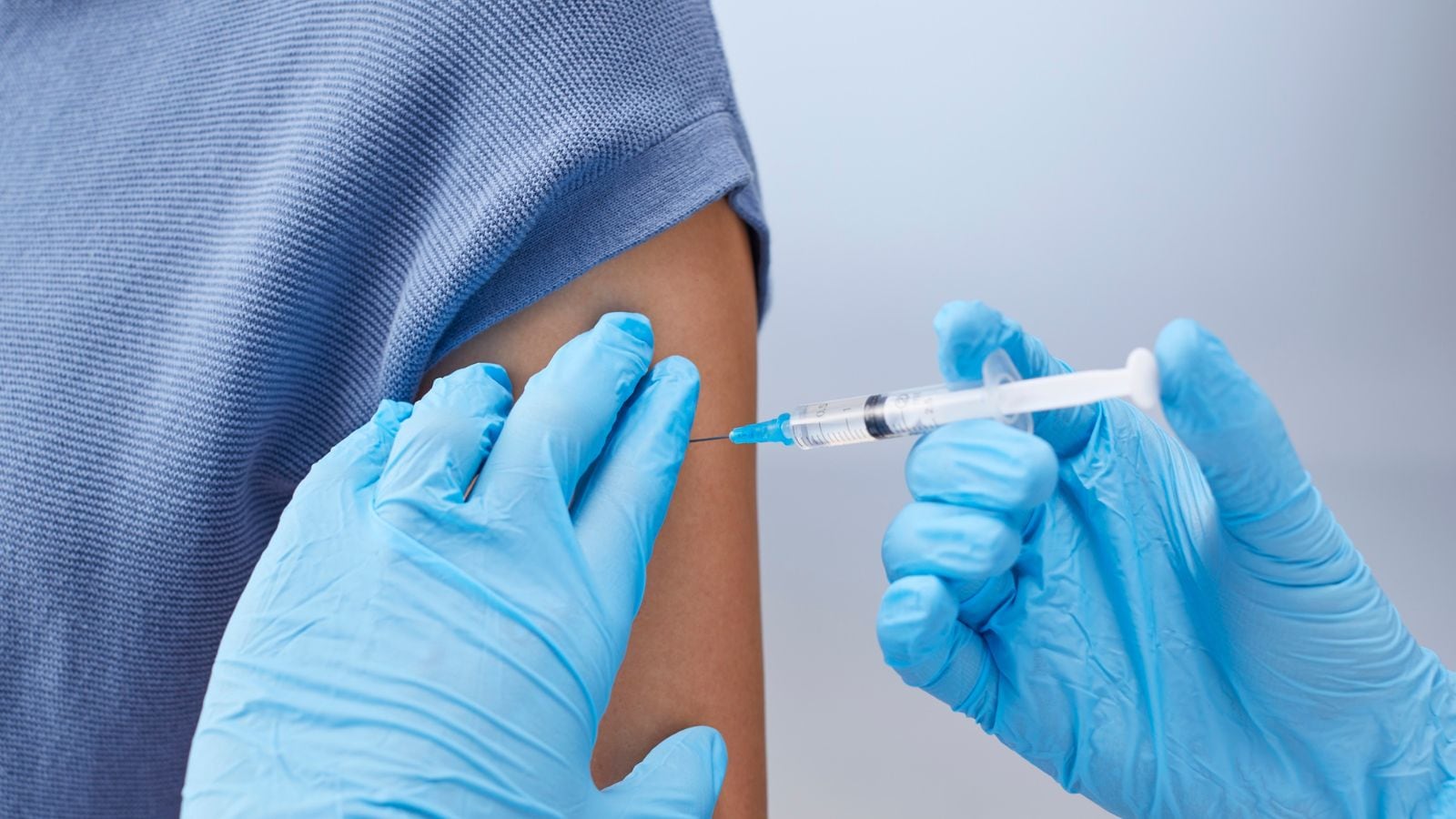
This is where the invisible stakes become lethal. Prostate cancer is the second most common cancer among men in the United States, and in New York City, the burden falls with brutal inequality. Black men in the city are more than twice as likely to die from prostate cancer as white men. Often, the disease shows no symptoms at all until it has already escaped the prostate and crept into the bones. Caught early, the five-year survival rate is nearly 100 percent. Caught late, that number plummets to roughly 34 percent.
Think about that gap. The difference between watching your grandchildren graduate and leaving behind an empty chair at the dinner table often comes down to a simple blood test—a PSA screening—that takes less than five minutes.
Why a Moustache Works When Pamphlets Fail
Public health campaigns usually fail because they rely on shame or sterile statistics. Nobody changes their behavior because a subway poster tells them to "Prioritize Your Wellness." Those words slide right off the human brain like rain off a waxed jacket.
This is the intuitive genius behind Movember, and why Mamdani’s decision to participate physically—not just by signing a budget line item in a wood-paneled office, but by altering his own face—carries real psychological weight. Think of a moustache in November as a human billboard that forces an interruption. You cannot walk into a bodega, a city council hearing, or a press conference with a sudden, dramatic moustache without someone asking, What happened to your face?
That question is the Trojan horse.
It bypasses the awkwardness that normally chokes off conversations about health. Men rarely sit down over beers and say, "Hey, have you had your testicular exam lately?" or "I've been feeling so overwhelmed lately that I can't get out of bed." We lack the vocabulary for that kind of vulnerability. We are trained from boyhood to swallow pain, to walk it off, to keep the mask tight. But when someone asks about the ridiculous hair on your upper lip, you have an instant, socially acceptable doorway to say, "I'm doing it for Movember. Actually, it made me finally book a physical."
History shows us that behavior rarely shifts through logic alone; it shifts through visible social permission. When high-profile figures—from athletes in the 1970s to modern political leaders—put their own vanity on the line, they rewrite the unspoken rules of what is acceptable. Mamdani, whose entire political rise was built on breaking down the barriers between City Hall and the everyday lives of working-class New Yorkers, understands optics better than almost anyone in modern municipal politics. By shaving his beard, he turned his own face into a daily press release for a $4 million public health intervention.
Where the Four Million Dollars Actually Goes
Money in government is an abstract concept until you trace it down to the street level. Four million dollars sounds massive in a headline, yet in a city with an operating budget exceeding $110 billion, it is a rounding error. So the real question is not the size of the check, but the precision of the aim.
If you dump $4 million into generic television commercials, you waste every penny. According to the city’s rollout plan, the funding is engineered to dismantle the exact friction points that keep men like our hypothetical Marcus out of the doctor’s office:
- Mobile Screening Units: Bringing free PSA blood tests and basic physical screenings directly to barbershops, union halls, mosques, churches, and transit hubs across the outer boroughs, eliminating the need for a man to lose half a day of hourly wages just to sit in a clinic waiting room.
- Peer-Led Mental Health Navigation: Funding community-based counselors—many of them men from the exact neighborhoods they serve—who understand the cultural stigmas surrounding depression and anxiety, stripping away the clinical coldness that drives men away from therapy.
- Targeted Outreach in High-Mortality Zip Codes: Directing resources specifically toward neighborhoods in Central Brooklyn, the South Bronx, and Southeast Queens, where late-stage prostate cancer diagnoses and untreated mental health crises cluster most densely.
Look closely at that first bullet point: barbershops.
If you want to understand community health, look at the barber’s chair. For generations, the neighborhood barbershop has been one of the few sacred spaces where men actually let their guard down. You sit still for forty-five minutes. Someone has their hands on your head, grooming you, talking about the Knicks, the subway delays, the neighborhood gossip. Trust already lives in that room. By partnering with local barbers and bringing nurses directly into those spaces, the city isn't asking men to enter an intimidating medical fortress. It is meeting them where they already feel safe.
The Quiet Epidemic Behind the Smile
We talk about cancer because it is tangible. You can see a tumor on a scan; you can measure antigens in a vial of blood. Yet the second half of Movember’s mission—and a massive portion of the city’s new funding—targets something far harder to spot on an X-ray.
Suicide is a leading cause of death for men under fifty. Across the United States, men die by suicide at a rate nearly four times higher than women. In New York City, the isolation of urban life makes this crisis uniquely cruel. You can be shoulder-to-shoulder with two thousand strangers on the 4 train at 8:30 in the morning and feel entirely invisible.
Men rarely exhibit depression the way textbooks describe it. We don't always cry in dark rooms. Instead, male depression wears disguises. It looks like sudden, explosive anger in traffic. It looks like working seventy hours a week so you never have to sit alone with your thoughts. It looks like drinking four beers every night just to quiet the static in your skull, or withdrawing slowly from every friend you have until your phone stops ringing altogether.
I have stood at the edge of that fog myself, watching a close friend slowly vanish while insisting every single week that he was "just tired" and "busy with work." When we finally sat down on a park bench in Astoria and cracked open what was actually happening, the relief in his voice was heartbreaking. He didn't need a miracle cure. He just needed to know that admitting he was drowning wouldn't make him less of a man.
That is the invisible architecture Mamdani’s $4 million pledge is trying to build: a net stretched underneath men before they hit the pavement.
The Cost of Waiting Until Tomorrow
Skeptics will always find reasons to criticize municipal spending. Some will argue that $4 million isn't nearly enough to fix a fractured healthcare system where emergency rooms overflow and insurance networks feel like labyrinthine traps. They are not wrong. Four million dollars will not cure cancer, nor will it erase decades of systemic inequality in how healthcare is delivered across New York’s five boroughs.
Others will roll their eyes at the theatrics of a mayor shaving his beard for cameras, dismissing it as performative politics designed to win easy headlines during a quiet news week.
Both critiques miss the point entirely.
Public health is a war fought on two fronts: infrastructure and culture. You need the clinics, the nurses, the diagnostic machines, and the funding to pay for them. Without money, awareness is just empty noise. Yet you can build the finest hospital in the world on the corner of every block in Queens, and it will sit half-empty if the men walking past its front doors believe that seeking help is a confession of weakness.
Culture only moves when people see other people taking a risk. When a mayor—a figure expected to project unshakeable authority—willingly makes himself look slightly vulnerable, slightly different, slightly unguarded in front of eight million constituents, he cracks the armor that so many men wear like a second skin.
November will end in a few days. The calendar will flip to December, the holiday lights will go up along Fifth Avenue, and eventually, Zohran Mamdani’s beard will grow back. The viral photos will fade into the endless scroll of the internet, replaced by budget battles, snowstorms, and whatever political drama dominates the winter.
Yet somewhere in Brooklyn, or the Bronx, or a cramped apartment in Jackson Heights, a man is going to look at his reflection in a bathroom mirror tonight. He is going to remember the ache he has been ignoring for six months, or the crushing weight sitting on his chest every morning when the alarm goes off. And because a conversation started over a ridiculous moustache, he might finally pick up his phone, dial a clinic, and save his own life.