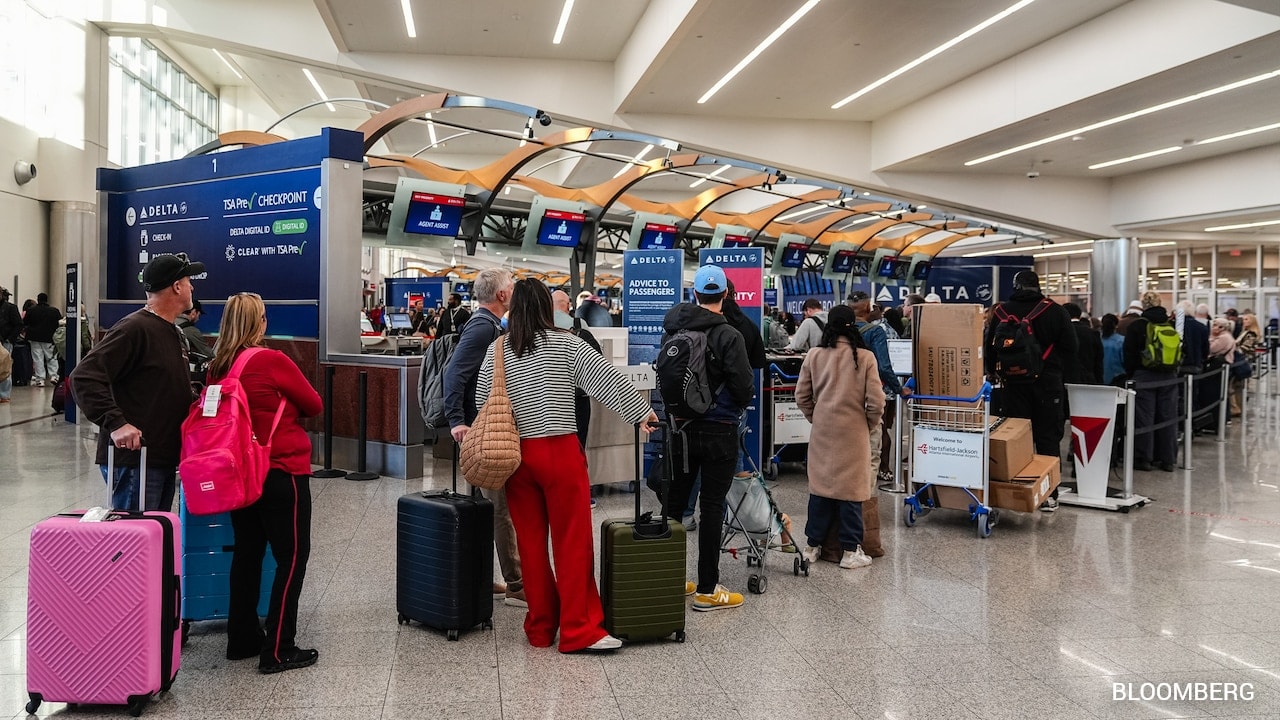
Four hours doesn't sound like much until you're sleeping on a terminal floor in Chicago on a Saturday night.
When a major airspace stoppage hits the US aviation grid for even a single afternoon, the damage doesn't vanish once the Federal Aviation Administration lifts the hold. It bleeds straight into Friday night, Saturday morning, and Sunday evening. Airlines operate on razor-thin margins with zero spare airplanes sitting around waiting to rescue stranded passengers. Once a four-hour ground stop freezes departures across major hubs, the entire domestic schedule collapses like a line of dominoes.
If you're stuck in the middle of a weekend travel meltdown, waiting politely at the gate desk is the worst move you can make. You have to understand how the system breaks so you can route around it before thousands of other stranded flyers take the last open seats.
Why US Flight Chaos Spills Into the Weekend After a Short Stoppage
Most travelers assume airlines keep backup planes and extra pilots tucked away at major airports like Atlanta, Dallas, or Newark. They don't. Modern commercial aviation runs on a tightly choreographed point-to-point and hub-and-spoke hybrid model where every single aircraft is scheduled to fly four to six legs a day.
When a four-hour stoppage hits, that plane misses its afternoon slot. Because that plane never arrives at its destination, the evening flight out of that second city gets canceled. Then the morning flight the next day disappears because the aircraft is sitting 800 miles away in the wrong state.
Crew legality makes the mess ten times worse. Under FAA Part 117 regulations, commercial pilots and flight attendants face strict federal limits on how many hours they can remain on duty. The clock starts ticking the moment they report for work, not when the wheels leave the tarmac. If a crew sits on a taxiway or in a terminal for four hours during a stoppage, they often "time out" before the plane even takes off.
Once a crew times out, federal law forbids them from flying. Even if the weather clears or the technical outage gets fixed, your flight cannot leave until the airline flies in a fresh crew. On a busy weekend, reserve crews dry up within hours. That single four-hour freeze suddenly strands 180 people overnight, who then spill onto Saturday's already full flights, bumping other passengers into Sunday.
The Ripple Effect Across Hub Airports
A stoppage in one region never stays local. If New York airspace shuts down for four hours, inbound flights from Miami, Los Angeles, and Denver get held on the ground at their origin airports. Those planes block gates needed by incoming flights that have nothing to do with New York.
Soon, planes sit on the tarmac waiting for open gates, burning fuel and running down crew clocks. By midnight, airlines are forced to cancel hundreds of flights just to reset the board and get aircraft back to their maintenance bases.
What Airlines Actually Owe You During a Weekend Meltdown
Airlines love to blame "air traffic control" or "weather" for weekend delays because those labels absolve them of paying for your hotel room. According to the U.S. Department of Transportation Airline Customer Service Dashboard, carriers are only required to provide meal vouchers, hotel accommodations, and ground transportation when a delay or cancellation is "controllable."
Controllable issues include mechanical problems, crew scheduling failures, and airline IT outages. Uncontrollable events include severe weather, airspace closures, and FAA-mandated ground stops.
Here is the catch that airlines rarely volunteer. Even if an initial four-hour stoppage was caused by an FAA system glitch or airspace restriction, the cascading crew shortages that cancel your Saturday flight might fall into a gray area. Airlines will almost always classify the entire weekend fallout as a ripple effect of the original uncontrollable event.
Don't waste your breath arguing with a stressed-out gate agent about whether your delay is controllable. You do, however, have one rock-solid federal right regardless of why the flight was canceled. If your flight is canceled or significantly delayed and you choose not to travel, the airline must give you a full cash refund to your original payment method. Not a travel voucher. Not expiring flight credits. Cash.
Under DOT rules, airlines must issue automatic refunds for canceled flights if you decline rebooking. If an agent tries to push a credit on you, politely decline and request the refund directly through the airline's website or customer service portal.
How to Escape a Stranded Terminal Faster Than Everyone Else
When a stoppage lifts and cancellations start flashing across the departure boards, speed is everything. Hundreds of people on your flight are all fighting for maybe twelve open seats on the next plane out.
Stop standing in the physical customer service line. By the time you reach the front of a two-hour queue at the gate, every seat for the next 48 hours is gone. Instead, attack the problem on three fronts at the exact same time.
- Use the airline mobile app immediately. Modern airline apps let you rebook yourself onto alternative routes the second a flight flips to canceled status, often before the gate agent even makes an announcement.
- Call the international support line. While thousands of domestic flyers jam the main US toll-free number, call the airline's customer support line in Canada, the UK, or Australia using a cheap VoIP app. Those agents access the exact same reservation system with a fraction of the wait time.
- Search nearby airports. If you're stuck trying to get into New York, look at flights into Philadelphia, Boston, or Hartford and take a train. If Washington D.C. is backed up, check Baltimore or Richmond.
Another trick seasoned flyers use is looking up specific flight numbers before talking to an agent. Don't ask an agent, "When is the next flight to Denver?" Tell them, "I see two open seats on Flight 1482 through Salt Lake City leaving at 6:15 PM—please put me on that." Giving an agent exact flight numbers cuts your call time in half and locks in seats before their system auto-rebooks someone else.
Should You Buy a Backup Ticket on Another Airline?
If you absolutely must be somewhere on Saturday morning—for a wedding, a cruise departure, or an emergency—relying on your original airline's rebooking system is a gamble. Major US carriers like Delta, United, and American will sometimes put you on a competitor's flight under interline agreements during severe disruptions, while budget carriers like Spirit or Frontier will not.
Even with legacy airlines, agents rarely offer competitor flights unless you explicitly ask for them, and they won't do it at all if the stoppage is blamed on weather or air traffic control.
If you see open seats on a competing airline, buy a refundable fare immediately as an insurance policy. You can always cancel it before departure if your original airline comes through. Just remember that if you take the backup flight, you must cancel the remainder of your original itinerary so you can claim your cash refund for the unused segments.
Why Weekend Travel Buffers Matter More Than Ever
The US aviation system operates closer to maximum capacity today than it did a decade ago. Load factors—the percentage of seats filled on an average plane—routinely hover above 85 percent on weekends. That means almost every flight is already near full before a single delay happens.
When an airplane holds 180 people and goes out with 175 seats filled, there are only five empty spots left for stranded passengers from an earlier cancellation. Multiply that across thousands of flights after a four-hour ground stop, and you can easily see why clearing the backlog takes until Monday afternoon.
If you're flying for a crucial event, stop booking the last flight of the night on a Friday. Evening flights bear the brunt of every delay that accumulated earlier in the day. Book the first flight out in the morning instead. That plane usually sat overnight at your departure airport, meaning you aren't waiting on an inbound aircraft to arrive from somewhere else before you can board.
Always pack a change of clothes, essential medications, and a portable phone charger in your personal item, not your carry-on roller bag. During weekend chaos, overhead bins fill up fast and gate-checked bags end up trapped in the belly of planes that aren't going anywhere. Keep what you need to survive 24 hours right under the seat in front of you, download your airline's app before you leave home, and monitor incoming aircraft status on a free flight tracker so you spot trouble hours before the departure board turns red.