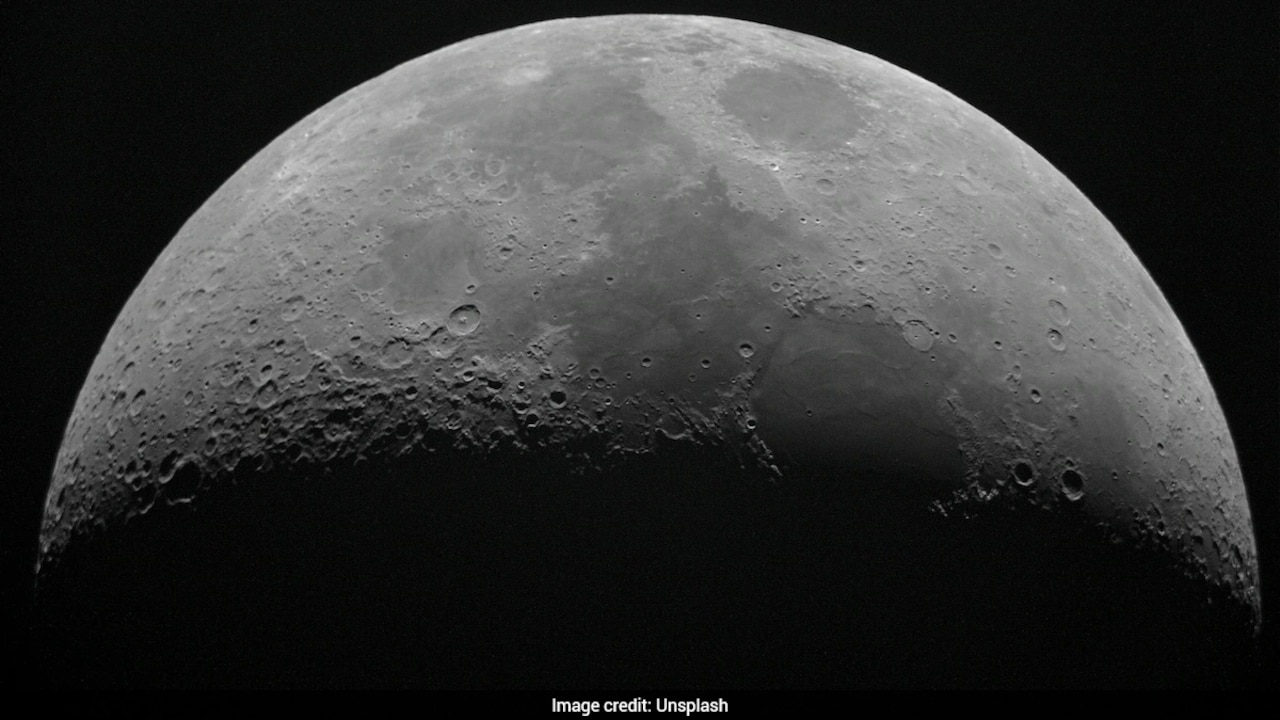
An abandoned SpaceX Falcon 9 rocket stage is currently on a direct collision course with the Moon, scheduled to strike the lunar surface at a velocity of roughly 2.58 kilometers per second. This derelict piece of hardware, a remnant of a deep-space launch from 2015, highlights a growing and largely unregulated hazard in cislunar space. While public attention often fixates on low-Earth orbit debris like defunct satellites and spent upper stages threatening the International Space Station, this impending lunar impact exposes the blind spots in how spacefaring nations and private operators track abandoned infrastructure beyond the immediate gravity well of Earth.
The Anatomy of an Abandoned Booster
The object in question is the second stage of a Falcon 9 booster that launched the Deep Space Climate Observatory (DSCOVR) mission in February 2015. After deploying its payload on a path toward the first Lagrange point, the roughly four-ton upper stage exhausted its propellant reserves. It lacked sufficient fuel to perform a deorbit burn back into Earth's atmosphere, nor did it carry enough energy to escape the Earth-Moon system entirely.
Instead, the booster entered a chaotic, highly elliptical orbit around the Earth-Moon system. Orbital mechanics in this region are notoriously difficult to predict long-term due to gravitational perturbations from the Sun and the Moon. For seven years, the spent stage tumbled silently through space, crossing paths with lunar gravity wells until a series of close lunar flybys in late 2021 and early 2022 altered its trajectory into a collision course. Independent orbital dynamicists first flagged the impending impact, catching a blind spot that traditional space surveillance networks had largely ignored.
Why Deep Space Tracking Failed
Earth-orbit tracking is a crowded discipline. Space agencies and private entities monitor thousands of active satellites and fragments in low-Earth orbit using ground-based radar and optical telescopes.
Deep space is different. Objects moving millions of kilometers away from Earth reflect very little sunlight relative to their distance, and radar signals degrade exponentially over those spans. Consequently, the United States Space Force and NASA primarily catalog debris within geostationary orbits or lower. Once a spacecraft or booster crosses into cislunar territory, it effectively vanishes from routine operational catalogs unless amateur astronomers and academic researchers happen to stumble upon its light curve during routine sky surveys.
This informational vacuum creates significant vulnerabilities. As commercial ventures, national space programs, and defense agencies pivot aggressively toward lunar exploration, the lack of a centralized tracking infrastructure for high-altitude space debris becomes a glaring liability. A stray upper stage hitting the Moon is scientifically fascinating, but the next object might collide with a crewed lunar gateway, a commercial landing craft, or an orbital relay satellite.
The Mechanics of Lunar Impact
When the Falcon 9 upper stage finally strikes the lunar surface, the event will unfold in a fraction of a second, releasing kinetic energy equivalent to several tons of TNT. Because the Moon lacks a substantial atmosphere, there is no air resistance to slow the descent or burn up the metal structure. The booster will hit pristine lunar regolith at hyper-velocity, excavating a fresh crater several meters wide and sending ejecta flying across the barren landscape.
From a scientific perspective, planetary scientists view this uncontrolled impact as an accidental experiment. Researchers plan to use orbital assets like NASA's Lunar Reconnaissance Orbiter to image the fresh crater immediately after the strike. Comparing the resulting impact site against computer models will yield valuable data regarding the mechanical properties of the lunar regolith and subsurface structure at the impact location.
Yet, treating an accidental collision as an opportunistic science experiment misses the broader point. Relying on uncontrolled debris to study geology is a reckless substitute for intentional, well-measured exploration protocols.
The Regulatory Void
Space law remains anchored to treaties drafted during the Cold War, most notably the 1967 Outer Space Treaty. These frameworks establish that launching states retain jurisdiction and control over their objects, but they contain virtually no enforceable provisions regarding post-mission disposal in deep space.
Low-Earth orbit is governed by increasingly strict consensus guidelines, such as the requirement to clear orbits within 25 years or perform immediate deorbit burns. Cislunar space enjoys a regulatory Wild West. Operators can launch payloads toward the Moon, Lagrange points, or heliocentric orbits with minimal oversight regarding where spent hardware ultimately ends up.
Commercial operators are scaling up operations exponentially. Dozens of missions are slated for the lunar surface over the coming decade, driven by resource prospecting, scientific outposts, and commercial logistics. If the current trajectory of unregulated deep-space operations continues, the region between Earth and the Moon will transform into a high-speed orbital junkyard.
Addressing the Blind Spots
Solving the cislunar debris crisis requires fundamental changes in mission architecture and tracking capabilities. Space agencies must mandate disposal plans for deep-space missions, similar to existing requirements for low-Earth orbit. This means building in extra propellant margins for heliocentric disposal burns, targeted impacts into controlled barren regions, or graveyard orbits that keep debris away from heavily trafficked lunar pathways.
Simultaneously, tracking networks must expand their aperture. Relying on amateur astronomers to piece together the trajectories of stray rocket bodies is an untenable strategy for a multi-trillion-dollar space economy. Dedicated optical survey telescopes positioned in high orbits or on the lunar surface could monitor cislunar space continuously, cataloging every piece of untethered hardware before it intersects a valuable destination.
The upcoming impact of a 2015 Falcon 9 booster should serve as an unmistakable wake-up call. Space is no longer an infinite void where discarded hardware can be forgotten once it leaves our immediate backyard. The debris we leave behind in the Earth-Moon system will eventually find its way home, whether into the path of an expensive spacecraft or directly onto the surface of the Moon itself.