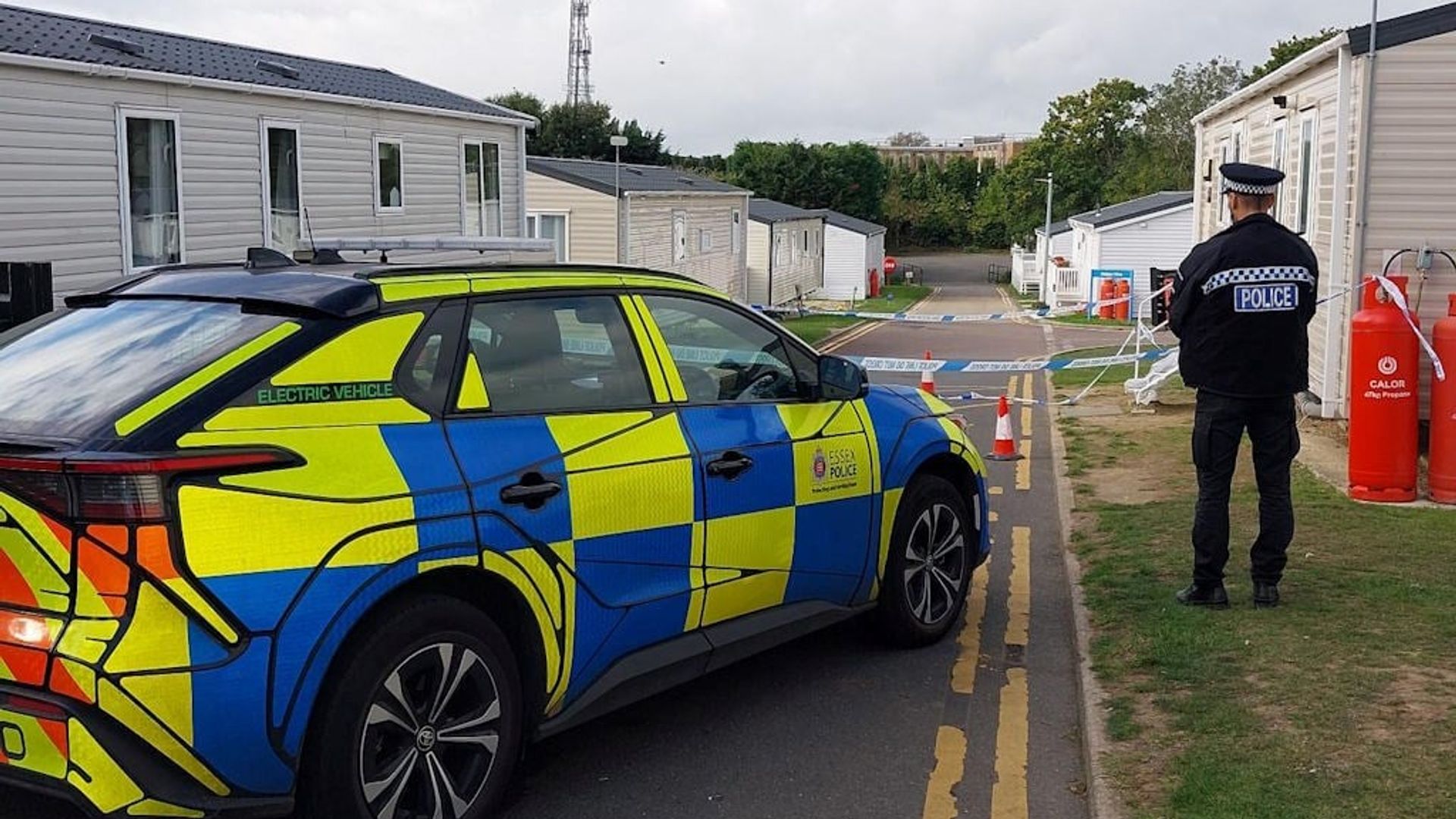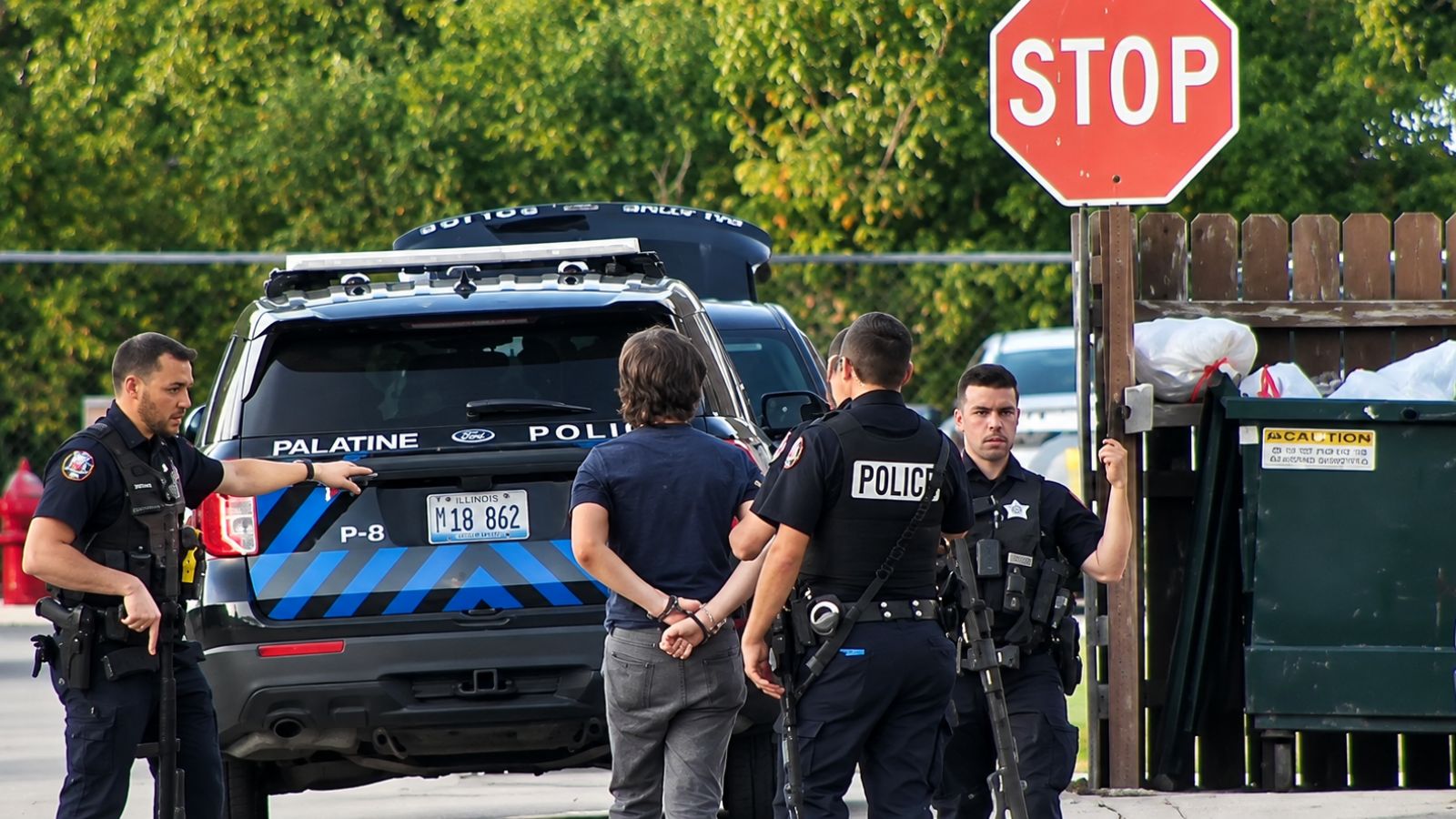
Read the headline again. Assault rifle. Nazi symbols. Teen's attack plan. Foiled at a Hindu temple.
It reads like a thriller script written by an algorithm trained on cable news chyron templates. Every piece clicks into place with suspicious neatness. The villain is young and radicalized. The hardware is scary. The target is sacred. And the authorities stepped in right before the tragedy.
Cue the relief. Cue the recycled talking points. Cue the collective sigh that the system worked.
Except when you cover counterterrorism, threat intelligence, and behavioral extremism long enough, neat stories start looking like warning signs of lazy analysis. Not because the threat wasn't real—when someone accumulates weapons, drafts an attack plan, and adopts extremist iconography, taking it seriously is non-negotiable—but because headlines like this train the public to misunderstand how modern plots actually form, how prevention really happens, and where our blind spots sit.
The lazy consensus goes something like this: a lone wolf teenager drank fascist poison online, bought or accessed a rifle, picked a religious house of worship out of hatred, and got caught thanks to sharp law enforcement. Case closed.
That narrative is comforting. It is also dangerously incomplete.
The Lazy Consensus Around "Lone Wolf" Extremism
Start with the label everyone reaches for first: the lone wolf.
It is one of the most durable myths in security reporting. The word lone implies isolation—a kid sitting alone in a basement, self-radicalizing in a vacuum before snapping. In reality, modern extremist plots rarely happen in true isolation. Even when an attacker plans to act alone, the ecosystem around them is crowded. It includes online forums, meme channels, grievance loops, algorithmically fed outrage, and sometimes real-world acquaintances who notice warning signs and either ignore them, enable them, or report them.
Calling a teenager with an attack plan a "lone wolf" lets institutions off the hook. It makes violence look like a sudden weather event rather than a predictable progression shaped by digital environments, family dynamics, mental health struggles, and missed off-ramps.
Then there is the obsession with symbols. Nazi imagery gets instant clicks because it carries unmistakable moral weight. Nobody has to explain what a swastika or SS rune signals. Yet treating symbols as a complete diagnostic tool is a rookie mistake. In youth extremism today, ideological symbols frequently overlap with nihilism, accelerationism, shock value, and status-seeking inside subcultures that care more about chaos and notoriety than coherent political doctrine.
A teenager plastering hate symbols across digital profiles might be a committed white supremacist. Or they might be drifting through overlapping extremist spaces—anti-government, anti-religious, accelerationist, misanthropic—grabbing whatever imagery maximizes shock. Confusing aesthetic alignment with ideological depth doesn't just flatten the reporting; it can distort how investigators and communities assess escalation.
Why Religious Sites Become Targets in Messy Grievance Networks
When people read about a plot targeting a Hindu temple, the immediate assumption is straightforward anti-Hindu bigotry. That motive can certainly be present, and minority religious institutions—temples, mosques, gurdwaras, synagogues, churches—face real vulnerability precisely because they are open, community-centered spaces with predictable schedules.
Still, stopping at "anti-religious hate" often misses how target selection works in chaotic plots.
In many foiled and completed attacks over the past decade, target selection is shaped by availability, symbolic weight, media impact, and grievance cross-pollination rather than a neat textbook ideology. A young offender immersed in online extremist spaces might absorb anti-immigrant narratives, anti-minority tropes, general anti-system rage, and a desire for infamy all at once. A temple or other religious center sits at the intersection of visibility and perceived "otherness" in ways a hardened government building does not.
Ignoring that cross-pollination leads to bad questions. People ask, "Why a Hindu temple specifically?" expecting a single tidy answer, when the real answer often involves a mix of local access, online radicalization pipelines, and an offender looking for a high-impact target that fits whatever grievance narrative is loudest in their head that week.
I have watched security teams and newsrooms burn huge amounts of energy chasing the wrong framing after high-profile scares—treating a multi-layered behavioral and digital failure as if it were a simple matter of one ideology colliding with one building. When you misdiagnose the mechanism, you build the wrong defenses.
Hardware Fixation vs. Behavioral Reality
Look at the phrase "assault rifle" in headlines like this. In everyday news usage, it functions as shorthand for maximum lethality—a word engineered to spike adrenaline.
In firearms law and technical precision, "assault rifle" has a specific definition: a selective-fire rifle capable of both semi-automatic and fully automatic or burst fire, typically chambered in an intermediate cartridge. Most civilian-owned modern sporting rifles—such as AR-15-pattern semi-automatic rifles—are not selective-fire military assault rifles, even though public debate routinely blurs the two.
Pointing out that distinction isn't pedantry, and it certainly isn't an excuse to shrug off a teenager planning a mass shooting. A semi-automatic rifle in the hands of someone determined to cause mass casualties is devastating enough. Precision matters because sloppy terminology breeds sloppy policy arguments. When commentators talk past each other over definitions before even addressing how a minor gained access to a firearm, storage failures, straw purchases, or family oversight, the conversation stalls in slogans.
More importantly, focusing almost exclusively on the weapon distracts from the behavioral timeline that precedes almost every serious plot.
Threat assessment professionals—including researchers who have studied averted school and mass attacks with agencies like the U.S. Secret Service's National Threat Assessment Center and academic criminologists specializing in targeted violence—consistently point to leakage as a central feature of planned attacks. Potential attackers rarely keep their intentions completely secret. They drop hints, post dark material, talk to peers, research tactics, or telegraph grievances before moving into operational preparation.
A plot being "foiled" is rarely a bolt out of the blue. Usually, someone saw something, heard something, or flagged something online, and investigators connected dots before the threshold into violence was crossed.
The Questions Everyone Keeps Asking (And Why They Miss the Point)
Whenever a plot is disrupted early, the same predictable questions pop up in search feeds and dinner-table debates. Most of them point people toward dead ends.
"How common are plots like this, and are they getting worse?"
Raw headline counts are a terrible yardstick. A rise in reported "foiled plots" can reflect an actual increase in radicalization and violent ideation, or it can reflect better digital surveillance, broader counterterrorism focus on domestic and youth extremism, more aggressive charging decisions, and wider media coverage of early-stage investigations.
Treating arrest or disruption counts as a clean trendline without accounting for enforcement posture and reporting incentives is bad data hygiene. What matters just as much as volume is stage of development: was this an aspirational fantasy with zero real-world steps, or an active operational plan with weapons acquisition, reconnaissance, and a timeline? Lumping early-stage disruption and late-stage intervention into the same emotional bucket distorts risk perception.
"Are tech platforms to blame for radicalizing teenagers?"
Algorithms don't pull triggers, and blaming "the internet" as a monolith is an easy cop-out. Platforms shape discovery, recommendation loops, and subcultural norms, especially for isolated or alienated teens spending hours behind screens. Yet plenty of teenagers browse dark corners of the web without planning mass violence.
Platform mechanics act as accelerators and amplifiers, not sole causes. They lower friction for finding like-minded extremists, normalizing violent rhetoric, and turning fringe grievances into identity markers. Treating social media as the sole villain ignores offline triggers—family instability, bullying, psychiatric distress, substance abuse, and lack of real-world accountability—while treating offline factors as the sole cause ignores how fast digital echo chambers compress radicalization timelines.
"Does foiling a plot prove prevention is working?"
Only halfway.
Stopping an attack before anyone gets hurt is a genuine win. Credit belongs to whatever mix of tipsters, parents, community members, school staff, local police, and federal investigators intervened in time.
At the same time, celebrating a disruption as total system success ignores survivorship bias and upstream failure. If a teenager reaches the point of drafting an attack plan and acquiring a serious weapon before intervention happens, early prevention already struggled. Waiting until the counterterrorism or law enforcement stage means catching a fire right before it hits the fuel tank rather than addressing the conditions that sparked it months earlier.
A Thought Experiment on Real Prevention
Imagine a scenario where a 17-year-old spends eight months cycling through extremist forums, posting Nazi and accelerationist memes, expressing hatred toward religious minorities, and researching mass casualty attacks. Suppose no single post crosses the line into an explicit, actionable criminal threat on its own, and no weapon has changed hands yet.
Under a purely reactive, law-enforcement-first model, options are tight until speech edges closer to incitement or concrete preparation. Under a purely symbolic outrage model, people argue loudly over labels and slogans while the underlying trajectory continues.
Now imagine a different approach: a coordinated, non-punitive and investigative threat-management response that treats early leakage as an urgent intervention window. Mental health evaluation, digital disengagement, family intervention where safe and appropriate, close monitoring of firearm access in the household, and clear legal boundaries where criminal thresholds are met.
That model isn't neat. It doesn't fit cleanly into a 30-second broadcast segment. And it carries real trade-offs.
The Honest Downsides of Taking a Nuanced Line
Contrarian analysis has its own traps, and pretending otherwise would be dishonest.
First, nuance can sound bloodless when real people's safety is on the line. When a Hindu temple—or any mosque, synagogue, church, or community center—is named in an attack plot, members of that community don't want a seminar on typology and threat-assessment frameworks. They want to know they can pray, gather, and celebrate festivals without looking over their shoulders. Ignoring that lived fear makes sharp analysis look cold and detached.
Second, unpacking complex motives can accidentally blur accountability. Saying that a teenager's worldview was messy, algorithmic, or influenced by overlapping grievances must never water down the seriousness of Nazi symbols, anti-Hindu hostility, or plans for mass murder. Hate is real. Antisemitism, anti-Hindu hate, Islamophobia, racism, and white supremacy are real. Complexity explains how a plot forms; it does not excuse what the offender chose to embrace.
Third, pushing back on sensational headlines can make people underestimate genuine threats. Scepticism toward media hype should never curdle into complacency. Even a poorly executed attack with a single firearm can cause catastrophic harm.
What Actually Works Instead of Panic and Platitudes
If you care about stopping attacks before they happen—and protecting vulnerable communities without living in permanent dread—stop treating every foiled plot as a finished moral parable. Do the harder work instead.
- Audit physical and digital security together. For houses of worship and community institutions, real protection isn't theatrical—it's practical. Clear sightlines, controlled access points, trained volunteers or security personnel, emergency communication drills, and direct working relationships with local law enforcement before a crisis hits. Pair physical readiness with calm, factual community briefings so rumors don't outrun reality.
- Take "weird" behavioral shifts seriously—especially in young people. Sudden isolation, fixation on violent or extremist content, fascination with weapons or mass-casualty events, and escalating hostility toward specific groups are red flags worth taking to trusted adults, school counselors, threat-assessment teams, or law enforcement tip lines. You don't need proof of a completed manifesto to report concerning behavior; let professionals evaluate risk.
- Lock down lethal means without waiting for a crisis. If there are firearms in a home where a teenager or anyone else is experiencing acute distress, anger, or extremist fixation, securing or removing access immediately is one of the highest-leverage safety steps available. Waiting for "clear proof" of imminent violence is how preventable tragedies happen.
- Read threat coverage with a cold eye. When a headline screams about a foiled plot, look past the shock adjectives. Ask what stage the plot had actually reached, how authorities learned about it, what role online networks played, and what gaps allowed it to get that far.
Headlines will keep chasing fear because fear sells. Real security lives in boring preparation, early intervention, and clear-eyed judgment long after the cameras move on.