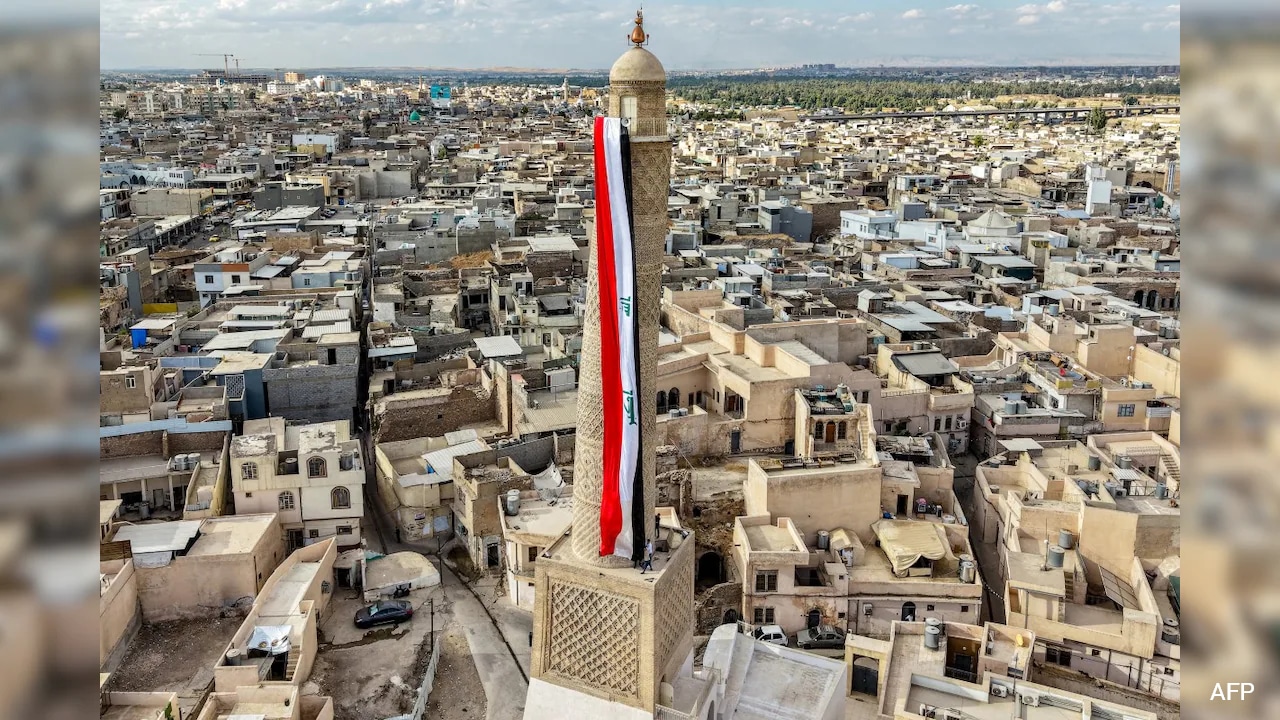
The coffee in the plastic cup has gone cold. Tariq doesn’t drink it anymore. He just holds it, feeling the damp chill radiating against his palms while the evening traffic crawls down the asphalt artery of central Baghdad. Horns blare. Exhaust fumes mix with the heavy dust of a fading desert day. Beneath the surface noise of the city, a quieter, sharper frequency vibrates through the air. Everyone feels it. Nobody quite knows how to name it.
June 2027.
It is a date inked onto official government memorandums, whispered in bureaucratic corridors, and debated over plastic tables in neighborhood tea houses. It is the deadline. The moment when Iraq’s government has demanded that the powerful, Iran-backed militias operating within its borders must finally disarm, integrate, or face an irreversible reckoning.
To understand what that date means, you have to step away from the polished walnut desks of foreign analysts and stand right here, where the concrete blast walls cast long shadows. You have to understand that sovereignty in Iraq has never been a simple legal abstraction written in a constitution. It is a breathing, bleeding thing, forged in the crucible of decades of conflict, foreign intervention, and factional survival.
Consider what happened after the United States military footprint receded. A vacuum is a violent phenomenon in geopolitics; it refuses to stay empty. Into that strategic hollow stepped groups born from resistance, ideological fervor, and cross-border alliances. Over the years, these armed factions grew into something far more complex than standard guerrilla units. They became institutionalized. They built political wings, economic empires, social welfare networks, and formidable arsenals that rivaled—and sometimes outmatched—the official state security apparatus.
Tariq remembers the years of near-constant sirens. He remembers when crossing certain neighborhoods meant holding your breath and wondering whose checkpoint was waving cars through. Today, the checkpoints look different. The flags flying from the concrete barriers bear distinct insignia, symbols of loyalties that stretch past national borders toward Tehran.
For the average citizen waking up in Baghdad or Basra, the presence of these armed groups is a daily reality laced with profound contradiction. On one hand, they emerged as defenders during harrowing existential crises, most notably when the black banners of extremist groups threatened to sweep across the country. On the other hand, their continued existence outside the absolute command of the state creates a permanent ceiling on Iraq’s stability.
How do you build a modern nation-state when private armies hold the keys to the kingdom?
Prime Minister Mohammed Shia al-Sudani’s administration has chosen a path fraught with immense peril. The decree giving these factions until June 2027 to disarm and transition into political or civilian life is not merely a policy prescription. It is an ultimatum drawn in a high-stakes poker game where the house rules are constantly shifting.
The strategy relies on a delicate balance of economic integration and political pressure. The Iraqi state has steadily worked to institutionalize the Popular Mobilization Forces—an umbrella organization containing many of these militias—bringing them under formal administrative oversight through the Popular Mobilization Commission. Salaries are paid from the state budget. Official identification cards are issued.
Yet, integration on paper is vastly different from surrender in practice.
The hardliners within these factions view their weapons not as bargaining chips, but as sacred guarantees. They argue that regional threats remain acute, that the United States and its regional allies still cast long shadows, and that laying down arms is equivalent to walking unarmed into a burning room. Their commanders point to the broader geopolitical chess match across the Middle East—the proxy wars, the simmering tensions between Washington and Tehran, the fragile ceasefires in neighboring states—as proof that vulnerability is a luxury Iraq cannot afford.
Yet the cost of inaction is bleeding the country dry. Foreign investment hesitates. Young Iraqis, armed with degrees and brilliant ambitions, look toward the borders and dream only of leaving. A country cannot attract global capital or build robust public infrastructure when parallel chains of command dictate who controls the ports, the trade routes, and the security of urban centers.
This is the invisible architecture of the crisis. It is not just about guns and rockets. It is about whether a mother can trust that the law protecting her children comes from an elected parliament rather than a local commander. It is about whether national wealth is distributed through transparent governance or captured by armed cartels operating with impunity.
The clock is ticking down to June 2027.
Months turn into weeks, and weeks slip away like sand through anxious fingers. Behind closed doors in Baghdad, envoys shuttle back and forth. Messages are carried from Tehran. Warnings are weighed against economic realities. The leaders of these armed factions know that a direct military confrontation with the Iraqi state—backed by its complex web of tribal alliances and security forces—would be catastrophic for everyone involved. Total war is a table nobody wants to flip.
Instead, the struggle plays out in the gray zones. It is fought through political maneuvering, budget allocations, media campaigns, and tense standoffs in provincial capitals. Every concession granted is measured in inches. Every deadline extended is parsed by diplomats looking for signs of weakness or strength.
Tariq finishes his cold coffee, sets the plastic cup down on the ledge, and looks out across the busy street. A group of teenagers walks past, laughing loudly over something on a smartphone screen, momentarily cutting through the heavy atmosphere of political dread. They are too young to remember the worst of the sectarian bloodshed, yet their entire futures are bound up in whether the adults can successfully resolve this monumental standoff before the calendar flips to June.
The deadline draws closer with the inexorable weight of a falling tide. Whether it marks the beginning of a truly unified, sovereign Iraq or simply another false dawn written in the long, troubled history of the region is a question still suspended in the evening air.
The sun dips below the horizon, painting the smoggy Baghdad sky in bruised shades of violet and orange, and the city waits for tomorrow.