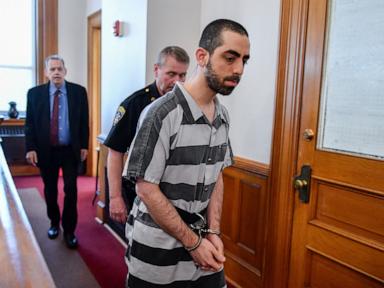
The gavel has fallen again. Hadi Matar, the man who ambushed author Salman Rushdie on a New York stage in August 2022, was just convicted on federal terrorism charges, including engaging in an act of transnational terrorism.
If you thought the state-level conviction and 25-year prison sentence handed down previously were the end of the legal story, think again. This federal verdict changes the scope entirely. It elevates a horrific local assault into an international indictment of state-sponsored terror and targeted violence against free expression.
Here is what you need to know about the trial, the evidence, and why this verdict matters far beyond the courtroom.
The Evidence That Sealed the Federal Verdict
Prosecutors didn't rely on guesswork. They laid out a digital trail showing months of meticulous planning.
During the federal trial, prosecutors presented messaging app exhibits from 2021 and 2022. The chats showed Matar fuming over Salman Rushdie's survival and arguing that the decades-old fatwa issued by late Iranian Supreme Leader Ayatollah Ruhollah Khomeini was still active. Matar tracked Rushdie's public appearances online, eventually zeroing in on the author's scheduled talk at the Chautauqua Institution.
The messages left little room for doubt about intent. In a private note uncovered by investigators, Matar wrote bluntly: "We need to kill him ASAP."
Faced with this documentation of a planned hit linked to Hezbollah and foreign militant networks, the jury deliberated for just a couple of hours before finding Matar guilty on all counts. He declined to take the stand in his defense, leaving his attorneys to argue that the government lacked direct proof of his mental state. The jury clearly disagreed.
Why the Federal Charges Are a Major Turning Point
You might wonder why federal prosecutors pursued a separate case when Matar was already serving a heavy state sentence.
State charges handle local crimes like attempted murder and assault. Federal terrorism charges, however, recognize a broader geopolitical reality. This wasn't just a random act of street violence. It was an attempt to enforce a foreign religious edict on American soil.
By securing a conviction for transnational terrorism, the Department of Justice sent an unmistakable signal. Threats originating overseas that manifest as violence inside the United States will face the full weight of federal counterterrorism laws. Matar now faces a potential life sentence, stacking on top of his existing state penalty.
The Personal Toll and the Ongoing Fight for Free Speech
The physical cost of the 2022 attack remains staggering. Rushdie was slashed 15 times in front of a live audience, suffering severe wounds that cost him the sight in his right eye.
Yet, Rushdie's response has been defined by resilience rather than silence. He testified during the proceedings, detailing the attack with clinical precision, and later processed the trauma through his 2024 memoir Knife before returning to fiction.
PEN America and other free expression advocates have repeatedly emphasized that this case serves as a grim reminder of the enduring dangers writers face when their words challenge power. The fatwa issued over The Satanic Verses in 1989 was never officially rescinded by Iran, and bounties from hardline foundations have persisted for decades.
Justice in a courtroom doesn't erase the scars or completely neutralize the chilling effect of violent extremism. But holding attackers accountable at both the state and federal levels establishes a vital legal firewall. Ideas must be met with ideas, never with a knife.