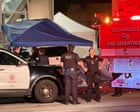
Dense fog on high-speed motorways frequently turns low-visibility conditions into catastrophic mass collisions. When a major pile-up occurs, immediate reports typically attribute the disaster entirely to localized weather anomalies like sudden fog banks. However, investigative analysis of motorway safety systems reveals that extreme weather is rarely the sole cause of high-fatality crashes. The true breakdown stems from a combination of inadequate automated warning infrastructure, delayed emergency dispatch triggers, poor inter-vehicle distance awareness, and structural road design flaws that trap vehicles in cascading multi-car chain reactions.
How Low Visibility Converts Speed Into Chaos
Atmospheric fog severely degrades human visual perception in two distinct ways: contrast reduction and spatial disorientation. Drivers traveling at standard motorway speeds—often 100 to 130 kilometers per hour—lose their primary visual anchors, including lane markings, horizon reference points, and the distance lighting of vehicles ahead. Also making headlines in this space: The Asphalt Gamble We Take Every Morning in Los Angeles.
At 120 kilometers per hour, a vehicle covers roughly 33 meters per second. If dense fog reduces visibility to under 20 meters, a driver's reaction window shrinks to less than one second. Standard human perception-reaction time averages 1.5 seconds under alert conditions. The physics are simple and unforgiving. By the time a driver detects red brake lights piercing the fog, stopping without impact is mathematically impossible.
The initial impact creates a stationary barrier across traffic lanes. Vehicles behind the first collision approach at unchanged cruising speeds because warning signs are either absent or too close to the hazard zone to allow deceleration. Additional insights regarding the matter are covered by BBC News.
Infrastructure Deficits and Deferred Safety Technology
Modern highway engineering offers solutions designed to prevent fog-related chain reactions, yet installation remains inconsistent across European and international road networks.
Variable Message Signs coupled with automated visibility sensors represent the primary line of defense. When optical scatterometers detect dropping visibility, automated systems trigger immediate speed limit reductions on overhead gantries miles ahead of the fog zone. Where these systems are absent, drivers enter high-density fog banks while still traveling at maximum allowed speeds.
Physical road infrastructure also plays a major role in collision severity.
- Inadequate emergency shoulders: Narrow or missing hard shoulders prevent drivers from pulling off the active travel lanes when visibility drops to zero.
- Rigid concrete barriers: High-containment median barriers prevent vehicles from crossing into oncoming traffic, but they can also channel crashing vehicles back into the main traffic stream, increasing secondary impacts.
- Absence of intelligent lighting: Standard highway lighting scatters in heavy fog, creating a wall of glare. Smart LED road studs that illuminate in sequence based on real-time vehicle spacing dramatically improve lane-keeping.
The Psychological Trap of Group Driver Behavior
Human psychology under pressure exacerbates low-visibility hazards. Drivers in heavy fog experience a phenomenon known as the speed adaptation illusion. Without external visual cues like trees or signage passing in the peripheral vision, drivers consistently underestimate their actual movement speed.
Additionally, drivers frequently engage in risk-matching behavior. Rather than slowing down to a speed dictated by their own sightlines, individuals attempt to keep pace with the vehicle ahead, relying on its taillights as a pathfinder. This creates tightly packed clusters of high-speed vehicles moving through zero-visibility zones—a configuration that virtually guarantees a multi-vehicle pile-up the moment the lead vehicle strikes an obstacle.
Counter-measures require a strict shift in individual driving habits during fog events:
- Increase following distance to at least five seconds behind the vehicle ahead.
- Rely entirely on the speedometer rather than visual estimation of speed.
- Use rear fog lights strictly when visibility falls below 50 meters, turning them off once normal traffic flow resumes to avoid blinding drivers behind.
- Avoid sudden braking, which triggers panic reactions in trailing vehicles; decelerate smoothly using engine braking where possible.
Operational Timelines and Emergency Dispatch Delays
The timeline between the first impact and the complete closure of the motorway is critical. In major pile-ups, secondary collisions continue occurring minutes after the initial crash because approaching traffic receives no advance warning.
Effective disaster mitigation requires integrating real-time telemetry from connected vehicles directly into regional traffic control centers. Automatic Crash Notification systems transmit vehicle coordinates and deployment data instantaneously. When traffic management centers act on telemetry data within seconds—automatically stopping oncoming traffic via smart signals—the scale of multi-vehicle disasters drops significantly.
Until automated intervention becomes standard across all major transport corridors, foggy motorways will remain latent high-risk zones where minor driver errors escalate into major structural disasters.