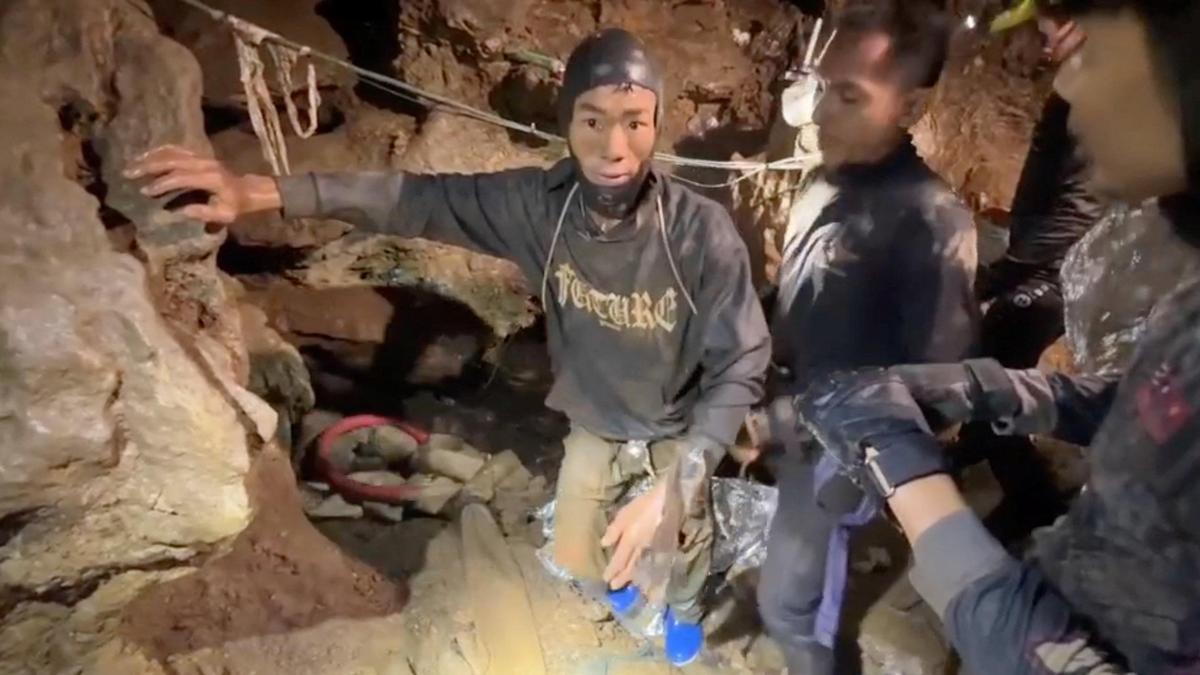
The media loop is entirely predictable. Two people go missing in a flooded cave system in Laos, the water rises, and the public immediately demands a miracle. Headlines pivot instantly to the same narrative: "Rescuers search for alternative routes."
It sounds proactive. It sounds hopeful. It is almost always a logistical illusion that endangers more lives than it saves.
When a cave floods, the instinct of the outside world is to treat the mountain like a building with a back door. They want to drill a hole from the top, find a hidden dry passage, or bypass the choked main entrance. Mainstream reporting feeds this fantasy because it makes for a gripping ticking-clock drama. But anyone who has actually managed underground operations knows that searching for alternative routes in an unmapped, flooded karst system is usually an exercise in tragic misdirection.
We need to stop pretending that every underground crisis can be solved by a Hollywood-style engineering pivot.
The Geometry of a Karst Trap
To understand why the "alternative route" narrative is flawed, you have to understand the geology of Southeast Asian karst typography. Mainstream coverage paints caves as a series of subway tunnels where if Line A is blocked, you simply take Line B.
Real caves do not work that way.
Karst terrain is formed by soluble rocks like limestone, dissolved over millennia by water. The result is a chaotic, unpredictable three-dimensional maze. A passage that sits just ten feet away from the victims on a two-dimensional map might be separated by hundreds of feet of solid, impenetrable bedrock.
Furthermore, flooded caves present specific physical realities that cannot be bypassed by wishful thinking.
- Siphon Mechanics: Flooded sections often form natural siphons. When the water level rises, it fills U-shaped passages completely, trapping air pockets only in elevated chambers. Finding an "alternative route" into these chambers usually requires blind diving through zero-visibility mud or drilling blindly from the surface.
- The Sump Problem: A sump is a cave passage that is completely submerged. If rescuers try to enter via an alternative upper dry passage, they almost invariably hit another sump further down the line. You cannot outrun the water table.
- Hydraulic Pressure: Flooding doesn’t just block passages; it turns the entire cave into a high-pressure hydraulic engine. Water moving through restricted conduits creates lethal currents that can trap even elite cave divers.
When you hear that teams are looking for another way in, what it usually means is that the primary, logical route is currently impossible, and they are grasping at straws to show progress to a demanding public.
The Drilling Myth: Why You Can’t Just Bore a Hole
The most common "alternative route" demand from armchair quarterbacks is simple: look at the GPS coordinates of the missing persons, haul a heavy drilling rig up the mountain, and bore a hole straight down to drop them food and radios.
I have watched organizations waste critical days trying to coordinate this kind of heavy machinery mobilization in remote jungle terrain. It fails almost every single time for three reasons.
1. The Precision Paradox
GPS signals do not penetrate rock. Finding the exact surface location corresponding to a deep underground chamber requires sophisticated survey data. If the cave was not meticulously mapped before the flood, rescuers are guessing. Missing a chamber by just five meters means drilling into solid rock, wasting days, and potentially triggering a cave-in above the survivors.
2. Air and Structural Integrity
Limestone under hydraulic pressure is unstable. The vibration of a massive industrial drill can easily trigger catastrophic ceiling collapses in the very chambers where people are sheltering. Even if the drill succeeds, it can puncture the delicate micro-climate of the cave, altering air pressure and causing water levels to rise faster due to the sudden release of trapped air pockets.
3. The Logistical Bottleneck
The missing people in Laos are trapped because of rapid flooding. Heavy drilling rigs weigh tons. Moving them up a mud-slicked, untracked jungle mountain in the middle of a monsoon season requires building roads. By the time the heavy equipment is positioned, the window of survival has either closed, or the water has naturally receded.
The Brutal Truth of Cave Rescue Priorities
If alternative routes are a fantasy, what actually works? The answer is uncomfortable, unglamorous, and deeply unsatisfying to a 24-hour news cycle: You wait, you stabilize, and you use the main vein.
The real hierarchy of a professional underground rescue looks like this:
| Priority | Action | Risk Profile |
|---|---|---|
| 1. Hydrological Control | Pumping water out of the primary entrance to lower the water table. | Low risk to rescuers, high energy requirement. |
| 2. Guideline Extension | Elite divers moving through the main flooded channel to establish a physical line. | High risk to divers, high probability of success if achieved. |
| 3. Surface Sealing | Finding where surface streams feed into the cave and diverting them outside. | Medium risk, directly reduces the flood volume. |
| 4. Alternative Routes | Searching for unmapped secondary entrances or sinkholes. | Extreme risk, low probability of finding a viable path. |
Every hour spent searching a jungle hillside for a hypothetical hidden sinkhole is an hour taken away from managing the water dynamics at the primary entrance.
Imagine a scenario where a rescue director splits their team. Half the team goes to clear a suspected upper blowout passage three kilometers away. Meanwhile, the main entrance water levels fluctuate unexpectedly because the pumping crew lacked the manpower to clear debris from the intake valves. The primary line is lost, and the alternative route turns out to be a dead end. That is how people die.
The Dangerous Allure of the "Expert" Influx
When an incident like the Laos cave flooding occurs, international experts fly in from around the globe. This creates an immediate clash of command structures. Local authorities understand the immediate terrain; international teams understand specific technical niches like hyperbaric diving or subterranean radio telemetry.
The media frames this influx as the arrival of the cavalry. In reality, it often introduces a dangerous variable: option paralysis.
With too many voices in the room, the simple, brutal strategy of "pump water and wait for a dive window" gets pushed aside for sexier, high-tech interventions. Everyone wants to be the one who discovered the secret back door into the mountain. No one wants to be the person standing in the mud for sixteen hours straight, ensuring a diesel generator keeps the water pumps running.
The downsides of my own argument are obvious. Waiting for the water to drop or relying solely on a flooded main passage requires immense psychological fortitude. It means accepting that for days at a time, you can do nothing but watch the water marks on the cave wall. It means the survivors are entirely on their own until the environment permits a safe extraction.
But the alternative—sending divers into unmapped, high-flow secondary passages or drilling blindly into the earth—is gambling with human lives to satisfy an emotional need for action.
Stop Demanding Miracles, Start Demanding Math
We have to change the way we process these crises. The question people should be asking is not "Why haven't they found another way in?"
The question must be: "What is the cubic discharge rate of the pumps, and what is the forecasted rainfall?"
Cave rescue is not an adventure movie. It is a cold, calculated war against fluid dynamics and geology. The main entrance is almost always the only entrance that matters. If the water blocks it, you do not look for a magic portal on top of the mountain. You fight the water at the gate, or you wait for the mountain to breathe out. Everything else is just noise.