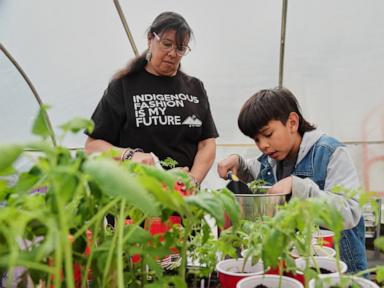
The biennial scramble for the United States Farm Bill follows a predictable script. Tribal leaders, policy advocates, and well-meaning NGOs line up outside congressional hearing rooms. They carry binders full of data detailing food insecurity in Indian Country. They ask for expanded "638 self-determination contracts." They request higher funding caps for the Food Distribution Program on Indian Reservations (FDPIR). They argue that with just a few more legislative tweaks, this massive piece of federal legislation can finally feed their people and preserve Indigenous culture.
It is a comforting narrative. It is also completely wrong. For a different perspective, read: this related article.
Relying on the Farm Bill to achieve food sovereignty is like asking a predatory lender to design a financial literacy curriculum. The structural framework of American agricultural policy is fundamentally incompatible with true Indigenous self-determination. The current consensus celebrates small policy victories as monumental leaps forward while ignoring a stark reality: you cannot lobby your way out of systemic dependency using the exact mechanism that created the dependency in the first place.
The Illusion of 638 Self-Determination
The loudest applause in recent years has been directed at the expansion of Section 638 self-determination contracts within USDA programs. On paper, these contracts allow tribal governments to take over the administration of federal programs, giving them the authority to select and purchase foods for their communities instead of accepting whatever random commodities the federal government ships to them. Advocacy groups call this a triumph for local control. Related insight regarding this has been provided by TIME.
Let's look at how this operates in practice.
A 638 contract does not grant true authority. It merely shifts the administrative burden of running a highly restrictive federal program from a federal bureaucrat to a tribal employee. The tribe is still operating within a rigid framework constructed by the USDA. The funding remains subject to the whims of congressional appropriations. The compliance metrics are still defined by Washington, D.C.
Imagine a scenario where a business owner is told they have total operational freedom, but a third-party competitor dictates their budget, sets their procurement rules, approves their suppliers, and retains the right to shut them down at any moment. No serious business mind would call that independence. They would call it a franchise agreement with terrible terms.
True food sovereignty is not the right to choose whether your community receives wild rice or processed crackers from a USDA-approved vendor list. True sovereignty is the capacity to produce, distribute, and regulate your own food supply without asking permission from a federal agency. By focusing energy on securing 638 contracts, tribes are spending valuable political capital to manage their own assimilation.
The Industrial DNA of the Farm Bill
To understand why the Farm Bill cannot preserve Indigenous culture, you have to look at what the bill actually is. It is not a humanitarian food initiative. It is a massive, corporate-driven mechanism designed to subsidize industrial monoculture, stabilize commodity markets, and protect the interests of corporate agribusiness.
The numbers bear this out. The vast majority of Farm Bill spending outside of nutrition assistance goes directly to propping up industrial scales of corn, soybeans, wheat, cotton, and dairy. These systems rely on massive land consolidation, heavy chemical inputs, and genetic uniformity.
This model is the exact antithesis of traditional Indigenous agricultural and ecological practices, which are rooted in biodiversity, localized production, and ecological balance.
+-------------------------------------------------------------------------+
|                        THE INCOMPATIBLE MODELS                          |
+-------------------------------------------------------------------------+
|  USDA FARM BILL FRAMEWORK          |  INDIGENOUS FOOD SOVEREIGNTY       |
+------------------------------------+------------------------------------+
|  • Industrial Monoculture          |  • Biodiversity & Polyculture      |
|  • Centralized Distribution        |  • Hyper-Localized Production      |
|  • High Corporate Subsidies        |  • Community-Led Stewardship       |
|  • Rigid Bureaucratic Procurement  |  • Flexible, Ecological Gathering  |
+------------------------------------+------------------------------------+
When tribal advocates petition to insert Indigenous priorities into this machinery, they are attempting to graft an ecological philosophy onto an industrial engine. The engine will always win. The Farm Bill is designed to incentivize overproduction of commodities that are then dumped into nutrition programs like FDPIR and SNAP.
When a tribe participates in these programs, even under the guise of self-determination, they are participating in a system that requires the continuous consumption of industrialized food. You cannot preserve a culture that is intimately tied to the land by participating in a policy framework that incentivizes the destruction of that very land through corporate monoculture.
The Nutritional Bait and Switch
The public health crisis in Indian Country is well-documented. Rates of type 2 diabetes, cardiovascular disease, and obesity on reservations are among the highest in the nation. The standard institutional response is to demand more funding for federal nutrition programs within the Farm Bill to ensure no one goes hungry.
But hunger and malnutrition are two different problems.
For decades, the FDPIR program—famously known as "commodity foods" or "neesh"—fed generations on high-sodium canned meats, bleached flour, refined sugar, and hydrogenated oils. It was a dumping ground for surplus American agricultural goods. While the USDA has made efforts to improve the nutritional profile of these boxes in recent years, adding bison and wild rice to a system still fundamentally built on shelf-stable, processed commodities is a cosmetic fix.
The underlying premise of federal food aid is management, not eradication, of a problem. The program ensures that low-income populations remain dependent on a centralized supply chain. When tribal health departments try to combat chronic disease while their citizens rely on food boxes shipped across the continent, they are fighting a losing battle.
The health crisis will not be solved by making the commodity box slightly healthier. It will be solved by dismantling the need for the box entirely. But the Farm Bill architecture creates a perverse incentive: tribal programs become dependent on the administrative funding tied to managing these distribution networks. The infrastructure itself becomes self-perpetuating.
Capital over Lobbying
If the Farm Bill is a dead end for true sovereignty, what is the alternative? The answer requires a pivot away from federal dependency toward aggressive, independent economic development.
I have seen tribal entities spend years and hundreds of thousands of dollars lobbying for minor language changes in a draft senate bill, only to see those provisions stripped out in a closed-door committee session. That same capital, invested directly into tribal enterprise, local food infrastructure, and independent distribution networks, yields actual autonomy.
Consider the reality of meat processing in the United States. During recent global supply chain disruptions, giant corporate meatpackers shut down operations, leaving local producers stranded and grocery store shelves empty. Tribes that relied on federal supply chains suffered. Conversely, tribes that invested their own capital into building their own USDA-certified processing facilities were completely insulated from the shock. They processed their own herds, fed their own people, and sold the surplus to surrounding non-tribal communities at a premium.
That is not a policy victory; it is an economic victory. It did not require a vote in Congress. It required capital allocation, infrastructure development, and a refusal to wait for permission from Washington.
To build an independent food system, tribes must focus on three core pillars that operate entirely outside the scope of the Farm Bill:
1. Direct Land Acquisition and Jurisdiction
Sovereignty requires land. While the Farm Bill offers conservation programs, these programs come with federal oversight and strings attached. Tribes must use gaming revenue, natural resource capital, and economic development funds to reacquire ancestral lands in fee status and transition them back into tribal trust or direct agricultural production under tribal law, completely free of USDA management restrictions.
2. Independent Capital Networks
Relying on federal grants means adhering to federal timelines, reporting requirements, and funding cycles. This stifles innovation. Tribes should establish native-owned financial institutions and community development financial institutions (CDFIs) specifically dedicated to funding indigenous agricultural startups, local greenhouses, and traditional harvesters.
3. Closed-Loop Tribal Food Economies
A closed-loop system ensures that every dollar spent on food stays within the community. Tribal casinos, schools, health clinics, and elder centers should be legally mandated by tribal code to procure their food from local tribal producers first, even if it costs more upfront than buying from mass-market corporate distributors. This creates a guaranteed market for tribal farmers and ranchers, insulating them from the volatility of the national commodity markets that the Farm Bill seeks to manipulate.
The Dangerous Allure of the Status Quo
The hardest truth to admit is that the current system of federal advocacy is highly comfortable for a lot of people. It supports an entire ecosystem of consultants, lobbyists, policy analysts, and non-profit executives whose careers depend on the ongoing cycle of Farm Bill reauthorizations. Every five years, these entities sound the alarm, raise money, write policy briefs, and claim victory when they secure a minor pilot program or a marginal increase in funding.
This is a distraction. It keeps tribal nations in a defensive posture, constantly reacting to federal legislative calendars instead of proactively building their own futures. It encourages leaders to view their citizens as consumers of federal benefits rather than producers of sovereign wealth.
We hear constantly about how the Farm Bill is an opportunity to get a seat at the table. But if the table is built on land taken from your ancestors, and the food served at that table is designed to subsidize the corporations that polluted your rivers, why would you want a seat there?
It is time to stop trying to fix a broken federal bill. Stop dedicating endless hours to committee testimony. Stop believing that the next iteration of the Farm Bill will be the one that finally gets it right.
The federal government is never going to legislate away its own leverage over Indian Country. True food sovereignty will not be found in a 1,000-page omnibus bill passed in Washington, D.C. It will be built on the ground, community by community, acre by acre, through independent economic power and an uncompromising refusal to accept managed dependency as a substitute for freedom. Turn your back on the Capitol. Build your own infrastructure. Grow your own food. Feed your own people. Ensure your own survival.