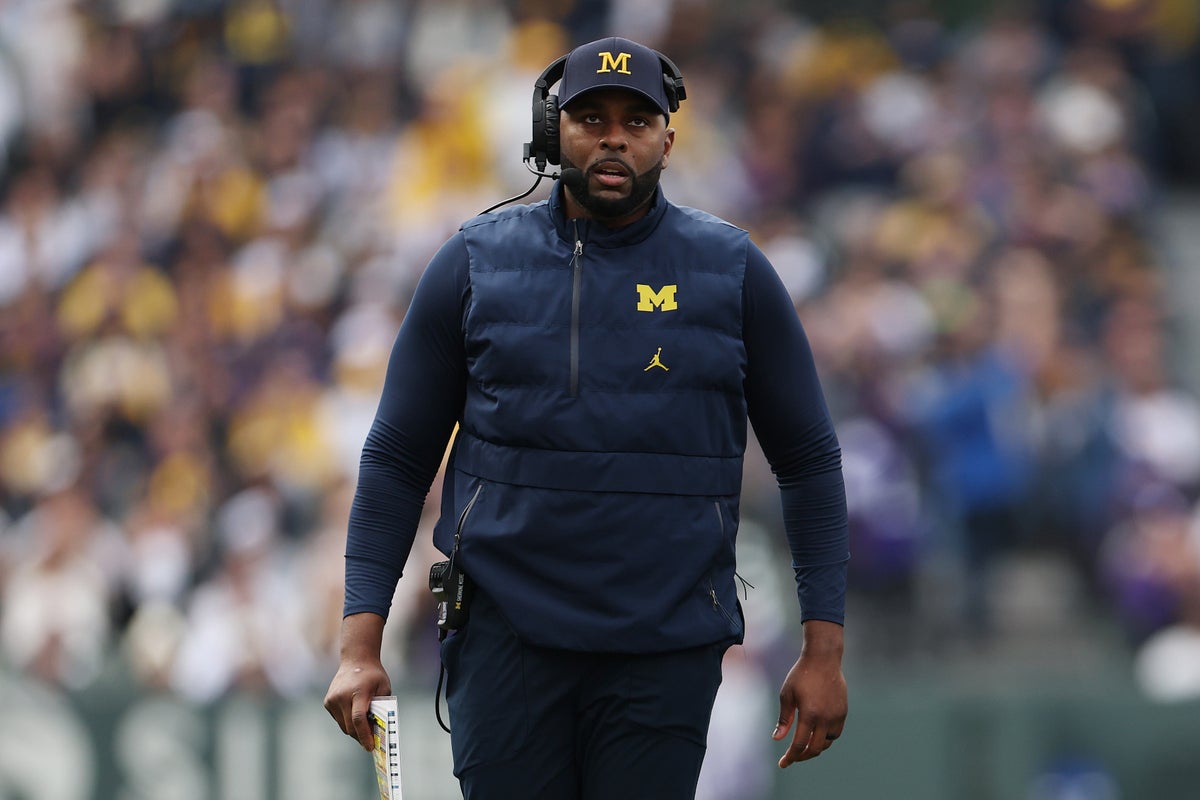
The air in Ann Arbor during late autumn usually carries the scent of woodsmoke and the electric, static hum of expectation. It is a city built on a foundation of "The Team, The Team, The Team," a mantra that demands a specific kind of stoicism from the men who lead it. But beneath the sapphire-and-gold veneer of the Big House, the human psyche remains a fragile thing, capable of fracturing under the weight of a legacy that no longer fits the reality of the present.
Sherrone Moore was supposed to be the bridge. He was the hand-picked successor, the man who had weathered the storms of suspensions and scandals to lead Michigan to its highest peak. Yet, the same fire that made him a fierce tactical mind on the sidelines became a scorching, uncontrollable heat in the private stillness of a suburban driveway. For a different look, consider: this related article.
He didn't just lose his job. He lost the script.
The Weight of the Ring
Imagine standing at the center of a stadium with a capacity of 100,000 people, everyone screaming your name. The pressure is a physical weight, like a rucksack filled with lead bars. For Moore, the transition from the interim savior to the permanent face of the program wasn't a promotion; it was an enclosure. When the NCAA investigations intensified and the roster began to churn, the pressure didn't just stay at the office. It followed him home. It sat at his dinner table. Similar reporting on this trend has been provided by NBC Sports.
Psychologists often speak of "displaced aggression," a phenomenon where an individual, overwhelmed by stressors they cannot control—like a looming legal inquiry or a shifting professional landscape—lashes out at a more accessible target.
In Moore's case, the target was a staffer. The location was a private residence. The time was well past the hour when professional boundaries should have remained locked.
The details of the confrontation remain harrowing not because of physical violence, but because of the sheer, desperate intensity of the breakdown. Witnesses described a man who didn't look like a championship coach. He looked like a man who had been pushed until his internal compass shattered.
The Midnight Drive
There is a specific kind of silence that exists in the Michigan suburbs at 2:00 AM. It is cold, damp, and unforgiving. When Moore arrived at the staffer’s home, he wasn't there to discuss recruiting cycles or offensive line schemes. He was there because the walls were closing in.
The subsequent legal proceedings pulled back a curtain on a culture that many chose to ignore while the wins were piling up. We want our coaches to be superhuman. We want them to be stoic generals who never blink. We forget that they are often just middle-aged men struggling with the same anxieties and ego-bruising failures as anyone else, only their failures are broadcast in 4K resolution to a global audience.
The court's decision to hand down a sentence—a mix of probation, mandatory anger management, and community service—was less about the specific legal infraction and more about a societal demand for accountability. Michigan, a university that prides itself on "Michigan Men," found itself staring at a reflection it didn't recognize.
Moore stood before the judge, his shoulders hunched, the vibrant sideline energy replaced by a hollowed-out exhaustion.
The Cost of Cold Facts
The police reports list the timeline. They mention the shouting. They record the neighbors’ calls to 911. But those facts are just the dry husks of a much larger tragedy.
Consider the staffer on the other side of that door. To them, Moore wasn't a celebrity or a local hero. He was an erratic superior breaking the sanctuary of their home. This is where the "sports" story ends and the "human" story begins. No one signs up for a job in football expecting their boss to show up at their doorstep in a state of emotional collapse.
The fallout was swift. The university, already under the microscope of the NCAA for previous infractions, could not justify keeping a leader who had so publicly lost his grip on the most basic tenets of professional conduct. The firing was a clinical execution of a contract, but the aftermath felt like a funeral for a dream.
Moore's sentencing serves as a grim punctuation mark on an era that promised glory but delivered a deep, lingering sense of unease.
The Invisible Stakes
Why does this matter to someone who doesn't care about the Big Ten?
It matters because we are living in an age of total burnout. We see it in high-stakes corporate boardrooms, in the frantic pace of the tech sector, and most visibly, in the high-pressure cooker of elite athletics. We demand "robust" results—to use a term the analysts love—without ever pausing to ask what those results cost the person delivering them.
Moore became a metaphor for the breaking point.
His sentence includes a requirement to speak to youth groups about conflict resolution. There is a profound irony in a man who reached the pinnacle of his profession being ordered by a court to explain to teenagers how to keep their cool. Perhaps that is where the real redemption lies. Not in the return to the sidelines, which seems impossible now, but in the slow, agonizing process of rebuilding a shattered reputation from the ground up.
The whistle has blown. The lights at the Big House have dimmed. Sherrone Moore is no longer a coach; he is a cautionary tale, a man who learned the hardest way possible that winning the game means nothing if you lose yourself in the process.
He sits in a quiet room now, far from the roar of the crowd, waiting for the clock to restart on a life that will never look the same again.