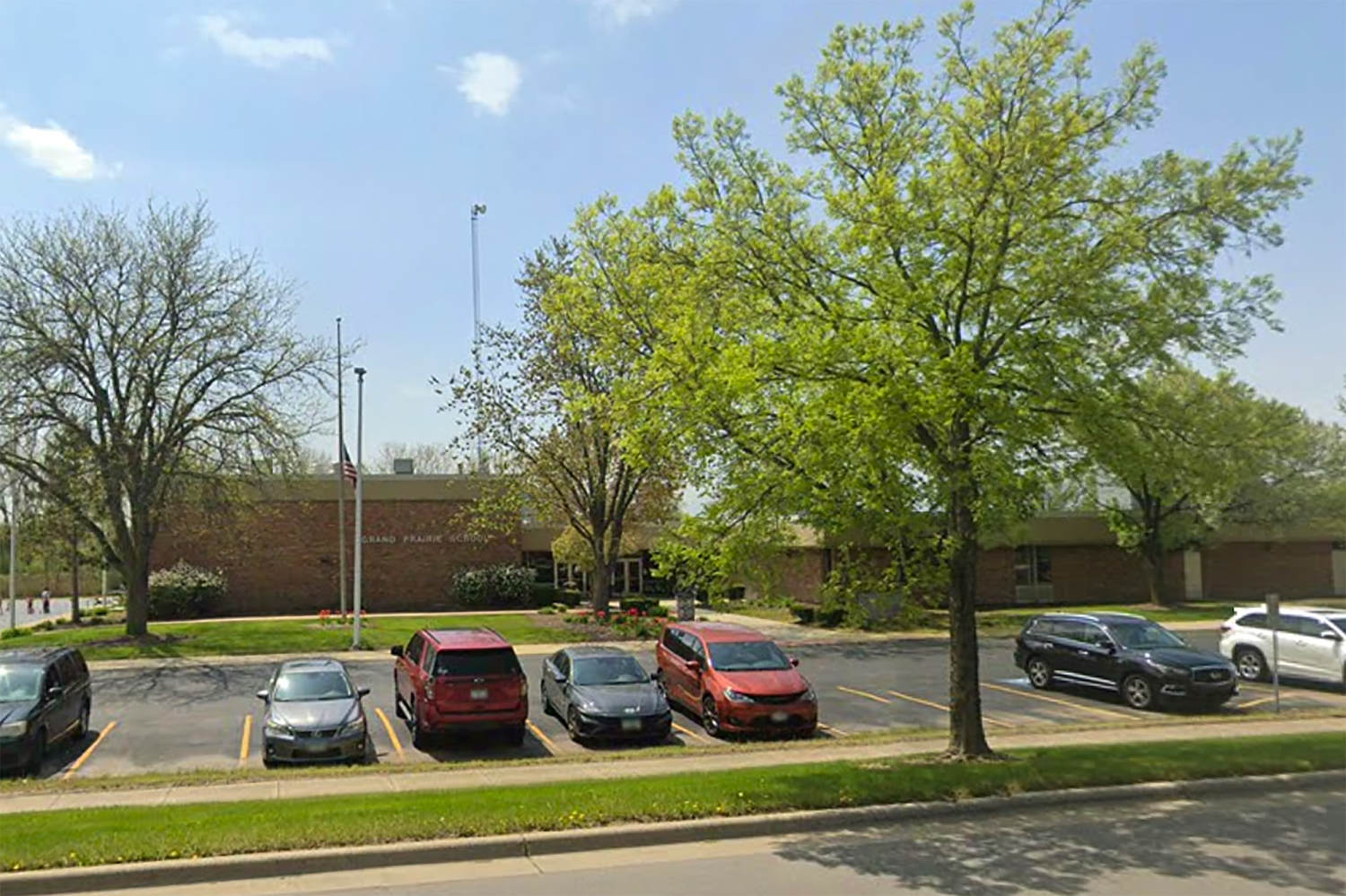
A heavily armed teenager was intercepted by a family member inside a Plainfield, Illinois home on Friday, stopping a planned mass casualty attack at Grand Prairie Elementary School before the suspect could leave the property.
Will County Sheriff’s deputies arrived at the residence on Helmar Lane to find a relative physically pinning down the minor. Law enforcement recovered a handgun, a backpack packed with multiple loaded magazines, knives, an accelerant, and gloves. The intervention was immediate, violent, and entirely domestic. It occurred before any institutional security apparatus, school resource officer, or threat-assessment software had any inkling of a threat.
The incident highlights a systemic vulnerability in the multibillion-dollar school safety industry. For decades, the public response to mass violence has focused heavily on hardening the perimeter of educational buildings. Bullet-resistant glass, single-point entry systems, and automated lockdown protocols are now standard infrastructure. Yet, these measures only activate once an attacker reaches the schoolyard. When a threat is neutralized in a living room rather than a vestibule, it reveals that the most effective line of defense remains the raw vigilance of families.
This dynamic places an extraordinary burden on households. Relatives are increasingly forced to serve as informal intelligence analysts, mental health evaluators, and, in this case, physical combatants. The Plainfield intervention succeeded because a family member recognized the immediate danger and chose physical confrontation over hesitation.
The structural breakdown of mass violence prevention typically follows a predictable trajectory. Security experts often discuss the pathway to violence, a multi-stage process involving ideation, planning, preparation, and implementation. Institutional interventions usually fail during the preparation phase because the acquisition of tactical gear, ammunition, and accelerants occurs within private, domestic spaces out of sight from school administrators.
The physical recovery of an accelerant alongside loaded magazines suggests an intent to maximize chaos and bypass traditional physical barriers. Standard school security infrastructure is designed to repel an intruder carrying firearms, but it rarely accounts for arson or secondary tactical hazards meant to flush occupants out into the open. By stopping the suspect at the point of origin, the intervention bypassed the entire operational plan of the attacker.
The legal and clinical handling of the suspect further emphasizes the complexity of these situations. Following the physical restraint and subsequent arrest, the teenager was transferred to a local medical facility rather than a juvenile detention center, and formal charges were deferred. This operational choice reflects a growing acknowledgment among law enforcement that acute psychiatric crises often drive the final preparation phases of targeted violence.
Relying on family members to act as physical barriers is an unsustainable strategy for public safety. It assumes that relatives are physically capable of subduing an armed individual, present at the exact moment of mobilization, and willing to cross a profound psychological threshold to neutralize a loved one. When the domestic sphere becomes the primary tactical checkpoint, it indicates that institutional early-warning systems have failed to detect the signals of radicalization long before the weapon is loaded.
The event in Will County serves as a stark reminder that school safety is not a problem solved entirely by architectural engineering or surveillance contracts. The hardening of schools has merely pushed the boundary of risk backward, shifting the line of engagement from the classroom door to the suburban home.


