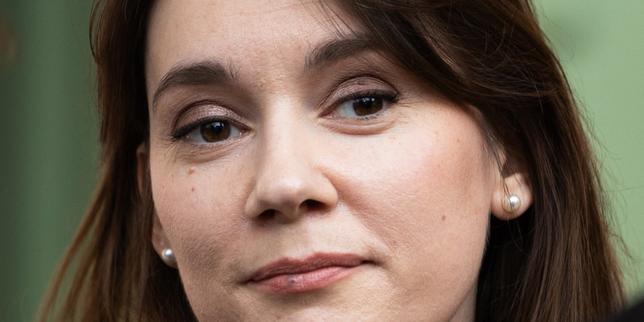
The screen in the corner of the quiet Paris café glowed with a familiar, high-contrast hue. On it, a woman with sharp cheekbones and an unyielding gaze spoke fluent, rapid French, defending a world that most of the people sitting within three blocks of this exact table considered an existential threat. This was Xenia Fedorova. To French intelligence, she was a node in a sophisticated apparatus of state influence. To her remaining viewers, she was a banished truth-teller. To the waiter clearing the adjacent table, she was just another blur on a glass rectangle, speaking a language drenched in consequences he had no time to decode.
Exile is rarely a sudden plunge into the dark. More often, it is a slow fading of the edges.
You pack a suitcase with the desperate optimism of a short-term trip, leaving winter coats in closets and framed photographs face-down on nightstands, only to watch the calendar turn pages until the keys in your pocket no longer fit any door you recognize. For Fedorova, the former head of RT France, the map changed overnight. When European capitals drew a hard, unyielding line against Russian state-backed media following the geopolitical rupture of 2022, the broadcast studios went dark. The hardware was frozen. The bank accounts locked. But the voice, or rather the ideological machinery that generated the voice, did not simply vanish. It mutated.
Consider what happens when a megaphone is smashed. The sound does not die; it finds smaller, more insidious copper wires.
Fedorova’s journey out of Paris and into the complicated shadows of transnational media logistics reads like a spy thriller written by a bureaucrat. It is a story of legal maneuvers, diplomatic pressure points, and the modern digital underground where sanctions are treated as mere turbulence rather than permanent grounding. When the French authorities moved to block the financial pipelines of the channel she directed, the confrontation moved from the boardroom to the administrative courts. Legal briefs piled up like sandbags against a rising tide. But the tide was an ocean.
I remember the specific brand of exhaustion that settles over newsrooms caught in the crossfire of great power politics. I have watched editors look at their screens with a hollow certainty that tomorrow’s accreditation might not arrive, that the server contracts might dissolve before the morning edition hits the web. It is a strange, weightless terror. You are working at maximum velocity while standing on melting ice.
Fedorova’s pivot—her tactical drift into new digital domains and overseas sanctuaries—highlights a profound vulnerability in the modern democratic toolkit. How do open societies police information without adopting the very authoritarian tactics they claim to oppose? It is a question that keeps security analysts awake in Brussels and Washington alike. When you ban a broadcaster, do you silence a threat, or do you simply martyr a messenger, driving an audience that already distrusts mainstream institutions straight into the waiting arms of alternative, untraceable echo chambers?
The answer is messy. It smells of damp servers, encrypted messaging apps, and the bureaucratic ink of frozen asset declarations.
In the weeks following the shutdown of RT France, the official narrative from government ministries was crisp and sanitary. The network was classified not as journalism, but as an instrument of hostile foreign influence—a weaponized narrative designed to fracture European consensus from within. The administrative decrees were signed. The accounts were sequestered. To the architects of these sanctions, it was a necessary act of digital hygiene.
Yet, ideas do not require bank accounts to travel. They ride on resentment. They hitchhike on economic anxiety, on the quiet disillusionment of citizens who feel ignored by traditional power centers.
Fedorova understood this long before the black SUVs of French financial investigators arrived at the corporate offices. The transition from traditional television broadcasting to distributed, decentralized digital survival was already mapped out. When the physical doors were chained, the operations simply dispersed. Some producers retreated eastward. Others scattered across sympathetic jurisdictions, operating behind layers of corporate shell entities that would give forensic accountants a migraine. This is the modern cavale—not a frantic run through alleywoods in the rain, but a quiet, calculated migration through the digital ether, where physical borders matter less than domain registrars and virtual private networks.
We tend to think of state-backed media as lumbering, Soviet-style dinosaurs. We picture gray men in drab suits shuffling paper in concrete towers. But the reality is sleek, agile, and terrifyingly modern. It utilizes the open architecture of the West against the West itself. Every protection afforded to free speech, every legal recourse, every procedural delay in a Western European courtroom is weaponized by operatives whose home countries grant none of those luxuries to their own domestic dissidents.
It is an exquisite irony that leaves a bitter taste.
Watch Fedorova in her post-Paris iterations. The studio lights are different now—perhaps dimmer, perhaps sharper, financed through labyrinthine networks that defy easy tracing. The tone has shifted from defensive justification to a hardened, almost triumphant defiance. She is no longer just a media executive; she is a case study in the resilience of digital-age propaganda. She is the living proof that in the twenty-first century, you can exile a person, but you cannot easily evict an idea once it has found a home in the architecture of doubt.
The implications stretch far beyond one woman or one banned network. They touch the core of how we will consume reality in the decades to come. As artificial intelligence floods the zone with synthetic noise, and as state actors refine the art of asymmetric information warfare, the traditional boundaries of sovereignty are dissolving. A broadcast doesn't need a transmission tower on foreign soil anymore. It lives in the pocket of a disgruntled teenager in Lyon, in the late-night scrolling of a factory worker in Marseille, in the algorithms that reward outrage above all else.
When the café lights in Paris finally flickered off and the chairs were stacked against the tables, the city outside remained stubbornly beautiful, lit by the amber glow of streetlamps that have witnessed centuries of ideological storms. But the air felt thinner. The invisible frequencies passing through our hands, through the glass of our phones, through the invisible cables running beneath the cobblestones, carry a war that has no front line and no armistice.
Fedorova is still broadcasting somewhere out there in the digital dark, adjusting her microphone, checking her levels, waiting for the signal to go live.