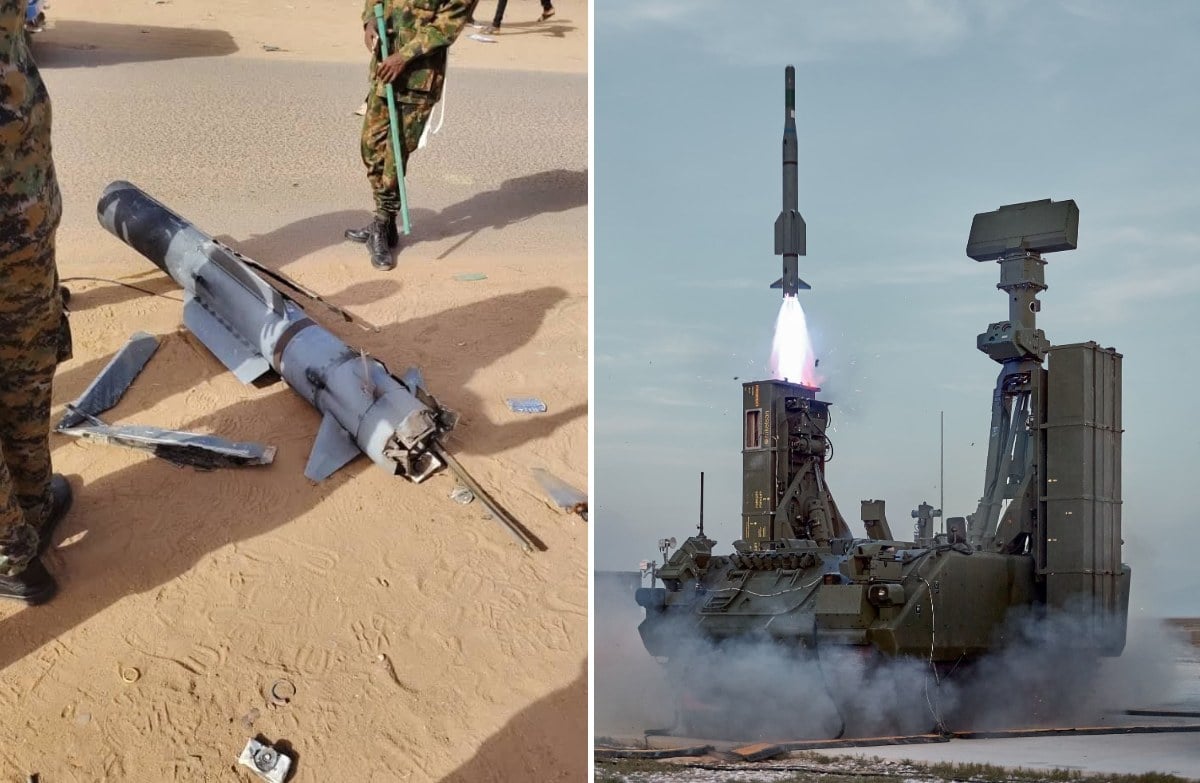
The mainstream defense press is hyperventilating over a grain of sand and missing the entire desert. Over the past week, OSINT analysts and military commentators went into overdrive following reports that the Rapid Support Forces targeted a Sudanese Armed Forces HİSAR-A air defense system near Omdurman. The lazy consensus formed instantly: Turkey is opening a dangerous new state-backed military front in Khartoum, directly supplying advanced hardware to tip the scales of Sudan's brutal civil war.
This narrative is completely wrong. It fundamentally misunderstands how modern arms proliferation, private defense contractors, and secondary military pipelines function. Learn more on a similar topic: this related article.
I have watched defense ministries blow millions tracking state-level shipping manifests while remaining completely blind to the gray-market networks underneath. If you think the presence of an Aselsan-built chassis in Khartoum means Turkish President Erdogan signed off on a direct bilateral deployment package to save the Sudanese government, you do not understand the arms industry. The reality is far more transactional, decentralized, and messy.
The Myth of the State-Directed Delivery
The lazy analysts point to Turkey’s "Steel Dome" initiatives and claim the deployment of the HİSAR-A in Sudan reflects a calculated geopolitical chess move by Ankara. More analysis by USA Today delves into comparable views on the subject.
They are chasing a ghost.
Let us look at the hardware itself. The HİSAR-A is a low-altitude air defense system mounted on a tracked FNSS ACV-30 chassis. It is designed to down low-flying drones, cruise missiles, and helicopters. Yes, it is advanced. No, its appearance does not prove a direct state-to-state supply chain.
Consider where else these systems reside. In recent years, Turkey heavily exported defense systems and armored platforms to regional hubs, including Libya, Qatar, and various East African nations. Turkish forces maintained an active footprint at Libya’s Al-Watiya Air Base, deploying exactly these types of short-range air defense architectures.
When a conflict escalates as rapidly as the war between the Sudanese Armed Forces and the RSF, weapons flow toward the vacuum through secondary and tertiary channels. Private military companies, regional middlemen, and recycled inventories from previous North African proxy operations are the true culprits.
A Lesson in Secondary Proliferation: Just because a weapon bears a specific manufacturer's stamp does not mean the host nation's government ordered its deployment. It means a contract was fulfilled years ago to a third party, and that third party shifted assets when the price was right.
The Drone Hegemony Illusion
The second major misconception dominating the commentary is that these advanced air defense systems are sweeping the skies clean and securing an absolute victory for the Sudanese military. Corporate defense writers love to paint a picture of neat, symmetrical warfare where a high-tech missile battery completely neutralizes an enemy drone threat.
The mud of Khartoum tells a different story. The RSF has adjusted. They are utilizing cheap, asymmetric drone swarms, commercial loitering munitions, and Chinese-made FB-10A short-range air defense systems to push back. In fact, the very footage that sparked this media cycle showed an RSF drone targeting the HİSAR-A itself.
The downside of deploying highly specialized systems like the HİSAR-A in an active, chaotic combat zone is their extreme vulnerability to saturation. A million-dollar radar unit can be blinded or destroyed by a swarm of consumer drones carrying taped-on mortar shells costing less than a used car. The Sudanese Armed Forces are discovering the hard way that advanced hardware without a comprehensive, layered electronic warfare umbrella is just an expensive target.
Dismantling the Expert Consensus
When defense forums ask, "How will the introduction of Turkish air defense systems alter the balance of power in East Africa?" they are asking the wrong question entirely. They assume that adding a sophisticated variable to a broken equation fixes the formula. It doesn’t.
Let us look at the brutal logistics.
| System Element | Conventional Expectation | Asymmetric Reality in Khartoum |
|---|---|---|
| Radar Coverage | Continuous tracking of low-altitude threats. | High ground clutter and urban density cause tracking blind spots. |
| Supply Chain | Specialized Roketsan maintenance and missile resupply. | Complete reliance on fragile, improvised regional gray markets. |
| Operational Crew | Highly trained technical personnel. | Accelerated, abbreviated training pipelines leading to tactical errors. |
Imagine a scenario where a military deploys a sophisticated tracked air defense platform but lacks the proprietary diagnostic software updates or spare parts for its radar array. Within weeks, that system degrades into nothing more than a heavily armored, stationary anti-aircraft gun. That is what the armchair generals miss when they look at satellite imagery and count missile tubes. They see capability; insiders see a ticking maintenance clock.
The Real Drivers of the Conflict
Stop looking at Ankara. Start looking at the local logistical realities. The war in Sudan has become an open-source testing ground for global arms manufacturers and private brokers. It is an environment where state policy matters far less than cash on delivery.
The Sudanese military is desperate to secure its strongholds in Omdurman and Khartoum against relentless drone attacks on its airports and power stations. They will buy from anyone, through any channel, whether it is Iranian Mohajer-6 platforms, Turkish Bayraktar drones, or secondary-market air defense systems. The presence of these weapons isn't a sign of an official alliance—it is a sign of desperation and an incredibly liquid underground weapons trade.
The real shift isn't that a specific flag has entered the fray. It is that the barrier to entry for high-tier anti-aircraft and drone warfare technology has collapsed entirely. The proxy war is decentralized, corporate, and uncontrollable. Believing that a state government can simply flick a switch and recall these weapons or manage their deployment from an office in Europe or Asia is the ultimate delusion of modern foreign policy analysis.