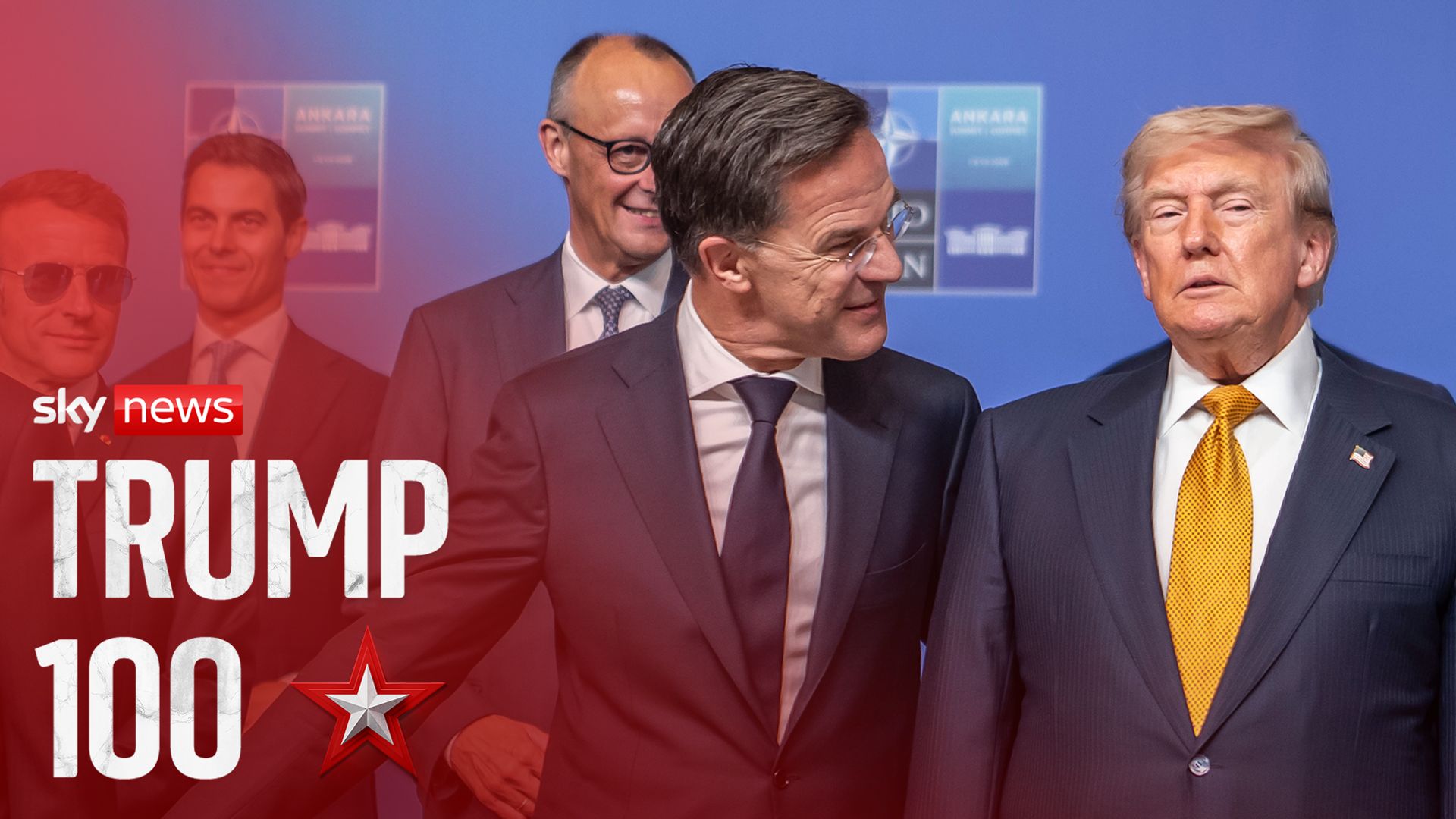
The mainstream media is having a collective panic attack over the 2026 Ankara summit. Turn on any news network or read the standard op-eds, and you will hear the same lazy consensus: Donald Trump is destroying NATO from the inside out, using threats of troop withdrawals and bizarre demands for Greenland to shatter the transatlantic security architecture.
They claim his transactional approach is a threat to global stability. They weep for the old days of absolute American commitments.
They are completely misreading the room.
What we are witnessing is not the destruction of NATO. It is the long-overdue restructuring of a bankrupt corporate subsidiary. For nearly eight decades, European defense has operated on a deeply flawed premise: the United States pays the bills, provides the logistical backbone, and takes all the risks, while Europe treats defense spending as an optional line item in a welfare budget.
By forcing a brutal, mercantilist re-evaluation of the alliance, Trump isn't killing NATO. He is executing a corporate turnaround that is making the alliance structurally viable for the first time in modern history.
The Myth of the Broken Alliance
The prevailing narrative focuses entirely on the friction. Pundits obsess over the January trade war threats, the 15% tariffs on EU imports, and the public spat over Greenland that saw Denmark and eight allies scramble forces under Operation Arctic Endurance. They point to Trump’s recent statement alongside Turkey's Recep Tayyip Erdoğan—where he threatened to pull all 80,000 US troops out of Europe—as proof of imminent collapse.
But look at the actual balance sheet instead of the rhetoric.
Under the hood, the pressure is yielding massive, unprecedented results. Since this administration took office, non-US NATO members have injected an additional $1.21 trillion into defense—a massive capital infusion the White House has rightly dubbed the "Trump Trillion." At the Hague summit, allies committed to a staggering 5% GDP defense spending target by 2035.
For decades, polite diplomatic prodding from American presidents achieved nothing but empty promises. It took an aggressive, high-stakes negotiation tactic to finally force European capitals to realize that the free ride is over.
The NATO 3.0 Business Model
The consensus view laments that the US is treating a sacred military alliance like a protection racket. That view is half-right but entirely misses the strategic benefit. This is NATO 3.0: a shift from security dependency to a hard-nosed, commercial partnership.
I have spent years analyzing how large institutions respond to systemic shocks, and the behavior we are seeing from European nations is textbook institutional panic turning into rapid modernization. Look at what just happened at the Ankara summit. The White House secured massive procurement commitments that effectively bind European defense directly to the American industrial base:
- Lockheed Martin is establishing a Patriot Advanced Capability-3 (PAC-3) missile sustainment facility on European soil.
- Northrop Grumman is signing deals with 10 nations for MQ-4C Triton maritime surveillance drones.
- Raytheon (RTX) is expanding European production lines for Stinger and AMRAAM missiles as a strict condition of bulk procurement.
- Anduril is aggressively moving into Central Europe, standing up a new production line for Barracuda-500 missiles in Poland.
This is not an isolationist retreat. This is a brilliant capitalization strategy. In 2025 alone, European defense spending supported nearly 200,000 American jobs. The administration’s America First Arms Transfer Strategy ensures that every Euro spent by an anxious European ally reindustrializes the American Rust Belt while outsourcing the actual frontline risk to the continent itself.
The Sovereign Reality Check
Consider the alternative that the foreign policy establishment champions. If the US maintained its traditional, unconditional security guarantee, what would Europe look like today?
It would remain a continent of military illusions. The United Kingdom and France have spent years maintaining global military ambitions without the domestic political will or financial capital to fund them. Both are currently struggling to find a credible pathway to even a 3.5% GDP target.
The current friction has forced a dose of harsh realism. Realizing they can no longer rely blindly on the American logistical, intelligence, and air defense backbone, European nations are finally building their own sovereign capabilities. The UK is currently leading a £37 billion European project with France, Germany, and the Baltics to develop an advanced long-range precision strike missile capable of hitting targets 1,200 miles away.
This is exactly what should have happened thirty years ago. The US military is returning its European troop levels to pre-2022 baselines, forcing local powers to assume primary responsibility for their own conventional defense.
The primary downside to this approach is obvious: it introduces acute short-term volatility. By treating alliances as purely transactional assets, you degrade the psychological value of deterrence. If an adversary believes the American nuclear umbrella is subject to a quarterly audit or a real estate dispute over Greenland, the risk of a miscalculation increases.
But maintaining a hollow alliance built on an unsustainable American subsidy was a far greater systemic risk.
Stop asking whether the administration is "loyal" to NATO. That is the wrong question. The real question is whether an alliance built on absolute dependency can survive a multipolar world. The answer is no. By forcing European nations to buy American hardware, build their own defense supply chains, and pay their fair share, the current strategy is building a real, hardened coalition of self-reliant states. It is noisy, chaotic, and deeply uncomfortable for the diplomatic elite—but it is the only way NATO survives the century.