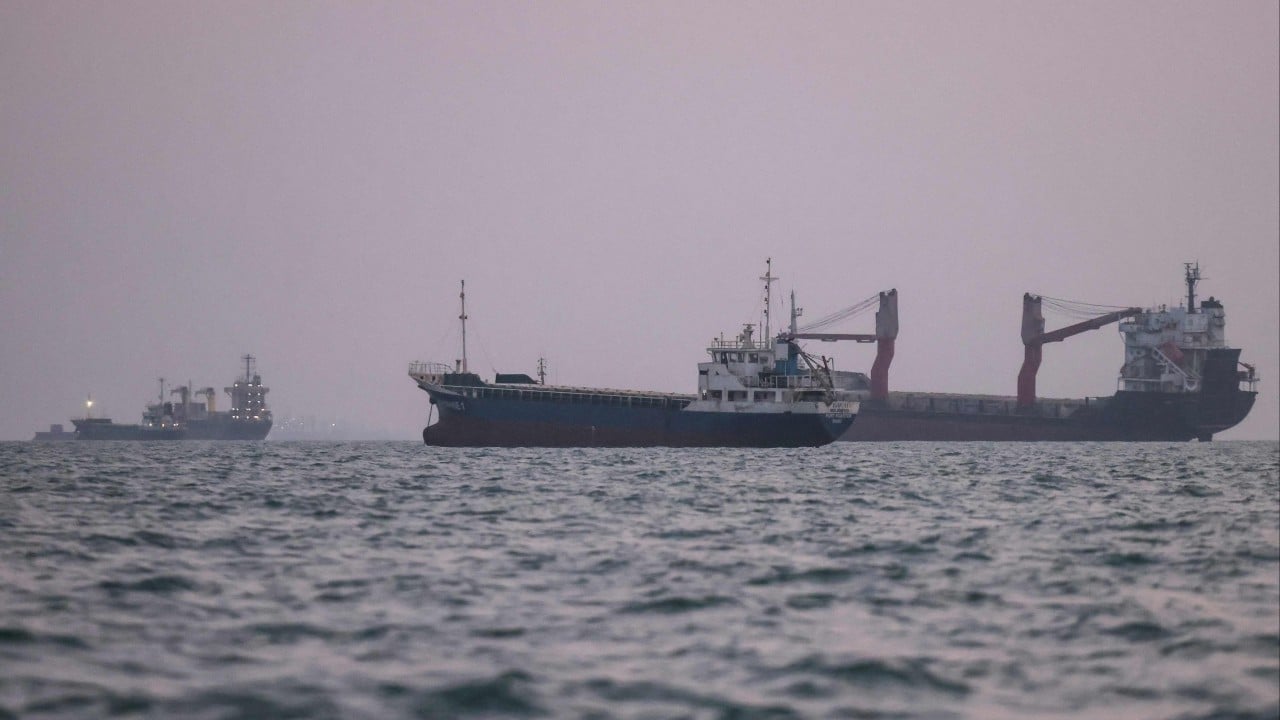
Every time a tin-can container or a rust-bucket tanker gets clipped in the Strait of Hormuz and the IRGC issues a breathless press release, Wall Street algorithms hyperventilate. Cable news desk producers dust off their dramatic 1990s graphics of burning petroleum. Pundits who couldn't read a bathymetric chart of the Persian Gulf if their bonuses depended on it start talking about seven-dollar gasoline and systemic global collapse.
It is financial theater. All of it. If you found value in this post, you should read: this related article.
I have spent twenty years watching traders panic over headlines written by people who think a VLCC is a cryptocurrency. Every single time a flashpoint hits the news wires out of Iranian state media, the knee-jerk trade is long crude and short sanity. And every single time, the physical market shrugs, re-routes a few thousand barrels, and prices drift right back down to reality within forty-eight hours.
Let us dismantle the lazy consensus. The narrative goes like this: twenty percent of the world's petroleum passes through a narrow maritime bottleneck, Iran controls the choke point, and any explosion means the global economy is two steps away from a medieval dark age. For another angle on this story, check out the recent coverage from TIME.
The reality is far more cynical, much more structural, and entirely ignored by the headline-chasing mob.
The Geography of Panic Versus the Physics of Supply
Let us define terms because sloppy terminology is how trading desks lose billions. The Strait of Hormuz is roughly twenty-one miles wide at its narrowest point, but the inbound and outbound shipping lanes are each a mere two miles wide, separated by a two-mile buffer zone. It is a natural funnel.
When the IRGC claims an oil tanker has exploded, the immediate assumption is that physical supply has permanently vanished from the global ledger. That is a category error. A ship is not a wellhead. A hull rupture, a minor limpet mine love-tap, or an engine room fire does not destroy the millions of barrels sitting in storage tanks across Kharg Island, Ras Tanura, or Al-Faw. It merely delays a floating metal box by a fortnight.
Imagine a scenario where a tanker is struck off the coast of Larak Island. The cargo belongs to a multinational trader or a national oil company. That oil is insured. The vessel is inspected, patched in dry dock or swapped out for a secondary charter, and the molecules eventually find their way to a refinery in Gujarat or Qingdao.
The market prices every incident as a permanent structural loss of supply when it is actually a temporary logistical friction. The world does not run out of petroleum because one ship gets singed. It runs out of petroleum only when geological reserves deplete or when sustained infrastructure destruction prevents extraction at the source. A surface explosion on a hull does not turn off a subterranean oil reservoir in Ghawar.
Why the Insurers and Traders Know Better Than the News
If you want to know what is actually happening in the Persian Gulf, do not look at Twitter feeds or state television broadcasts from Tehran. Look at the hull and machinery war risk insurance premiums out of Lloyd's of London.
When a genuine existential threat materializes, underwriters spike rates into the stratosphere or suspend coverage entirely. Yet, during most of these high-profile explosions and fiery IRGC announcements, war risk surcharges tick up by a meager fraction of a percent—barely enough to buy a round of espresso for an underwriting syndicate. Why? Because the risk-pricing professionals know that neither Iran nor its adversaries have any appetite for a permanent closure of the strait.
Iran needs to export its own crude to survive, largely via clandestine shadow fleets moving oil to independent refineries in Asia. If the Strait of Hormuz becomes completely impassable, the Iranian economy flatlines faster than any Western embargo could dream of achieving. The IRGC understands game theory better than western cable anchors give them credit for. They engage in calibrated friction—enough noise to move futures contracts and project regional defiance, but never enough to actually choke off the economic lifeline that keeps their own regime solvent.
We have watched this script play out for decades. The Tanker War of the 1980s saw dozens of vessels hit by Exocet missiles and sea mines, yet oil flows continued because the economic gravity of global energy demand outweighs regional posturing every single time.
The Structural Buffer the Media Ignores
Let us talk about the math that the panic-peddlers conveniently omit. Strategic petroleum reserves, pipeline bypasses, and floating storage act as colossal shock absorbers that render localized tanker incidents largely irrelevant on a six-month horizon.
Saudi Arabia built the East-West Pipeline (Petroline) precisely to bypass the maritime vulnerability of Hormuz, linking oilfields in the Eastern Province straight to the Red Sea port of Yanbu. The United Arab Emirates constructed the Habshan-Fujairah oil pipeline to push crude directly to the Gulf of Oman, circumventing the choke point entirely.
When an incident occurs in the strait, these alternative routes ramp up utilization. The system adapts because capital seeks out flow. Yet, every time an explosion makes the news, analysts talk as if every barrel of Middle Eastern crude must walk the exact same plank. It is lazy, outdated thinking born of an era when pipelines were scarce and strategic reserves were thin.
The Uncomfortable Truth About the Contrarian Trade
Admitting this reality comes with a downside, of course. The contrarian trade—betting against the geopolitical panic—requires iron discipline. Markets can remain irrational longer than your margin account can remain solvent. If you short the oil spike immediately after an explosion headline, a stray algorithmic headline can trigger a short squeeze that hurts.
Playing the contrarian angle means accepting that short-term volatility is weaponized by speculators. You are not arguing that risk does not exist; you are arguing that the duration and severity of the risk are systematically mispriced by a public conditioned to expect cinematic apocalypse.
Stop trading the noise. The next time a state-run news agency announces a fiery disaster in the Persian Gulf, check the pipeline flows, check the insurance underwriters, and look at where the physical barrels are actually moving.
The explosion is on the screen. The oil is still flowing.


