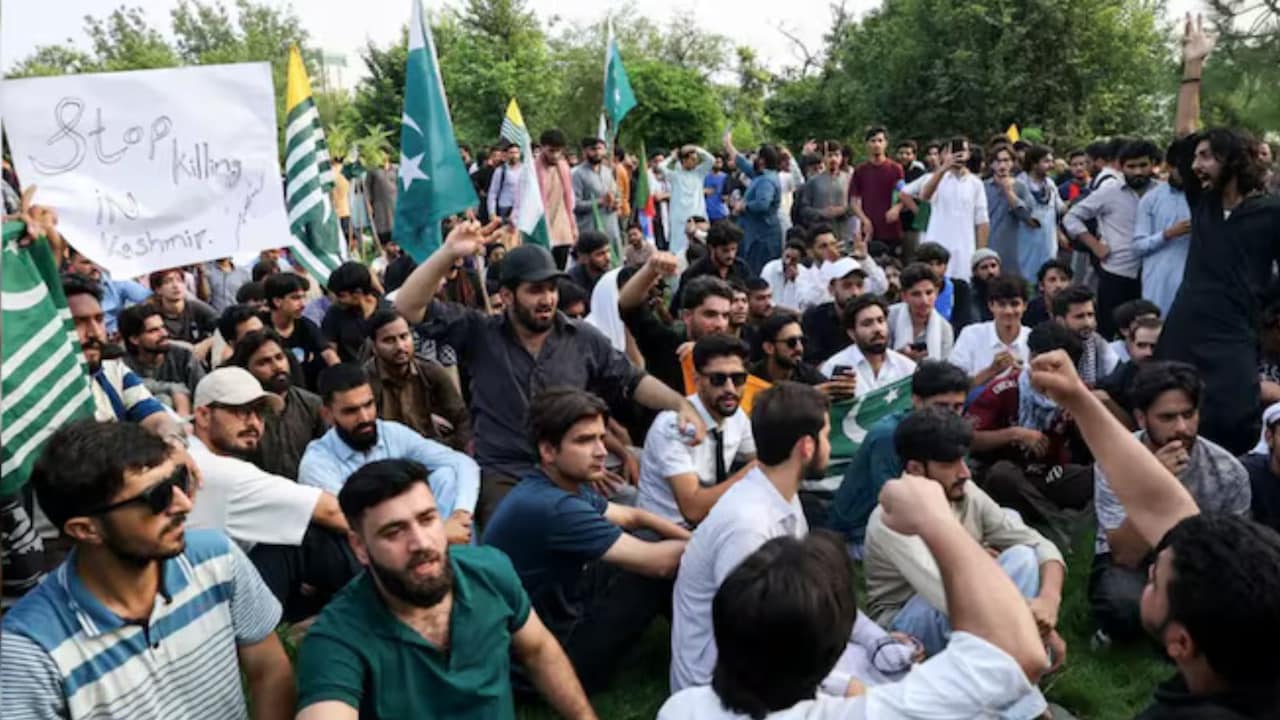
The mainstream punditry is having a field day hyperventilating over Islamabad postponing regional assembly polls in a handful of districts across Pakistan-occupied Kashmir. Standard media reports frame this move through a tired, predictable lens: a state buckling under civil unrest, panicked authorities scrambling to contain violent street protests, and a sudden administrative pause to restore public order.
It is a superficial narrative designed for casual consumers who prefer clean heroes and villains over messy structural realities. Anyone tracking statecraft knows that administrative suspensions of this magnitude are rarely born out of sudden panic. They are calculated cooling-off periods designed to blunt organized resistance, fracture activist coalitions, and preserve institutional dominance without firing another live round.
Let us look past the superficial shock value and dismantle the lazy consensus.
The Mirage of Democratic Breakdown
The prevailing assumption across global news desks is that postponing voting in seven constituencies of Poonch and Sudhnoti's Pallandri signals a severe institutional failure for the ruling setup. Analysts point to widespread demonstrations spearheaded by groups like the Joint Awami Action Committee, shouting about rigged refugee seats and structural underrepresentation, as proof that the regime is losing its grip.
This reading misreads the operational playbook entirely.
I have watched administrative systems absorb localized riots, civilian pushback, and coordinated strikes across contested peripheries. When a ruling apparatus abruptly halts an electoral phase after pushing through two prior rounds—rounds that conveniently netted the federal incumbent a comfortable majority of 24 seats—they are not retreating. They are consolidating.
Think of it as a pressure-release valve on an industrial boiler. If you force an election through active kinetic zones where civil resistance has crossed the threshold of lethality, you risk creating permanent martyrs, permanently delegitimizing the resulting legislature, and inviting unmanageable international exposure. By hitting pause on specific high-friction districts, the state shifts the battlefield from chaotic streets back to the quiet, predictable corridors of backroom arbitration.
The Mechanics of Structural Control
To understand why this delay is a masterclass in containment rather than a retreat, you must look at how power is actually distributed in the territory. The local legislative framework is structurally bound to Islamabad's federal machinery via institutional weightings like the Kashmir Council, headed directly by the federal chief executive.
The contested 12 refugee seats—parachuted into the electoral math from populations residing outside the immediate region—have always functioned as an external steering mechanism. Critics scream about rigging, but treating these mechanisms as anomalies misses the point: they are the core design. They ensure that local demographic defiance can always be mathematically neutralized by external blocs loyal to the federal center of gravity.
When phase one and phase two secure 24 seats for the ruling Pakistan Muslim League-Nawaz, the arithmetic of governance is already effectively settled. The remaining districts slated for postponement represent high-noise, low-compliance zones. Forcing a vote there right now would only amplify dissenting voices within the assembly walls. By freezing the contest, the establishment denies protestors a localized political platform while retaining total control over the legislative outcome.
The Flawed Premise of Outside Intervention
Another favorite trope of international commentary is the idea that external diplomatic pressure or regional friction will force a sudden democratization of the administrative process. This is wishful thinking divorced from geopolitical history.
Regional governance structures in disputed peripheries do not operate on standard Westminster democratic principles. They operate on national security calculus. Every administrative decision, from constituency demarcations to election schedules, is filtered through the prism of strategic depth and territorial stabilization. Expecting the system to willingly yield to grassroots agitation without a fundamental structural collapse is a category error.
The Joint Awami Action Committee has mobilized unprecedented crowds, shifting the baseline of public defiance. But street mobilization, absent an independent economic or institutional alternative, hits a hard ceiling against a state apparatus willing to absorb civil friction indefinitely.
Stop viewing the postponement as an administrative embarrassment. It is a calculated tactical stall designed to let the tear gas clear, wear down organizational momentum, and permit the political machinery to quietly lock in its gains on its own terms.
POK Election Row Explodes | Staggered Polls Trigger Rigging Allegations | Pakistan | News18
This video provides an overview of the ongoing political disputes and rigging allegations surrounding the staggered electoral process in Pakistan-occupied Kashmir.
http://googleusercontent.com/youtube_content/1