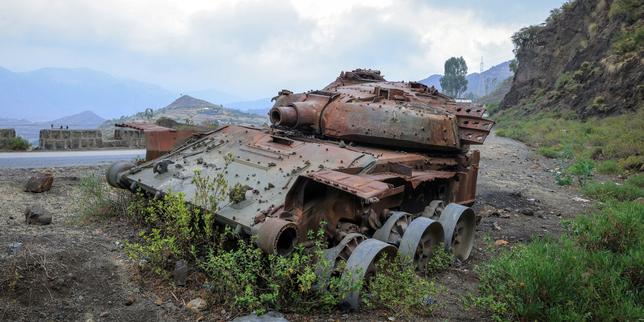
The lazy consensus in mainstream foreign correspondence treats every flare-up in the Afar region as a localized tactical rebound, a messy byproduct of an incomplete peace agreement. Analysts sit in air-conditioned European think tanks, mapping out supply lines to Djibouti and shaking their heads over the fragility of African federalism. They report on skirmishes between federal troops and Tigrayan forces as if they are watching a delayed replay of a match that ended years ago.
They are missing the structural reality entirely.
This is not a border dispute over scrubland or a petty revenge match for past atrocities. The recurring clashes bleeding across the Tigray-Afar frontier are symptoms of a systemic failure in how modern states manage internal ethnic federalism under economic strangulation. When centralized states run out of liquidity, fiscal patronage collapses. When fiscal patronage collapses, peripheral regions stop negotiating and start mobilizing.
The Myth of the Frozen Conflict
Foreign desks love the phrase "fragile peace" because it excuses lazy reporting. It implies that a treaty signed in Pretoria somehow put a permanent lid on institutional pressures, and that any subsequent violence is just a violation of the rules by bad actors.
This perspective ignores how power actually operates in the Horn of Africa. Peace treaties in deeply fractured nations are rarely resolutions; they are temporary balance-sheets where warlords, regional elites, and federal commanders calculate their depreciation. I have watched organizations pour millions into tracking troop movements while completely ignoring the macroeconomic metrics driving young men back into militias. When local currency devaluation destroys agricultural supply chains, joining a regional defense force or a federal auxiliary isn't an ideological choice. It is the only viable employment sector left.
Imagine a scenario where a government attempts to service foreign debt while simultaneously maintaining a bloated, multi-ethnic security apparatus on empty municipal coffers. The math does not work. Concessions break down at the margins first, and the Afar region—sitting awkwardly astride the trade artery to the Red Sea—becomes the pressure valve for every unaddressed grievance in the federation.
Dismantling the Geographic Fallacy
The mainstream narrative frames the Afar clashes as an incursion, a violation of territorial sovereignty by Tigrayan units pushing eastward. This framing is deliberately engineered to fit a neat legalistic template that international bodies prefer. It casts the federal government as the aggrieved defender of order.
Look closer at the logistics. The terrain here is a punishing theater of arid salt flats and jagged escarpments where conventional military doctrines go to die. Armies do not fight here for territorial expansion; they fight for supply dominance and economic leverage. Control over transport corridors means control over survival.
When regional forces clash in Afar, they are fighting for the jugular of the national economy. To reduce this to a simple story of ethnic hostility is to ignore the structural incentives created by a state that has centralized political control while decentralizing economic ruin. The federal deployment of drone warfare and heavy artillery does not restore stability; it deepens the alienation of populations caught between competing centers of coercion.
What Everyone Gets Wrong About the Solution
International diplomats keep prescribing the same tired remedy: more dialogue, more power-sharing agreements, more institutional tweaking. They believe that if you write a better constitution or seat more representatives around a mahogany table in Addis Ababa, the bullets will stop flying.
This is professional delusion.
Power-sharing pacts only work when there is a growing economic pie to distribute. When growth stalls and inflation eats away at the urban middle class and rural poor alike, elite power-sharing merely becomes a cartel agreement on how to carve up a shrinking carcass. Every faction knows that the moment they disarm, their rivals will seize the administrative apparatus to starve them of resources.
The real question is not how to enforce a fragile ceasefire. The question is how long an administrative model based on ethnic federalism can survive when the center lacks the fiscal capacity to buy off regional powerbrokers.
Stop treating these clashes as anomalies. They are the new baseline. Until international observers stop looking at African conflicts through the lens of moral melodrama and start analyzing them as brutal exercises in fiscal survival, their predictions will keep failing. The lines in the Afar dust are not being drawn by ideology. They are being drawn by bankruptcy.