Conservation has a massive public relations problem, and it thrives entirely on the narcotic comfort of the tidy island success story.
Whenever wildlife agencies drop a handful of endangered marsupials onto an offshore sanctuary stripped clean of foxes and feral cats, the media immediately drafts the obituary for extinction. Ten years later, triumphant headlines echo the exact same script: species liberated, population explodes, entire island occupied. Cue the applause. Cue the institutional grant renewals. Cue the self-congratulatory back-slapping at the next international biodiversity summit.
It is a deeply comforting illusion. It is also an ecological catastrophe waiting to happen.
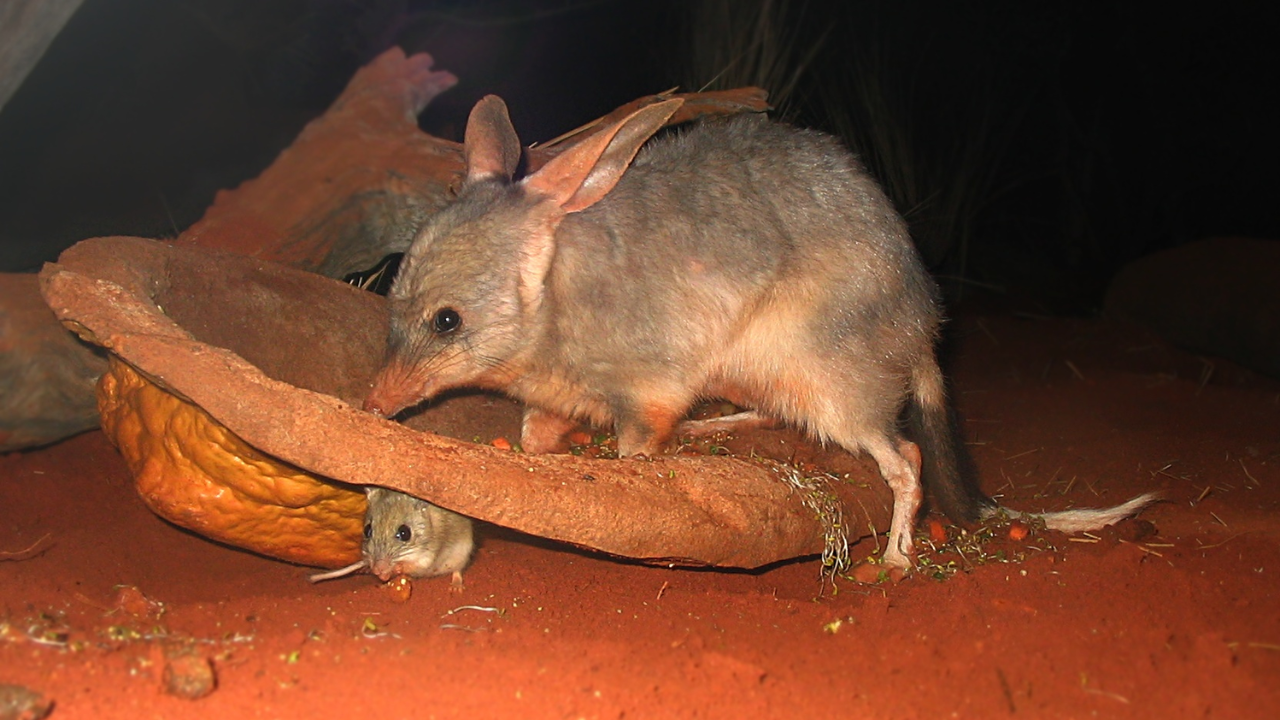
I have spent two decades watching conservation budgets evaporate into vanity projects that substitute raw population arithmetic for actual ecological health. When a native species like the greater bilby is parachuted onto a predator-free island and proceeds to overrun every square inch of terrain within a decade, people call it a triumph. They are mistaking a demographic pulse for functional stability.
Let us examine what actually happens when you remove top-down pressure, cut all natural mortality checks, and hand a prolific burrowing omnivore an unsecured buffet in a closed container.
The Oversaturation Trap and the Fallacy of Exponential Growth
The standard consensus surrounding historical island introductions treats exponential growth as proof of concept. If numbers go straight up, the system must be working. Right?
Wrong. Exponential population growth in a closed, predator-free bubble is not a sign of a healthy ecosystem. It is a textbook symptom of an ecological time bomb.
When you strip out apex predators and natural mortality checks, you do not restore nature. You create an open-air laboratory for unchecked overpopulation. Bilbies are industrial-grade diggers. A single animal can turn over multiple tons of soil annually, creating micro-habitats, shifting seed banks, and altering soil chemistry. That mechanical disturbance is beneficial in a vast, dynamic mainland matrix where dingoes, monitor lizards, and wedge-tailed eagles keep population densities tightly regulated.
Drop hundreds of them onto a restricted island ecosystem with zero top predators, and that same digging behavior transforms from an ecological service into a scouring pad. They strip the vegetative cover down to bare dirt, deplete invertebrate biomass, and outpace their own resource base within a handful of breeding cycles. By the time observers declare total occupancy, the island is often experiencing severe trophic degradation masked entirely by high headcounts.
Imagine a scenario where a billionaire buys a luxury penthouse, locks all the doors, fills the rooms with rabbits, and watches them breed until they eat through the drywall and chew the electrical wiring. You would not call that wildlife management. You would call it a quarantine hazard. Yet conservationists do precisely this, slap a green ribbon on the outcome, and demand a multi-million-dollar budget increase.
The Myth of Static Restoration
The core fallacy governing modern wildlife management is the static equilibrium fallacy. Conservationists operate as though nature is a museum diorama that can be frozen in a pristine state once the bad things like invasive predators and human development are scrubbed away.
Nature is never a diorama. It is a chaotic, volatile feedback loop driven by conflict, scarcity, and evolutionary adaptation.
When researchers point to a ten-year timeline of total island saturation, they are celebrating an unmanaged surge. In a truly functional ecosystem, population numbers fluctuate wildly in response to drought, predation, disease outbreaks, and resource scarcity. On an island containment zone, those natural brakes are systematically cut. The population spikes vertically, hits a hard biological ceiling, and then violently crashes into starvation or disease epidemics.
I have seen field stations panic when a dense marsupial population suddenly hits a wall, shedding body condition scores and wiping out endemic flora in a desperate feeding frenzy. The response is rarely an admission of flawed design. Instead, managers scramble to implement artificial culling or supplementary feeding, turning a supposed wild sanctuary into an expensive, high-maintenance wildlife petting zoo.
If your conservation model requires permanent human intervention to keep the animals from eating themselves out of house and home, you have not restored a species. You have built a cage with a better ocean view.
The Data Blind Spot and Species Chauvinism
Let us scrutinize the metrics used to evaluate these projects. Headcounts. Litter sizes. Spatial distribution maps. These are vanity metrics. They measure presence, not persistence.
When an island is fully occupied by a single reintroduced species, biodiversity indices often plummet across every other taxonomic group. Ground-nesting birds lose their breeding sites to relentless soil churn. Rare endemic flora gets devoured, uprooted, or trampled. Soil compaction changes hydrological runoff patterns, altering microclimates for native insects and reptiles.
By hyper-focusing on one charismatic poster child, biologists ignore the collateral damage inflicted on the broader biological community. It is species chauvinism disguised as science. We privilege the cute, furry excavator because it plays well in fundraising brochures, while the silent collapse of less photogenic invertebrates, fungi, and plants goes completely undocumented and unstudied.
Critics of my stance often argue that isolated islands are necessary arks, genetic safety deposit boxes against mainland extinction. And they are right, up to a point. Stashing populations on offshore islands makes sense as an emergency triage measure when a species is seconds away from absolute annihilation.
Here is the bitter downside of my own contrarian argument: without these offshore arks, several critically endangered Australian mammals would already be extinct. I concede that point entirely. Captive breeding and island sanctuaries buy time when options are exhausted.
However, buying time is not the same as solving the crisis. Treating the emergency insurance policy as the final destination is where conservation loses its moral and scientific compass.
Dismantling the Institutional Rescue Complex
Why do entrenched institutions cling so desperately to the island saturation myth? Because structural nuance does not fund government grants or secure philanthropic endowments.
Telling donors that you successfully stabilized a fluctuating predator-prey dynamic across a complex mainland region does not yield a clean, punchy headline. Telling them you dropped a handful of mammals on an island and watched them conquer every acre in ten years creates an instant hero narrative. It is marketing dressed up as rigorous ecology.
The direct consequence of this marketing-driven model is a dangerous complacency trap. Agencies pour millions into localized island spectacles while mainland habitat destruction continues unchecked across thousands of square kilometers. It creates the comforting illusion that we can simply warehouse Australia's unique fauna on offshore theme parks while the rest of the continent burns, clears, or degrades.
We need to stop celebrating population booms in artificial vacuums as permanent victories. They are temporary holding actions that mask deeper systemic failures.
The Unconventional Blueprint for True Recovery
If we are serious about genuine species recovery, we have to abandon the island enclosure mindset and confront the messy, dangerous reality of mainland rewilding.
Here is how you actually fix the approach:
- Reintroduce the Full Ecological Assembly: Stop removing predators just to make life easy for herbivores. If you reintroduce prey species without restoring the top-down evolutionary pressure that shaped them, you engineer an ecological disaster in slow motion. Bring back dingoes, quolls, and raptors in strict tandem with prey releases.
- Redefine Core Success Metrics: Measure ecosystem resilience, soil recovery rates, and multi-species biodiversity indices instead of counting how many individuals of a single species occupy a fixed perimeter.
- Embrace Controlled Volatility: Allow populations to crash when resources dip. Stop panicking and rushing in with supplemental feed every time a harsh season tests a species' evolutionary resilience. Natural selection is not a design flaw; it is the core operating system.
- Audit the Sanctuary Trap: Treat island reserves strictly as emergency quarantine bunkers, not as templates for long-term ecological health or self-sustaining wilderness models.
Stop funding the vanity metrics. Stop pretending that an overcrowded island represents a functioning ecosystem.
Let the animals fight for survival in a complete wilderness, or admit that you are running a zoo.