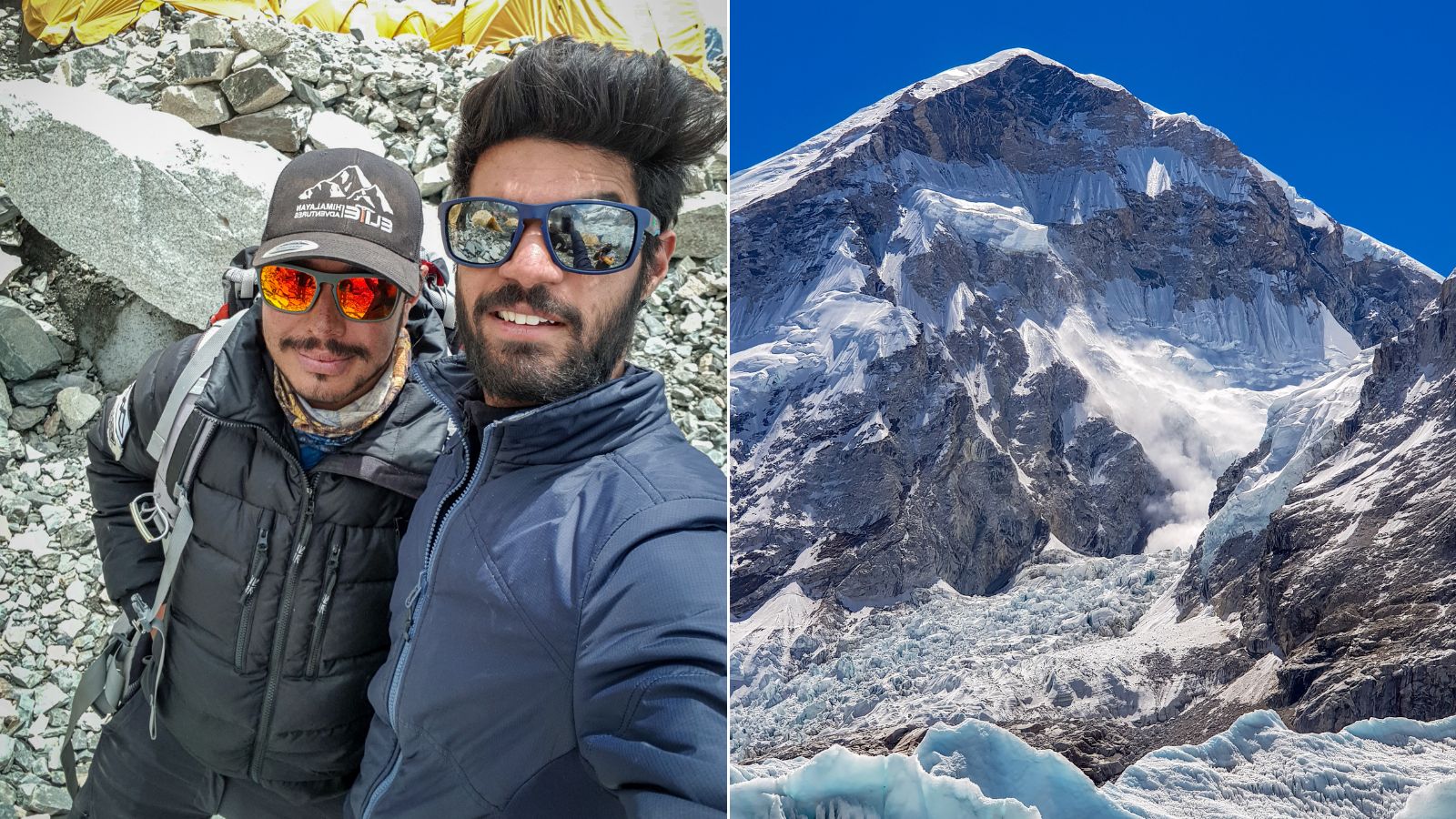
The global media loves a predictable headline. When Kami Rita Sherpa summited Mount Everest for the 32nd time, the press rolled out the standard copy-paste narrative. They called it an superhuman feat. They praised the triumph of the human spirit. They treated a highly commercialized, mechanized logistics operation as if it were an isolated act of pure, heroic mountaineering.
They are missing the entire point. Recently making headlines recently: Structural Mechanics of Omani Visa Liberalization.
The obsession with counting Everest summits has become a distraction from what the mountain actually is today: a high-altitude conveyor belt. To look at a 32nd summit and see only a sports record is to misunderstand modern Himalayan climbing entirely. The real story isn't the number. It is how the globalization of extreme tourism turned the world’s highest peak into a corporate infrastructure project, and why the record itself is a byproduct of labor, not leisure.
The Mirage of the Solo Hero
Western media routinely framing Sherpa guides through the lens of individual athletic achievement is a fundamental misunderstanding of their role. Elite western climbers chase records for sponsorships, lectures, and personal brand building. For high-altitude workers, repeating the climb is a job description. More details into this topic are detailed by Lonely Planet.
Every spring season, the Khumbu Icefall is transformed. It is not conquered by lone explorers battling the elements. It is engineered. A specialized team known as the Icefall Doctors fixes miles of ropes and places hundreds of aluminum ladders across gaping crevasses. After them, teams of workers carry hundreds of pounds of oxygen cylinders, tents, fuel, and luxury food up to four distinct high-altitude camps.
By the time a commercial client or a veteran guide steps onto the route, the mountain has been heavily modified.
To call every ascent a new world record ignores the structural reality of how these climbs happen. Kami Rita Sherpa is a legendary figure with unmatched physiological adaptation and deep mountain wisdom. No one disputes his grit. But his 32 summits are the result of leading a massive logistics company, Seven Summit Treks, which requires him to be on the mountain every single year to manage client safety and route fixing.
He isn't breaking records for the sake of the history books. He is going to the office.
Dismantling the PAA Premise: Is Everest Still a Challenge?
Go to any search engine and look at what people ask about mountaineering. You will find variations of the same naive questions.
- How hard is it to climb Everest?
- Can an average person climb Mount Everest?
The premise of these questions is flawed because it assumes "climbing" means what it did in 1953. Today, the difficulty of Everest is no longer a question of pure mountaineering skill. It is a question of financial capitalization and risk tolerance.
If you have $50,000 to $100,000, a massive supply of supplemental oxygen, a personal guide to cook your meals, pitch your tent, and physically clip your carabiner into a continuous safety line from Base Camp to the summit, the nature of the challenge changes completely. You are no longer navigating an alpine environment. You are being escorted through it.
The real danger today is not the mountain itself, but the crowds created by this exact business model. The bottlenecks at the Hillary Step happen because the barrier to entry has shifted from competence to capital. When hundreds of under-prepared climbers are funneled up a single fixed line during a narrow weather window, a manageable environment becomes a death trap.
The Economics of Risk
I have spent years watching how corporate structures manage risk in extreme environments. In any other industry, if a operational process resulted in a predictable percentage of fatalities every single fiscal year, the board would shut it down. On Everest, it is considered part of the marketing budget. The danger is the product.
The commercialization of the Himalaya has created a bizarre economic paradox:
| The Illusion | The Reality |
|---|---|
| Alpine adventure seeking unknown frontiers. | Highly predictable, repetitive industrial labor. |
| Strict environmental stewardship. | Massive accumulation of waste, human feces, and abandoned gear. |
| Equal opportunity heroism. | Deep structural stratification between Western paying clients and local labor. |
The Western elite who pay for these expeditions like to believe they are participating in a pure sport. But true sport implies an unpredictable outcome based on skill. When you look at the mechanics of a modern commercial expedition, the variable isn't the climber's ability to read the weather or find a route; the variable is whether their respiratory system can handle the altitude even with high-flow oxygen, and whether their guide can drag them down if they collapse.
The Toxic Legacy of the Numbers Game
This fixation on numbers—whether it is thirty-two summits, the fastest time to climb all fourteen 8,000-meter peaks, or being the youngest person to do so—is actively ruining the culture of mountaineering.
To achieve these hyper-inflated stats, teams have to rely on massive environmental intervention. Helicopters are now routinely used to fly equipment, food, and even clients to higher camps to bypass dangerous sections or speed up acclimatization. Helicopters have even been used to drop gear directly to Camp 2 to save labor.
This isn't climbing. It is aviation-assisted tourism.
The pursuit of these metrics forces local workers into higher-risk scenarios. To ensure a record-breaking run or a 100% summit success rate for a commercial group, guides must push through marginal weather windows that traditional Alpinists would avoid. The pressure to deliver on the financial investment overrides traditional mountain caution.
The Uncomfortable Truth
If we want to respect the mountains and the people who live among them, we have to stop treating Everest like an Olympic stadium where the only thing that matters is the scoreboard.
The media needs to stop celebrating repetitive ascents on a fully fixed route as the pinnacle of human achievement. The real pinnacle of mountaineering is happening away from the cameras, on unclimbed technical faces in Patagonia, Alaska, or the remote valleys of Pakistan, where climbers move fast, carry their own gear, leave no trace, and accept the absolute reality of self-rescue.
Kami Rita Sherpa’s career is a masterclass in survival, endurance, and business acumen within a grueling industry. He deserves respect as a titan of high-altitude logistics. But stop calling his 32nd summit a sports record. It is a monument to an industry that has successfully commodified the top of the world.
Stop looking at the summit count. Start looking at the machine required to make that count possible.