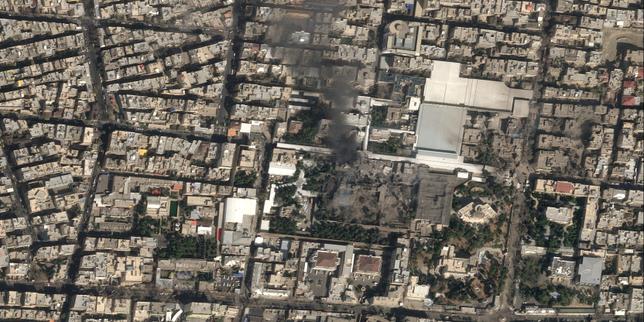
The explosions rocking the suburbs of Tehran and the coastal fringes of Bushehr are not just tactical strikes. They represent a fundamental shift in the theater of Middle Eastern warfare where the distance between "deterrence" and "total war" has shrunk to the speed of a supersonic cruise missile. While initial reports from local agencies like Fars emphasize the immediate chaos of these blasts, the real story lies in the calculated dismantling of Iran’s defensive architecture. This is a cold, mechanical process designed to strip away the illusion of sovereignty before a single ground troop ever crosses a border.
Late-night reports indicate that the primary targets were not merely symbolic. Instead, the focus has shifted toward the integrated air defense systems (IADS) and the logistical hubs that facilitate Iran’s regional reach. By targeting Bushehr, a city synonymous with Iran’s nuclear ambitions and maritime power, the aggressors are signaling that no site is off-limits. This isn't just about blowing things up. It is about demonstrating that the most sophisticated sensors in the Iranian arsenal are effectively blind against modern electronic warfare and low-observable munitions.
The Architecture of a Modern Air Strike
To understand the current crisis, one must look past the smoke and focus on the electromagnetic spectrum. Before a missile hits a warehouse in Tehran, a digital war is won. Modern strikes utilize a "lead-in" phase where electronic attack aircraft saturate local radar with false targets or simply "white out" the screens of operators. This creates a window of vulnerability that allows strike packages to penetrate deep into sovereign airspace.
In the recent sorties, we see evidence of a multi-tiered approach.
- SEAD Operations: Suppression of Enemy Air Defenses. This involves high-speed anti-radiation missiles that home in on the very radar signals Iran uses to find its targets.
- Cyber Interdiction: Disrupting the communication links between command centers and mobile missile batteries. If the battery commander cannot get authorization to fire, the most advanced missile in the world is just an expensive lawn ornament.
- Kinetic Impact: The final stage where GPS-guided and inertial-navigation munitions find their coordinates with a margin of error measured in centimeters.
The strikes in Bushehr are particularly telling. As the site of Iran's only operational nuclear power plant, any kinetic activity in this district carries immense weight. Even if the reactor itself is untouched, hitting the surrounding military infrastructure sends a clear message: we can get close enough to touch the crown jewels whenever we choose.
The Bushehr Dilemma and the Nuclear Shadow
Bushehr has always been a paradox. It is a civilian energy project draped in military significance. By striking the neighborhoods nearby, the attackers are exploiting a grey zone in international law. They are not hitting a nuclear facility—which would trigger global condemnation and potential environmental catastrophe—but they are hitting the "shield" that protects it.
When you remove the shield, the target feels the cold. This psychological pressure is often more effective than the physical damage. Iranian leadership now faces a brutal choice. They can retaliate, potentially triggering a much larger "Phase 2" operation that could target energy infrastructure or leadership hubs, or they can absorb the blow and risk looking weak to their internal hardliners and regional proxies.
History shows that "limited strikes" rarely stay limited. The friction of war, as Clausewitz described it, ensures that something always goes wrong. A stray missile hits a civilian apartment block. A pilot is downed and taken captive. These are the sparks that turn a surgical operation into a regional conflagration.
Why Domestic Narratives in Tehran are Shifting
Inside Iran, the state media apparatus is working overtime to minimize the optics of the damage. By framing the explosions as "intercepted threats" or "minor incidents," the government attempts to maintain a sense of order. However, the ubiquity of smartphones and social media makes this narrative difficult to sustain. Residents in Tehran didn't just hear the explosions; they felt them in their floorboards.
The disconnect between official reports and the physical reality on the ground creates a vacuum of trust. In an authoritarian system, that vacuum is dangerous. It leads to panic-buying, currency devaluation, and a sense of impending doom that can be as destabilizing as the bombs themselves. We are seeing the early stages of a "war of nerves" where the objective is to make the Iranian public believe their government is incapable of protecting the capital.
The Technical Reality of Iranian Interception Claims
Iran often touts its domestically produced missile defense systems, like the Bavar-373, as being superior to the Russian S-300 or even the American Patriot. The reality seen over the skies of Tehran suggests otherwise. While these systems are capable against older generation drones or subsonic missiles, they struggle against the complex, layered attacks seen in the last 24 hours.
$V_{intercept} < V_{threat}$ is the simple math that haunts Iranian commanders. If the incoming munition is faster, stealthier, or more numerous than the interceptors, the defense fails. It is a saturated environment where the cost of defense is exponentially higher than the cost of the attack.
The Failure of Regional Deterrence
For years, the prevailing wisdom was that Iran’s "ring of fire"—its network of proxies in Lebanon, Iraq, and Yemen—would prevent a direct strike on the Iranian heartland. The logic was that any attack on Tehran would result in thousands of rockets raining down on the aggressor's cities.
That logic has been shredded.
The aggressors have gambled that they can hit the head of the snake without the body reacting in time. This suggests a massive intelligence failure on the part of the Iranian security apparatus, or a calculated decision by regional players to step back and watch the fireworks. If the proxies don't move now, they prove themselves to be paper tigers. If they do move, they risk being drawn into a war they cannot win.
The Intelligence Gap
How did the strike packages bypass the early warning stations? This is the question being asked in the halls of the Iranian Revolutionary Guard Corps (IRGC). It points to a deep-seated intelligence penetration. To execute a strike of this complexity, the attackers needed more than just satellite imagery. They likely had real-time data on:
- Shift changes at radar stations.
- Maintenance schedules of surface-to-air missile batteries.
- Physical locations of mobile launchers that are supposed to be hidden.
This level of granularity suggests that human intelligence (HUMINT) is playing as big a role as high-tech hardware. The Iranian regime is likely looking for a mole within its own ranks, which leads to internal purges and further weakens the military structure at the exact moment it needs to be most cohesive.
Logistics and the Long Game
A single night of bombing is a headline. A sustained campaign is a strategy. The true test of these strikes will be whether they continue over the next 72 hours. If this was a "one-and-done" operation, it was a warning. If the sorties continue, it is the start of a systematic campaign to neuter Iran’s regional influence for a generation.
The logistical strain on Iran to repair these sites is immense. Sanctions have made it difficult to source high-end electronics and specialized parts for radar arrays. Every dish that is destroyed and every control center that is burned represents a capability that may not be replaced for years. The attackers aren't just destroying buildings; they are deleting decades of military investment.
The Role of Non-State Actors
In the chaos, watch the borders. Groups that have long been suppressed by the Iranian state may see this as an opportunity. When the central government is distracted by high-altitude threats, internal security often thins out. We have seen historical precedents where external strikes served as the catalyst for internal uprisings or intensified guerrilla warfare in peripheral provinces.
The Global Energy Fallout
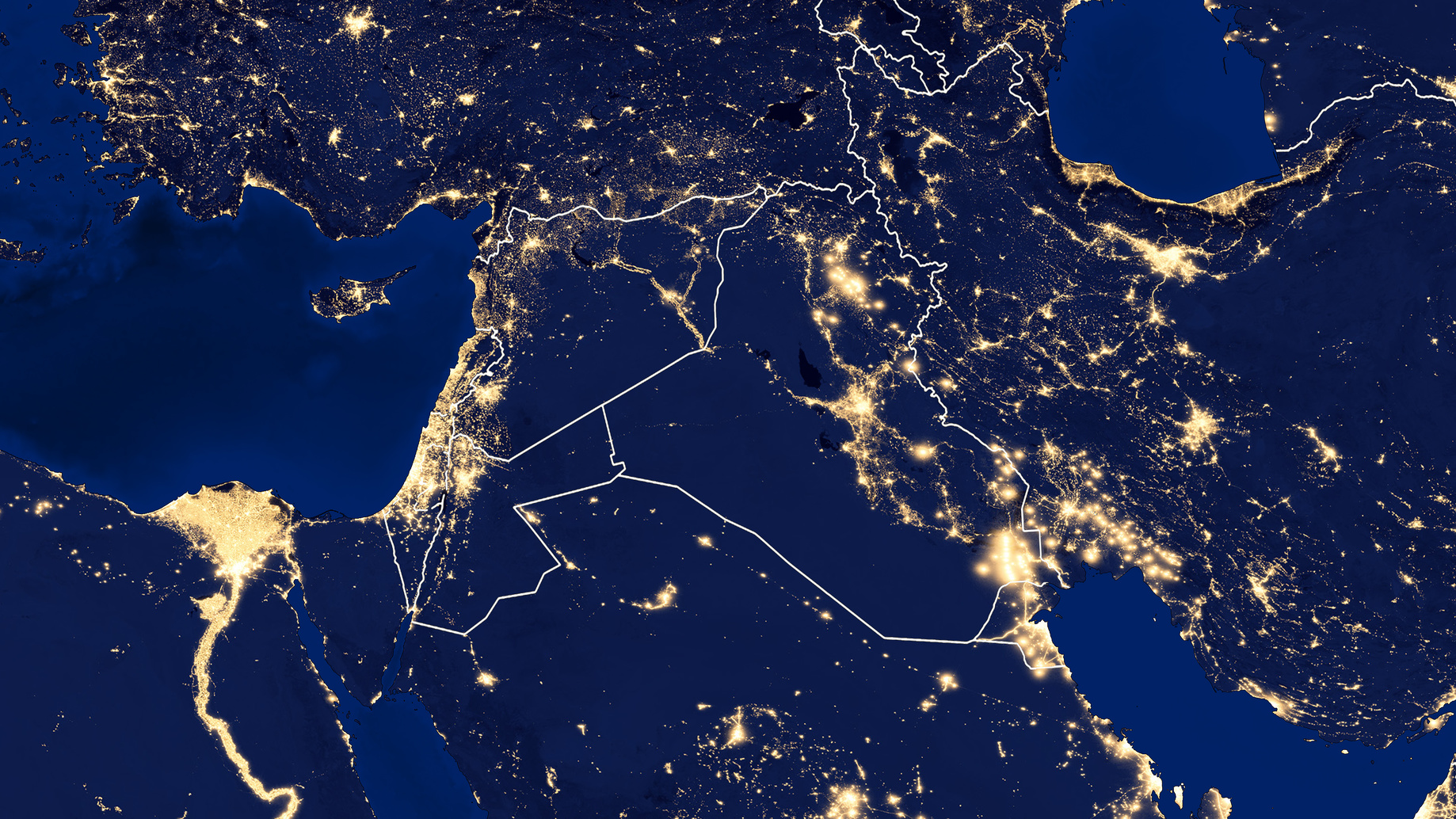
The proximity of the strikes to Bushehr and the broader Persian Gulf region has sent tremors through the oil markets. This is the "energy premium" that the world pays for instability in the Middle East. While the world's transition to alternative energy continues, the global economy is still tethered to the flow of crude through the Strait of Hormuz.
Any escalation that leads to Iran attempting to close the Strait—their "nuclear option" of conventional warfare—would send oil prices into a triple-digit spiral. This is the leverage Tehran still holds. They can effectively hold the global economy hostage if they feel their back is against the wall. The attackers are betting that Iran won't pull that trigger because it would mean the total destruction of their own economic lifeline. It is a high-stakes game of chicken played with millions of barrels of oil.
The Illusion of Proportionality
International law often speaks of "proportionality," but in the theater of high-end kinetic operations, the term is functionally meaningless. An attack is either successful or it is not. If the goal is to stop a missile program, you don't hit one factory; you hit the entire supply chain.
The strikes we are seeing are disproportionate by design. They are meant to overwhelm, to confuse, and to demoralize. The "why" behind the topic is clear: the era of shadow boxing is over. The parties involved have moved past the point of proxy skirmishes and into the realm of direct, high-consequence confrontation.
The smoke over Tehran will eventually clear, but the strategic landscape has been permanently altered. The myth of Iranian invulnerability, carefully cultivated through decades of rhetoric and military parades, has been punctured by the reality of modern precision warfare.
The next move belongs to Tehran, but their options are narrowing by the hour. They can choose to escalate and risk everything, or they can stand down and accept a new reality where their skies are no longer their own. Neither path offers a clean exit. The explosions heard in the early hours of the morning were not just the sound of collapsing buildings; they were the sound of a regional order breaking apart.
If you are waiting for a return to the status quo, you aren't paying attention. The status quo was buried in the rubble of the first strike. The only question left is how much more will be lost before the dust settles. Keep your eyes on the satellite feeds and the internal security reports. The real war is just beginning.