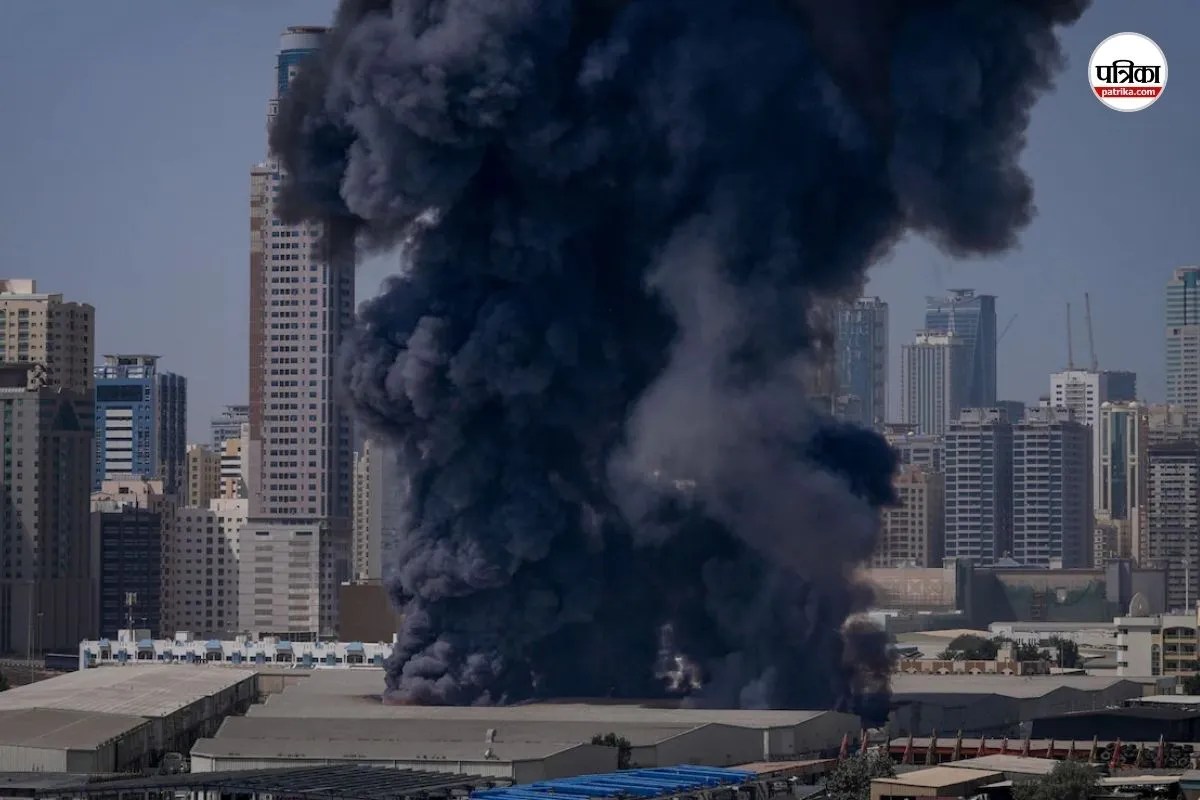
The current kinetic escalation between Iran and the United States represents more than a regional security crisis; it is a systemic shock to global energy liquidity and institutional risk appetite. When explosions occur in Tehran and reported casualties reach the magnitude of 800, the geopolitical premium on every barrel of oil and every equity unit is instantly recalculated. This transition from "gray zone" maneuvering to overt hostilities triggers a specific sequence of economic and diplomatic protocols that dictate the immediate future of emerging markets, particularly India.
The Triad of Conflict Transmission
To understand the velocity of the current crisis, one must analyze the three distinct channels through which a localized explosion in Iran transforms into a global economic contraction.
1. The Energy Supply Chain Compression
Iran’s proximity to the Strait of Hormuz—a chokepoint responsible for the transit of approximately 21% of global petroleum liquids—creates an immediate supply-side risk. Unlike previous localized conflicts, an attack on Tehran signals a total-war posture.
- Risk Premium Inversion: Markets do not just price in current lost production; they price in the total cessation of Persian Gulf exports.
- Logistics Latency: Tankers currently in transit must re-route or wait for naval escorts, adding 10–15 days to delivery cycles and inflating insurance premiums by 300-500%.
- The Strategic Petroleum Reserve (SPR) Fallacy: While the US and its allies can release reserves, these are finite buffers designed for temporary disruptions, not a sustained regional war.
2. Capital Flight and the Flight to Quality
The "share bazar dhadam" (market crash) mentioned in contemporary reports is the result of algorithmic and institutional de-risking. In a high-uncertainty environment, the Cost of Equity rises sharply.
- Foreign Institutional Investor (FII) Outflow: Emerging markets like India are often treated as "high-beta" assets. When systemic risk spikes, FIIs liquidate Indian holdings to cover margin calls in their home markets or to move into US Treasuries and Gold.
- Currency Depreciation: As capital exits, the Rupee faces downward pressure. Because India imports over 80% of its crude oil, a weaker currency combined with higher oil prices creates a "double-tax" on the Indian economy.
3. Diplomatic and Humanitarian Logistics
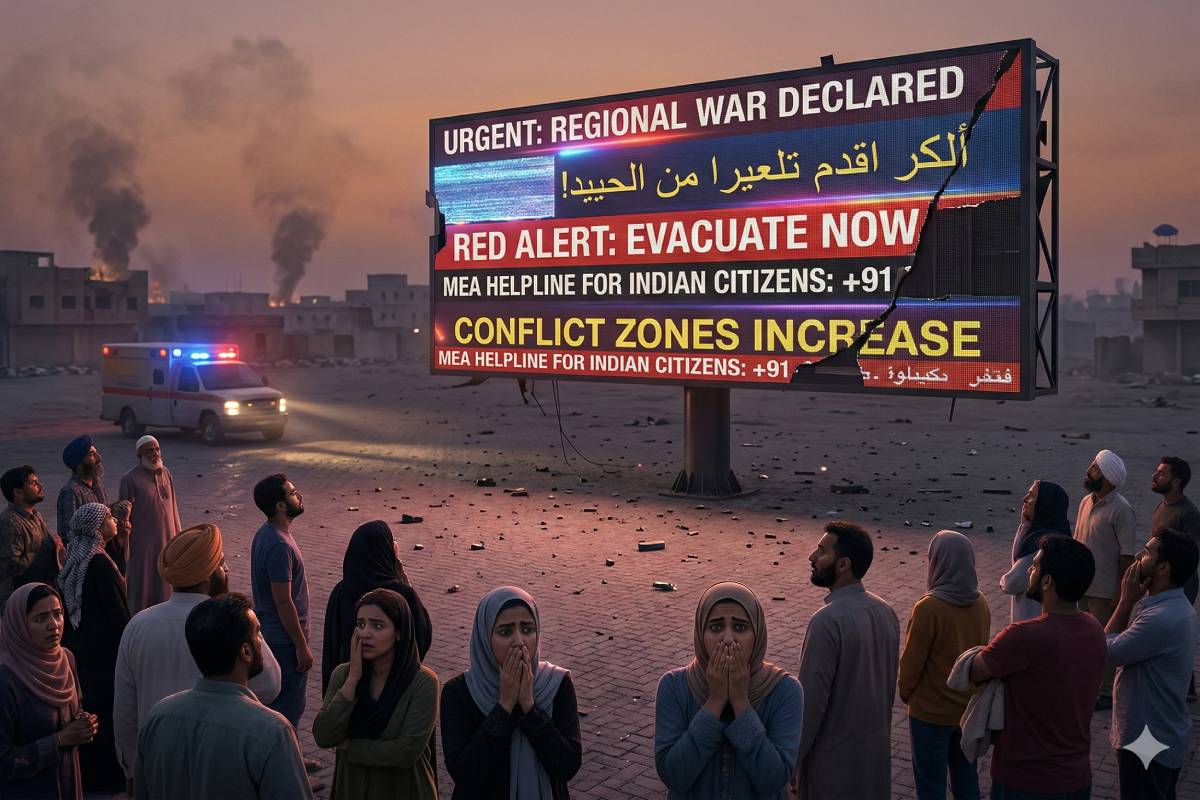
The establishment of a "Control Room" by the Indian government is a mandatory operational response to the Expatiate Density Variable. With millions of Indian nationals residing in the Middle East, the logistical challenge of a mass evacuation is a primary constraint on India’s foreign policy maneuverability.
The Economic Mechanics of a 800-Casualty Event
The reported figure of 800 deaths suggests a high-intensity strike on either a dense urban center or a critical military-industrial complex. In the logic of escalation, casualty counts of this magnitude force a "Retaliation Minimum."
Iran’s response function is typically divided into three tiers:
- Proxy Activation: Utilizing the "Axis of Resistance" to strike US assets in Iraq, Syria, and the Levant.
- Maritime Interdiction: Mining the Strait or seizing commercial vessels.
- Direct Missile Volleys: Targeting regional energy infrastructure (e.g., desalination plants or refineries in neighboring states).
Each of these tiers increases the Geopolitical Risk Multiplier, ensuring that the market "bottom" remains elusive until a clear de-escalation signal is received.
India’s Strategic Vulnerability Framework
India sits at a unique intersection of this conflict. Unlike the US, which is a net energy exporter, India's growth is tethered to Middle Eastern stability.
The Fiscal Deficit Feedback Loop
The primary mechanism of damage to the Indian state is the Current Account Deficit (CAD).
- For every $10 increase in the price of a Brent crude barrel, India's CAD widens by approximately $12-15 billion.
- This widening forces the Reserve Bank of India (RBI) to intervene to stabilize the Rupee, depleting foreign exchange reserves.
- Higher energy costs translate into "Imported Inflation," forcing the RBI to maintain or raise interest rates, which further suppresses domestic industrial growth.
The Control Room Operational Logic
The Ministry of External Affairs (MEA) uses these control rooms as data-aggregation hubs. Their function is not merely communication but Risk Stratification:
- Tier 1: Immediate danger zones (Tehran, border regions).
- Tier 2: Critical infrastructure hubs where Indian labor is concentrated.
- Tier 3: Transit corridors for evacuation.
The logistical nightmare of the 1990 Kuwait airlift serves as the baseline for these operations. However, the scale of current Indian involvement in the Gulf makes a repeat of that success significantly more complex under active missile fire.
Quantitative Analysis of Market Panic
When the stock market "crumbles," it is rarely a rational assessment of long-term value and almost always a liquidity crisis.
| Sector | Impact Vector | Sensitivity (1-10) |
|---|---|---|
| Aviation | ATF prices and airspace closures | 9 |
| Logistics | Increased freight and insurance costs | 8 |
| Banking | Rise in NPA risks due to industrial slowdown | 7 |
| Paint/Chemicals | Crude derivatives as raw material | 9 |
| IT Services | Reduced discretionary spend by global clients | 4 |
The second-order effect is the Wealth Effect Contraction. As retail investors see their portfolios decline, domestic consumption drops. This creates a feedback loop where the economy slows down not just because of oil, but because of a psychological shift toward capital preservation.
Structural Limitations of De-escalation
The difficulty in halting this specific escalation lies in the Assymmetry of Objectives. The US seeks to degrade Iran's nuclear and regional influence, while Iran views its "forward defense" (proxies and missiles) as existential necessities.
- The Information Gap: In the early hours of a strike, "800 deaths" may be an unverified or psychological warfare figure. However, in high-frequency trading, the perception of the number is more important than the reality of the number.
- The Policy Trap: If the US does not respond to Iranian counter-strikes, it loses deterrence. If it does respond, it enters a cycle of "attritional escalation" that could last months.
The global economy is currently ill-equipped for a sustained supply-side shock. Post-pandemic debt levels are high, and central banks have limited "dry powder" (interest rate cut capacity) to stimulate growth if inflation remains high due to energy costs.
Strategic Imperatives for Institutional Navigators
Investors and policy analysts must move beyond headline-watching and monitor the Credit Default Swap (CDS) spreads of regional sovereign debt. This provides a more accurate real-time assessment of war probability than news tickers.
The immediate priority for the Indian corporate sector is the stress-testing of supply chains against a 30-to-60-day disruption in the Persian Gulf. This includes identifying alternative sourcing for petroleum-based precursors and hedging currency exposure against a 75-85 range for the USD/INR.
In the event of a sustained blockade of the Strait of Hormuz, the "Gold-Oil Ratio" will become the primary metric for global value. Historically, gold outperforms during the onset of kinetic conflict, but its utility as a hedge diminishes if the conflict leads to a total breakdown in trade liquidity.
The move by the Indian government to establish a control room suggests they are preparing for a "long-tail" risk event rather than a short-term skirmish. This indicates a shift in the internal assessment of Middle Eastern stability from "tenuous" to "compromised."
Maintain a maximum liquidity posture. The current volatility is not a "dip" to be bought but a structural re-pricing of global risk. Wait for the stabilization of the Brent Crude forward curve before re-allocating to high-beta emerging market equities. The focus must remain on capital preservation until the "Retaliation Minimum" from the Iranian side has been exhausted and the extent of US kinetic commitment is clarified.