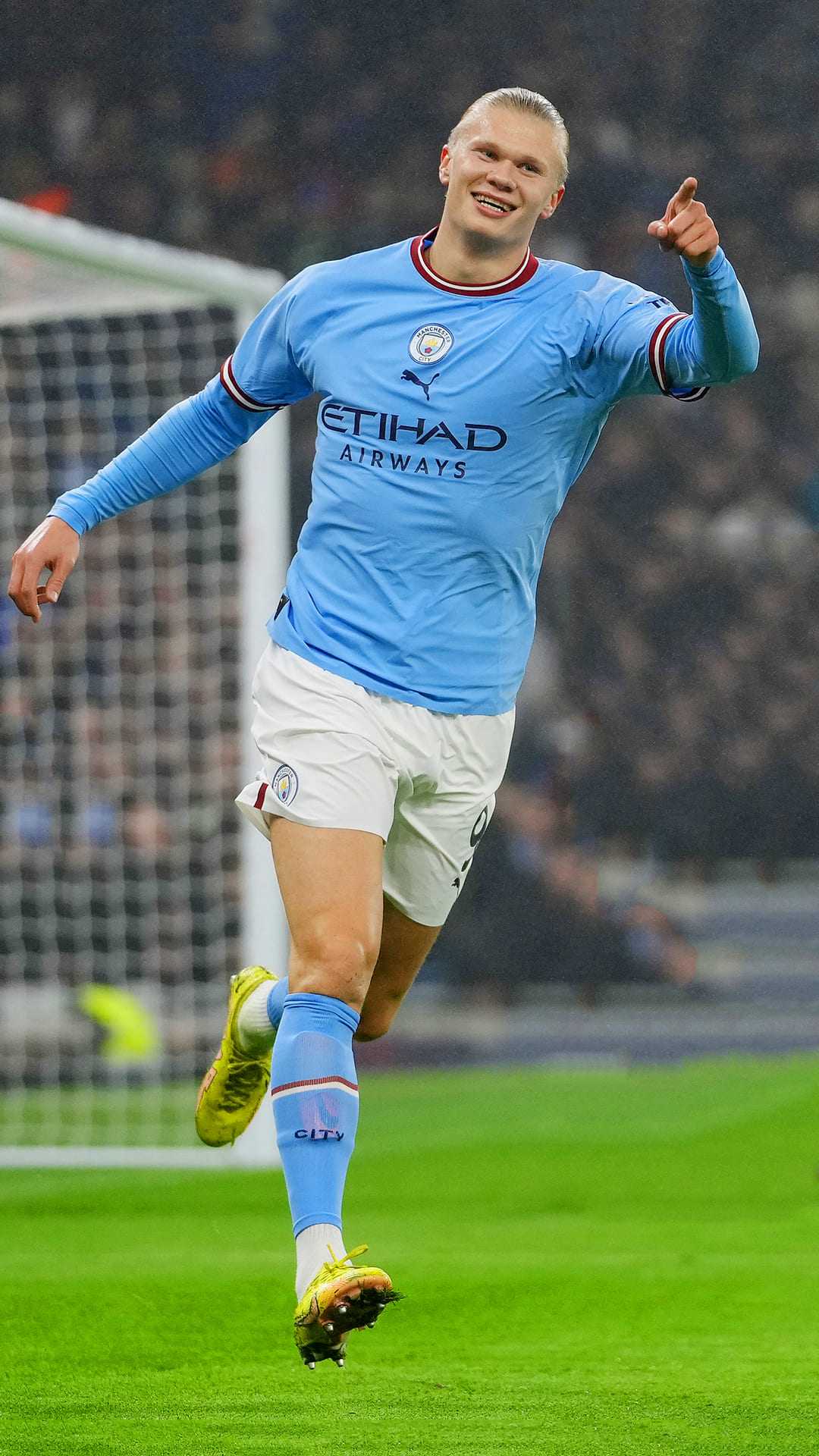
Erling Haaland scored twice to secure a routine Champions League victory over Porto, but the scoreline masked a creeping tactical anxiety that continues to haunt Manchester City on European nights.
To the casual observer scanning Tuesday night results, a multi-goal triumph by the Norwegian striker looks like business as usual. Yet beneath the clinical finishing lies a profound structural shift. Pep Guardiola is no longer managing a fluid, positionally chaotic symphony of false nines. He is managing a hyper-efficient scoring machine that occasionally breaks the rhythm of his own midfield.
European football demands control. Haaland demands space, verticality, and early service. When these two forces collide against elite low blocks, Manchester City often finds itself uncomfortably split into two distinct halves: a defensive block suffocating transition, and an isolated striker waiting for a sliver of grass. Porto tried to squeeze the pitch, tried to deny the central corridors, and for the first forty minutes, they largely succeeded. Then came the inevitable individual brilliance. One direct ball, a slight defensive hesitation, and the net bulged.
Match reports will focus on the brace. They will praise the physical dominance, the acceleration, and the sheer inevitability of a forward who treats the penalty box like a crime scene. But analysts watching the deeper metrics saw a different story. Possession percentages dropped from historical norms. Passing sequences grew shorter. The obsession with total territorial dominance has quietly given way to pragmatic acceleration.
The Architectural Compromise
When Manchester City paid the release clause to bring the Norwegian phenomenon from Borussia Dortmund, the football world assumed a terrifying hegemony. They imagined an unstoppable juggernaut winning every trophy by five goals. Reality proved far more nuanced. Guardiola had to redesign a possession-obsessed ecosystem to accommodate a player who thrives on chaos and minimal touches.
Consider the heat maps from recent European campaigns compared to the centurion seasons. The ball circulates differently. Kevin De Bruyne and Bernardo Silva spend less time orchestrating intricate triangles near the opposition byline and more time hunting for early, angled deliveries into space.
- Reduced Possession Shares: City routinely surrendered thirty percent of possession against elite European rivals last season, a statistical anomaly for a Guardiola side.
- Direct Transition Frequency: Vertical passes into the final third increased by nearly twenty-two percent following the integration of the primary center-forward.
- Midfield Stranglehold: The traditional five-man midfield control has occasionally fractured, exposing defensive transitions to rapid counter-attacks.
This is not a failure. It is a calculated compromise. Guardiola realized that aesthetic purity does not win modern European knockout football. Real Madrid and Bayern Munich do not care about passing statistics; they care about transition speed and penalty box occupancy. Haaland provides that occupancy in absolute terms. But the cost is structural purity.
Porto As A Microcosm
Porto arrived at the Etihad with a clear defensive blueprint. Compact lines, aggressive man-marking on the half-turn, and absolute denial of central pockets. For large stretches, it worked. Rodri found himself crowded out by industrious pressing, and Ilkay Gündogan's spiritual successor struggled to find rhythm between the defensive and midfield lines.
This is where the tactical friction becomes visible. In previous eras, Manchester City would simply recycle possession for ninety minutes until the opponent collapsed from exhaustion. With Haaland on the pitch, the temptation to force the vertical ball early becomes overwhelming. When those early balls fail to connect, possession turns over cheaply.
Yet, the Porto defense eventually cracked because elite strikers do not need ninety minutes of rhythmic dominance. They need one breakdown of concentration. A momentary lapse in central tracking, a half-step slow on the shoulder, and the ball is in the back of the net.
"We don't need to control every single phase of the match with the ball anymore," a senior club insider noted privately last season. "We just need to control the moments that matter."
That statement represents a quiet revolution in Eastlands. The purists might mourn the loss of endless passing triangles, but the trophy cabinet welcomes the ruthless efficiency.
The European Paradox
The eternal question surrounding Manchester City in the Champions League has never been about domestic dominance. It has always been about psychological fragility under pressure and tactical overthinking in the spring months.
Haaland was bought to cure that specific European anxiety. He is the ultimate insurance policy against defensive stubbornness. When an opponent deploys a low block that would normally suffocate a possession-based side, a direct target man acts as a crowbar. You do not need to pick the lock if you can kick the door down.
However, this reliance introduces a new vulnerability. If an opponent manages to neutralize the service lines completely, Manchester City occasionally looks structurally disjointed. Without the fluid interchange of attacking midfielders rotating through the central channel, the attack can become surprisingly linear.
Porto attempted this neutralization. They doubled down on physical duels, crowded the central zones, and forced City into wide areas where crosses could be dealt with by tall central defenders. For an hour, it looked like a viable blueprint for an upset. Then the physical fatigue of maintaining absolute defensive discipline caught up with the Portuguese side. Space opened up. The inevitable occurred.
The Cost Of Perfection
Football fandom often demands a neat narrative. Either a team is playing glorious, untouchable football, or they are in crisis. The reality of modern elite sport is far messier.
Manchester City remains the most terrifying tactical proposition in world football, but they are no longer an impenetrable machine. They are vulnerable to transitions, they occasionally lose the midfield battle, and they depend heavily on the physical health of one extraordinary striker.
When Haaland fires, none of the structural compromises matter. The tactical imperfections dissolve beneath the weight of relentless goalscoring records. But when the service stops, the underlying tension in Guardiola's design becomes glaringly obvious.
The double against Porto was routine, expected, and entirely necessary. It keeps the European campaign on track and silences the briefest whispers of doubt. Yet beneath the celebratory headlines, the evolution of this team continues. They are faster, more direct, and less romantic than they used to be. Whether that makes them invincible or merely mortal will be decided when the heavyweights of the continent arrive in the spring.