The outrage machine is running right on schedule.
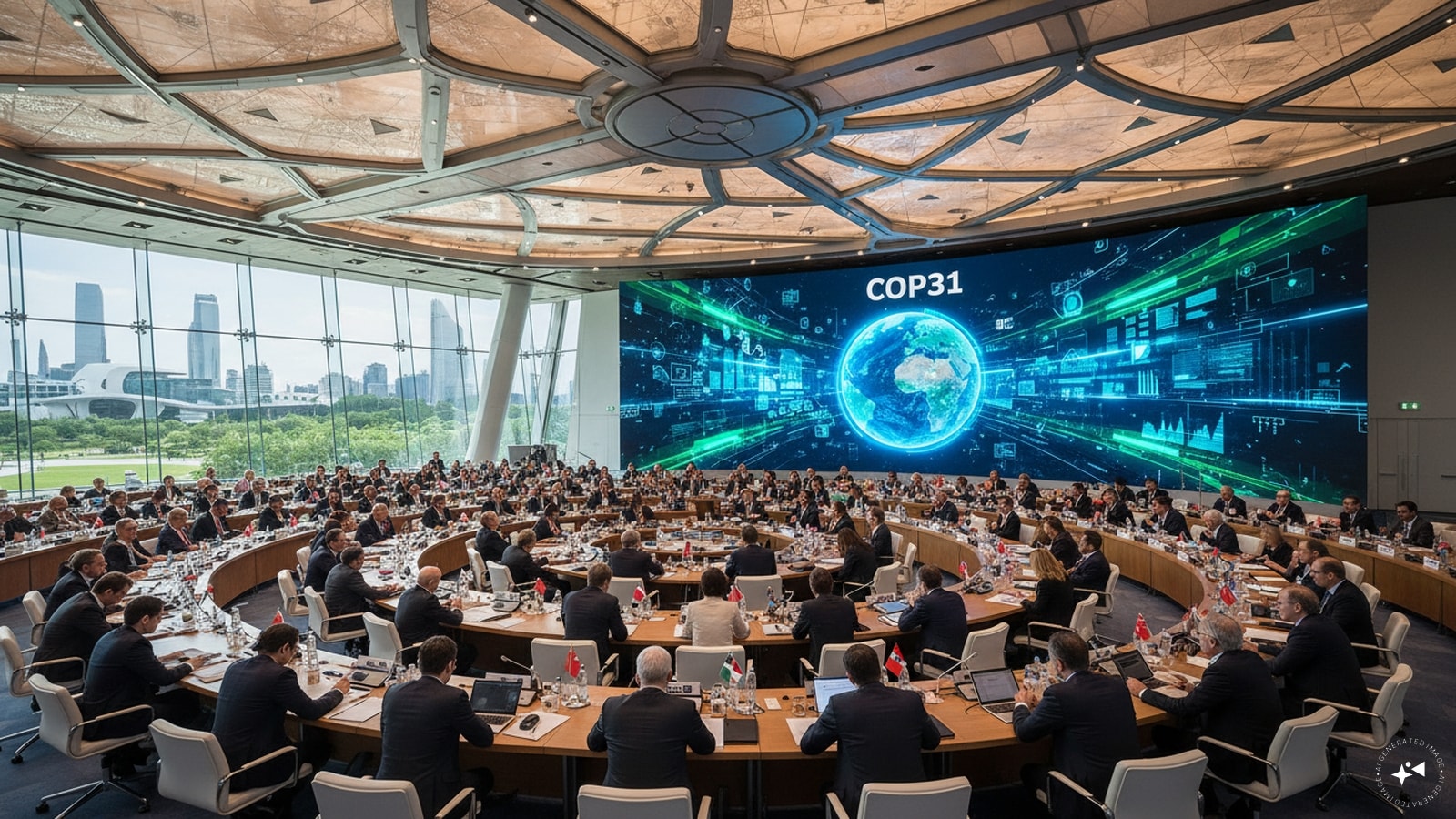
Headlines are screaming about diplomatic betrayal because the COP31 final draft coming out of Turkiye omits the two magic words that climate activists treat like a religious incantation: "fossil fuels." Pundits are calling it a step backward. NGOs are issuing breathless press releases mourning the death of global ambition.
They are completely missing the point.
Obsessing over whether a non-binding United Nations communique includes the phrase "fossil fuels" is the ultimate distraction. It is diplomatic theater disguised as progress. For three decades, negotiators have spent thousands of hours, burned millions of gallons of jet fuel, and exhausted entire forests of political capital arguing over the exact phrasing of paragraphs that carry zero legal enforcement mechanisms.
Meanwhile, global coal consumption hit record highs, oil demand kept climbing, and the actual physical infrastructure of the global economy barely flinched at the poetry written in Paris, Dubai, Baku, or Belem.
If stripping those two words out of the text breaks the deadlock and shifts the conversation from symbolic word games to actual industrial deployment, Turkiye’s negotiators didn't fail. They finally grew up.
The Fetishization of UN Text
Let’s look at how these summits actually operate behind closed doors.
I have sat in enough policy briefings and energy transition war rooms to watch smart people blow millions of dollars chasing regulatory ghosts. The pattern is always identical. Delegates lock themselves in windowless convention center rooms for two weeks. They argue until 4:00 AM over the difference between "phase out," "phase down," and "transition away from."
When COP28 in Dubai finally included the phrase "transitioning away from fossil fuels in energy systems," the climate establishment threw a victory parade. The press declared a historic turning point.
What happened in the real world after that historic text was inked?
Nothing that wasn't already dictated by economics and physics. Capital did not suddenly flee hydrocarbons because a UN PDF used the right noun. Developing nations did not cancel baseload power projects because a plenary session applauded a compromise sentence. Oil majors did not rewrite their capital expenditure budgets based on Paragraph 28 of a consensus document.
Under the UNFCCC framework, decisions require consensus. Consensus means every single petrostate, coal-dependent emerging economy, and small island nation has an effective veto. When you force nearly 200 countries with violently opposing economic survival instincts to agree on a single text, you get one of two outcomes:
- Gridlock: The summit collapses without a deal, killing momentum on finance, adaptation, and technology transfer.
- Linguistic Gymnastics: Negotiators invent vague, toothless language filled with loopholes ("unabated," "in a just, orderly and equitable manner") that allows everyone to claim victory while changing nothing.
By refusing to turn the COP31 draft into a hostage negotiation over two specific words, the presidency bypassed the most predictable trap in international diplomacy.
Supply-Side Bans vs. Demand-Side Reality
The prevailing consensus among environmental journalists is simple: if you don't name the enemy, you can't defeat it. They argue that omitting "fossil fuels" gives oil and gas producers a free pass to expand production indefinitely.
This reflects a fundamental misunderstanding of how energy markets work.
You cannot regulate away supply while demand remains inelastic. Imagine a scenario where every major producer voluntarily agreed tomorrow to halt new oil and gas exploration, simply because a UN text demanded it. If global demand for steel, cement, fertilizer, aviation fuel, and grid-scale electricity hasn't been replaced by scalable, cost-competitive alternatives, prices would skyrocket overnight. Energy poverty would explode across the Global South. Voters in Western democracies would immediately throw out any government responsible for $12-a-gallon gasoline and rolling blackouts, replacing them with administrations that would tear up every climate pledge on day one.
We saw a preview of this dynamic during the 2022 European energy crisis. The moment natural gas supplies tightened, countries that prided themselves on green leadership fired up mothballed coal plants and scrambled to sign long-term LNG contracts. Survival always beats ideology.
Energy transitions are not driven by supply-side scolding. They are driven by demand-side substitution.
Why Economics Beats Declarations
Look at where real decarbonization is actually happening:
- Solar and Wind: Deployment is surging not because of COP communiques, but because levelized costs dropped below coal and gas in most major markets.
- Electric Vehicles: Adoption is accelerating in China and Europe because battery pack prices fell below $100 per kilowatt-hour and industrial policy created manufacturing scale.
- Grid Storage: Utility-scale batteries are eating into peak gas turbine market share because lithium-iron-phosphate chemistry made them profitable without massive subsidies.
None of these breakthroughs required a UN resolution naming coal, oil, or gas. They succeeded because engineers, manufacturers, and capital allocators built better, cheaper mousetraps.
When negotiators spend all their oxygen fighting over whether to name fossil fuels in a final cover decision, they starve the agenda items that actually move capital: cross-border grid interconnection standards, concessional finance de-risking mechanisms for emerging markets, and methane abatement protocols.
The Geopolitical Hypocrisy Nobody Mentions
There is another reason the outrage over Turkiye's draft rings hollow. It ignores the glaring double standard baked into international climate politics.
Wealthy Western nations built their industrial bases, middle classes, and military dominance on two centuries of unrestricted fossil fuel combustion. Today, many of those same countries are the loudest voices demanding that a UN text explicitly call for the end of hydrocarbons—even as several of them quietly approve new domestic drilling licenses, expand LNG export terminals, or import energy-intensive manufactured goods from Asia while bragging about their own falling domestic emissions.
Meanwhile, countries like India, Indonesia, Nigeria, and Turkiye itself are trying to lift hundreds of millions of people into modern living standards. To do that, they need massive amounts of cheap, reliable energy right now.
Turkiye sits at a unique geopolitical crossroads. It is a major energy transit hub, an industrializing economy, and a diplomatic broker straddling Europe, the Middle East, and Central Asia. Hosting COP31 put Ankara in a position where forcing a binary, Western-style "anti-fossil fuel" declaration would have alienated half the world and guaranteed a diplomatic trainwreck.
Instead, shifting the textual focus toward implementation, grid modernization, clean tech financing, and industrial transition creates a tent big enough for both climate-vulnerable nations and energy-producing economies to stay at the table.
Addressing the Questions Everyone Is Asking
When news of the draft broke, search engines lit up with predictable questions. Most of them are built on flawed premises. Let’s dismantle them.
Does omitting "fossil fuels" violate the Paris Agreement?
No. Read the actual text of the 2015 Paris Agreement. The words "fossil fuels" do not appear anywhere in it. Not once. The Paris Agreement is built around temperature targets (well below 2 degrees Celsius, pursuing 1.5 degrees) and Nationally Determined Contributions (NDCs). It is deliberately technology-neutral regarding how countries achieve their emissions reductions. Treating the inclusion of the phrase as a legal requirement of the Paris framework is pure historical revisionism.
Won't oil and gas companies use this draft to justify endless expansion?
Oil and gas companies do not make multi-billion-dollar final investment decisions based on UN press releases. They make them based on forward price curves, shareholder return mandates, cost of capital, and domestic tax regimes. ExxonMobil, Aramco, and Shell didn't stop producing after COP28 mentioned fossil fuels, and they won't start a reckless drilling spree because COP31 didn't.
Does this mean the 1.5-degree target is dead?
Let’s be brutally honest: the 1.5-degree target was already on life support based on physical carbon budgets and current global emissions trajectories, regardless of what any COP draft says. Pretending that inserting two words into a diplomatic text keeps 1.5 alive is magical thinking. Staying as close to that threshold as physically possible requires tripling renewable capacity, fixing permitting bottlenecks, and scaling nuclear and carbon capture—not winning a semantic battle in a plenary hall.
The Real Bottlenecks Killing the Energy Transition
If climate advocates want to get angry about what is missing from international climate negotiations, they should stop policing vocabulary and start attacking the physical and financial chokepoints actually slowing down decarbonization.
Right now, trillions of dollars in clean energy projects are stuck in limbo. Not because of a lack of UN slogans, but because of mundane, unglamorous failures:
- Interconnection Queues: In the United States and Europe alone, thousands of gigawatts of wind, solar, and battery storage projects are waiting years just to plug into the electrical grid. We don't have a generation problem; we have a transmission line problem.
- Cost of Capital in the Global South: Developing economies hold the greatest potential for solar and wind growth, yet they pay two to three times more in interest rates to finance clean energy projects than developers in Germany or California. Currency risk and political instability kill deals before the first shovel hits the ground.
- Critical Mineral Supply Chains: You cannot build an electrified economy without copper, lithium, nickel, cobalt, and rare earth elements. Opening a new mine takes an average of 16 years. Environmental groups that demand the immediate end of fossil fuels while simultaneously suing to block every new lithium and copper mine are actively sabotaging the transition they claim to want.
- Heavy Industry Heat: Electricity can power cars and light industry, but making primary steel, clinker for cement, and ammonia for fertilizer requires extreme heat and chemical feedstocks that renewables alone cannot easily replace at scale today.
A COP document that forces developed nations to guarantee sovereign loan backstops for grid expansion in Africa and Asia is worth ten thousand declarations condemning fossil fuels.
The Downside of the Pragmatic Approach
To be clear, stripping explicit fossil fuel language out of global agreements carries a real risk.
Words set norms. In international law and corporate governance, soft-law declarations eventually harden into hard-law regulations, central bank stress tests, and institutional investor mandates. When major asset managers evaluate long-term stranded asset risk, they look at diplomatic consensus signals to gauge regulatory direction.
Removing the phrase gives petrostates rhetorical cover. It allows bad-faith actors to argue that the international community is backing away from the trajectory established at COP28, potentially slowing down domestic policy reforms in countries that use UN commitments to justify unpopular energy subsidies cuts at home.
That is a legitimate vulnerability. Ignoring it would be naive.
However, the solution to that vulnerability isn't holding the entire multilateral process hostage over two words. The solution is shifting the battleground from broad, unenforceable cover texts to binding, sector-specific coalitions.
What Smart Leaders Should Do Instead
If you are a policymaker, corporate executive, or investor watching the fallout from COP31, stop reading the cover text like tea leaves. Follow the capital and the physics instead.
- Watch the NDCs, Not the Cover Decision: The real teeth of the UN process sit inside individual countries' Nationally Determined Contributions and domestic legislation—things like the EU Carbon Border Adjustment Mechanism (CBAM), industrial subsidies, and national grid mandates. That is where compliance costs become real.
- Invest in the Bottlenecks: Stop chasing crowded, low-margin solar installation plays and look at high-voltage transformers, grid-enhancing technologies, industrial heat pumps, and permitting software. The energy transition is now a supply-chain and infrastructure business.
- Measure Outcomes, Not Pledges: Track gigawatts connected to the grid, tons of methane abated, and actual capital deployed in emerging markets. Ignore any organization whose primary metric of success is how strongly worded their press release is.
Diplomatic communiques are written for politicians and journalists. Power plants, transmission lines, and battery factories are built by engineers and financiers.
Stop cheering for better adjectives. Start demanding more megawatts.