The coffee at the corner diner in Akron is still lukewarm when Elena walks in at five in the morning. For twenty-two years, she has wiped down these same laminate countertops, listening to the morning news blur through a tiny, wall-mounted radio. Lately, the anchors do not talk about a recession anymore. They talk about a ghost. A phantom heat that refuses to dissipate from the global machinery.
To economists in glass-walled offices in Frankfurt and New York, the phenomenon is charted on crisp, glowing monitors as sticky inflation, persistent labor demand, and an annualized global growth rate defying every pessimistic forecast scrawled on a whiteboard two years ago. The world economy is running hot.
To Elena, it means the price of eggs went up thirty cents again last Tuesday, and her distributor just added a fuel surcharge that makes her stare quietly at the invoice for ten long seconds before signing it.
We built a system designed to idle, and then we forgot how to take our foot off the gas.
To understand why the global economic engine is burning past its redline, we have to look past the Federal Reserve’s interest rate dials and examine the raw human machinery underneath. For the past decade, conventional wisdom taught us that post-pandemic recovery would follow a predictable curve. A sharp rebound, a period of tightening, a cooling off, and a return to the quiet baseline of the 2010s—an era of low inflation, cheap capital, and predictable rhythms.
Instead, something entirely unprecedented happened. The patient refused the medicine. Or rather, the patient discovered that the medicine tasted like stagnation, and preferred the fever.
Consider Elena’s nephew, Marcus. At twenty-four, he works remote logistics coordination from a spare bedroom that smells perpetually of instant noodles and cold brew. Marcus represents a seismic shift in labor dynamics that central bankers failed to model in their spreadsheets. He is part of a generation of workers who realized during the Great Resignation that time has a cash value, and mobility is a weapon. Even as borrowing costs climbed to levels not seen in a generation—with benchmark interest rates hovering stubbornly in restrictive territory—labor markets stayed remarkably stubborn.
Why aren't people losing their jobs en masse? Why isn't the cooling hammer of monetary policy breaking the labor anvil?
Because corporations learned a brutal lesson during the supply chain blockages of 2021 and 2022. They learned that hoarding labor is cheaper than replacing it. When you cannot get semiconductors, container ships, or truck drivers, you hold onto the people you have, even when demand dips slightly. This labor hoarding has created an invisible floor beneath consumer spending. People have jobs. People are spending money. And because they are spending money, businesses keep raising prices to protect margins. It is a self-sustaining feedback loop powered by human persistence.
The technical term for this is resilience. But resilience, when overextended, becomes stubbornness.
Walk down to the Port of Savannah or peer into the cavernous fulfillment centers humming across the Midwest. The lights never go out. Automated guided vehicles glide across polished concrete floors, guided by algorithms designed to optimize every millisecond of transit time. This is the structural side of the hot economy. Billions of dollars in capital expenditure, poured into automation, artificial intelligence integration, and nearshoring during the supply chain crises, have permanently raised the baseline productivity of global commerce.
We did not just recover from the shocks of the early 2020s. We upgraded our operating system.
When you upgrade the operating system of global capitalism while simultaneously pumping trillions of dollars into energy transition infrastructure—building gigafactories, retrofitting power grids, and securing critical minerals—you create an immense, unstoppable wave of fiscal stimulus that monetary policy alone struggles to tame. Central banks are trying to cool a house fire by blowing on it with a desk fan, while governments down the street are pouring gasoline on the lawn to fuel the green transition.
Both things are happening at the exact same time.
The International Monetary Fund recently adjusted its global growth projections upward, whispering what Wall Street has known for months: the anticipated hard landing was canceled. But a soft landing that stays hot feels an awful lot like flying too close to the sun without a parachute.
Inflation has retreated from its screaming peaks, yes. But it has settled at a plateau that feels heavy and alien to families accustomed to the thirty-year discount era of cheap Chinese manufacturing and zero-percent interest rates. The new normal is not normal at all. It is a high-pressure system.
Let us step back into the diner. Elena is wiping down the counter again, listening to a financial pundit declare that consumer resilience is the primary driver of current economic stability. She doesn't know what a primary driver is. She only knows that her property taxes doubled, her electricity bill looks like a phone number, and her regulars are tipping slightly less because their own mortgage resets are starting to bite.
This is the central paradox of our current economic moment. The macro numbers look triumphant, yet the micro experience feels like a perpetual endurance test.
We are living through the consequences of an economy that has decoupled from old gravity. Traditional economic models rely on equilibrium—the idea that what goes up must eventually balance out, that high interest rates will inevitably crush demand, throw millions out of work, and restore price stability through sheer pain. But what happens when the global consumer refuses to break? What happens when corporations have enough cash cushions to absorb higher borrowing costs without folding? What happens when the green energy transition demands continuous, non-negotiable capital investment regardless of what the Federal Reserve does on a Wednesday afternoon?
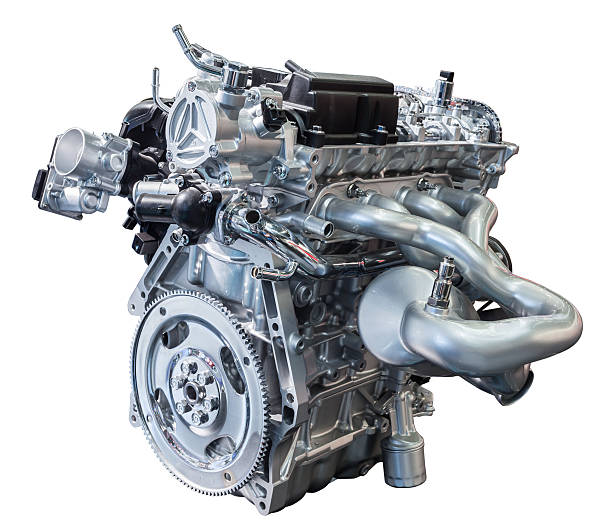
We find ourselves in uncharted territory. The engine is running hot, not because it is broken, but because it has been rewired to burn hotter, run faster, and demand more fuel than any model predicted.
The steam rises from Elena’s coffee mug, dissolving quietly into the fluorescent light of the early morning. Outside, delivery trucks rumble down the highway, their diesel engines throbbing in the cold dawn air, carrying goods to stores that will sell them to people who will pay for them, one way or another. The heat is on. And nobody knows how to turn down the thermostat without breaking the house.