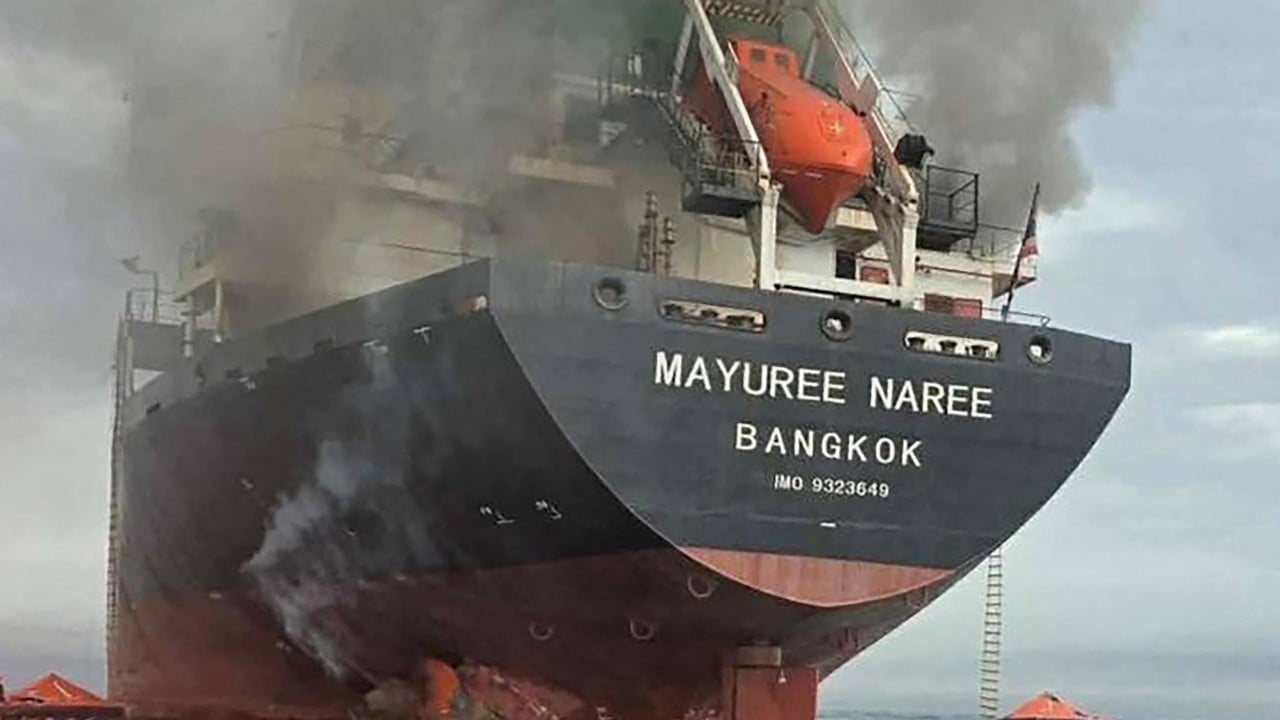
The sea is a thief that takes without asking, but usually, it plays by the rules of the wind and the tide. Families in the coastal provinces of Thailand understand this bargain. They know the risks of rogue waves or engine failure. What they weren't prepared for was the sudden, violent intrusion of a war they didn't start, occurring thousands of miles away from their quiet docks.
A week ago, three families in Thailand were planning for a homecoming. They were checking calendars and counting down the days until the True Confidence, a massive bulk carrier, docked and released its crew for well-earned rest. Instead of a reunion, these families received a phone call that shattered the mundane rhythm of their lives.
The news was a jagged edge. Three Thai crew members were dead. They weren't lost to a storm. They were killed when a missile, launched by Houthi rebels in Yemen, slammed into their vessel in the Gulf of Aden.
The Weight of an Unseen War
To understand the tragedy, you have to look past the geopolitical maps and the military briefings. Think about the kitchen table in a small home in Samut Prakan. There is a specific spot where a father usually sits. There is a favorite mug. There is a pile of mail waiting for him. These items are now artifacts. They are silent witnesses to a life that ended in a flash of heat and twisted metal on a ship that was simply trying to deliver cargo.
The global supply chain is often described as a series of spreadsheets and shipping lanes. It feels clinical. We talk about "disruptions" and "logistical challenges." But the reality is that the things we buy—the electronics in our pockets, the fuel in our cars, the grain in our bread—are moved by people who are increasingly being treated as collateral damage in a game of regional dominance.
The True Confidence was a Barbados-flagged, Liberian-owned ship. The crew was an international mosaic of workers from the Philippines, Vietnam, Sri Lanka, and Thailand. They had no stake in the conflict between the Houthis and the international coalition. They were just men doing a job.
A Flash in the Dark
Imagine the moment of impact. One second, you are monitoring a console or checking a pressure gauge. You are thinking about what you’ll eat for dinner or what you’ll say to your children on the next satellite call. The next second, the air is replaced by fire.
The Houthis claimed they targeted the ship because they believed it was American-owned, a retaliatory strike linked to the ongoing conflict in Gaza. It wasn't. Ownership had changed. The intelligence was wrong. But in the theater of modern asymmetric warfare, accuracy is often secondary to the message. The message was fear. The cost was paid in Thai, Filipino, and Vietnamese lives.
When the Thai government confirmed the deaths, the announcement was formal and somber. Officials promised compensation. They spoke of labor protections and insurance. But money is a poor substitute for a heartbeat. No amount of Thai Baht can replicate the sound of a husband’s key turning in the front door.
The Invisible Stakes of the Sea
Most people never think about the merchant mariner. They are the ghosts of the global economy. They spend months at a time suspended between horizons, enduring isolation and grueling shifts so that the rest of the world can enjoy the convenience of modern life.
We have become accustomed to a world where everything is available at the click of a button. We don't see the tension in the Red Sea. We don't see the rerouting of ships around the Cape of Good Hope, adding weeks to voyages and millions to costs. Most importantly, we don't see the terror of a bridge crew watching a drone approach on a radar screen, knowing they have no way to defend themselves.
This is not a story about logistics. It is a story about the vulnerability of the human element in an increasingly volatile world. The Gulf of Aden has become a gauntlet. For the Thai sailors who perished, it was a trap.
The Ripple Effect
The tragedy ripples outward from the deck of the burning ship. In Thailand, the maritime community is small and tight-knit. Every sailor knows someone who was on a high-risk route. Every mother watches the news with a knot in her stomach.
The government's response has been a mix of grief and caution. There are calls to reroute vessels, to provide better security, and to demand international accountability. But how do you hold a rebel group accountable when they operate outside the traditional bounds of diplomacy? How do you protect a slow-moving cargo ship from a ballistic missile?
The answers are complicated, buried under layers of international law and military strategy. But for the families in Thailand, the answers don't matter anymore. The only thing that matters is the silence in the house.
A Legacy of Salt and Steel
We often wait for a catastrophe to acknowledge the people who keep our world spinning. We wait for a bridge to collapse or a ship to be struck before we recognize the bravery inherent in the mundane. The three Thai crew members who lost their lives weren't soldiers. They didn't sign up for combat. They signed up to provide for their families, to build a future, and to see the world.
Their deaths are a reminder that no corner of the globe is truly isolated. A missile launched from a desert in Yemen can break a heart in a village in Thailand. We are all connected by these invisible threads of commerce and consequence.
As the True Confidence was towed toward safer waters, scarred and smoldering, it carried more than just cargo. It carried the shattered dreams of men who were almost home.
In the coming weeks, there will be ceremonies. There will be prayers at the local wat. The incense will rise, and the bells will ring, and people will speak of merit and the cycle of life. But when the smoke clears and the mourners go home, the sea remains. It is still there—vast, indifferent, and now, much more dangerous.
The next time you hold a product that traveled across an ocean, take a moment to think about the hands that moved it. Think about the eyes that scanned the horizon. Think about the three men who never got to sit in their favorite chairs again.



