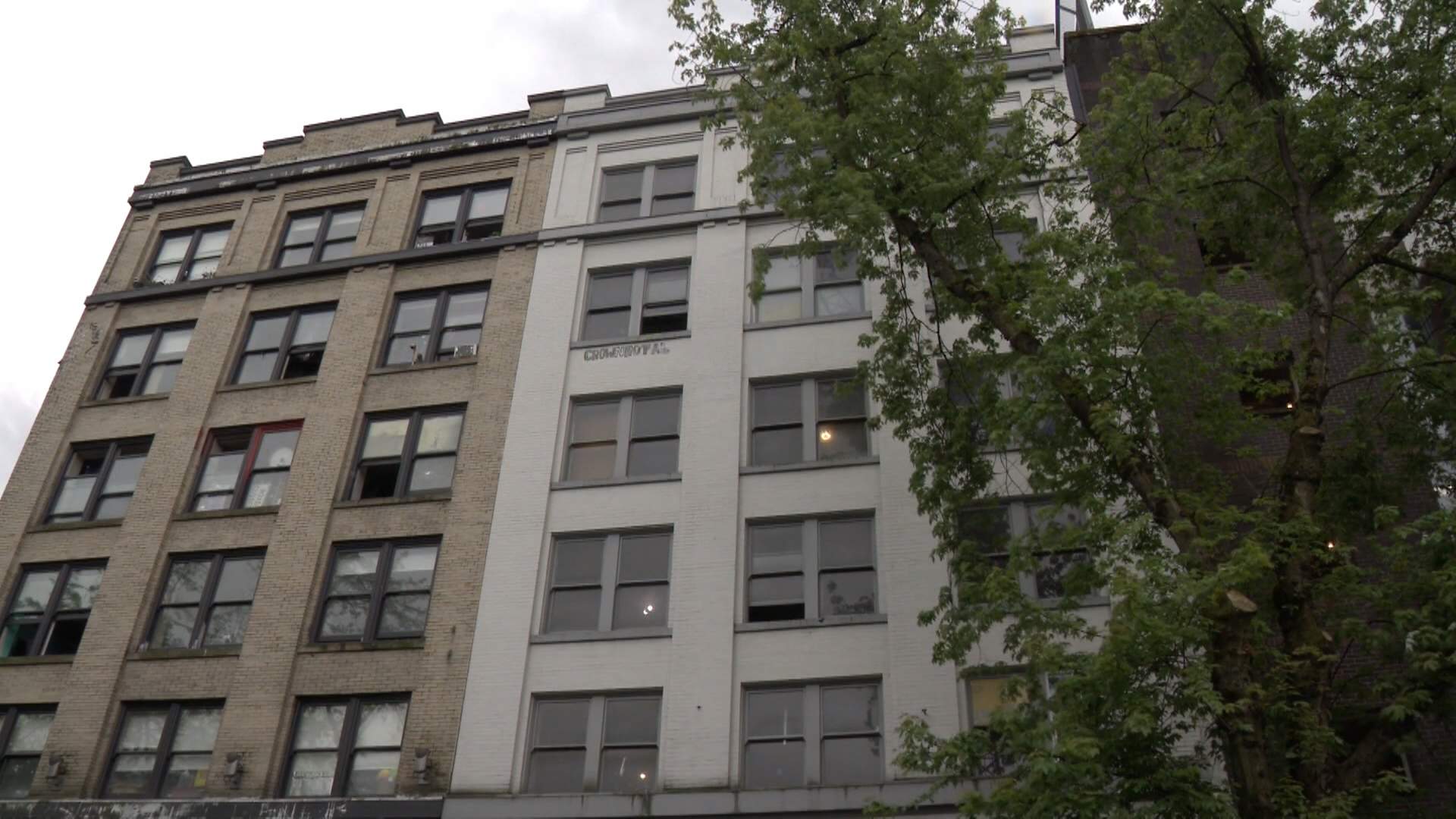
The British Columbia government’s expenditure of over $500,000 to facilitate the relocation of two tenants from a single Single Room Occupancy (SRO) building represents a breakdown in municipal housing procurement and a failure of standardized valuation models. This case study in fiscal inefficiency reveals how decentralized negotiation strategies and the absence of clear legislative caps on tenant buyouts create a "holdout premium" that distorts the public housing market. When a government entity pays roughly $250,000 per door—not for the real estate asset, but merely for the right to vacate it—the underlying capital allocation strategy has moved from social service provision to reactive crisis management.
The Triad of Operational Failure in Public Real Estate Acquisitions
The $500,000 outlay must be categorized through three distinct structural failures that characterize the current B.C. housing strategy: the Information Asymmetry Gap, the Holdout Incentive Structure, and the Externalized Cost of Delay.
1. The Information Asymmetry Gap
In traditional real estate transactions, price discovery occurs via market comparables. However, in the niche of SRO tenant displacement, there is no public ledger of "cash for keys" settlements. The B.C. government operates as a price-taker rather than a price-maker. Because the government’s timeline for redevelopment or building acquisition is often publicly signaled or tied to political cycles, the tenant (and their legal representation) gains superior leverage. They possess the private information of their "reservation price"—the minimum they would accept—while the government’s "willingness to pay" is perceived as near-infinite due to the high political cost of project stagnation.
2. The Holdout Incentive Structure
By paying a quarter of a million dollars to a single individual for an SRO unit—a space that often lacks private bathrooms or kitchens—the BC Housing authority has established a dangerous precedent. This creates a moral hazard:
- Rational Maximization: Future tenants in buildings targeted for government acquisition now have a logical incentive to refuse initial, fair-market relocation offers.
- The Anchor Effect: This specific $500,000 figure now serves as a psychological and legal anchor for all future negotiations in the Downtown Eastside (DTES).
- Supply Contraction: Private developers, seeing the astronomical costs of government-led displacement, may further retreat from the market, leaving the state as the sole, and most inefficient, actor.
3. The Externalized Cost of Delay
The government’s internal justification for these payments often rests on the "cost of inaction." If a $100 million renovation or social housing project is stalled by two tenants, the daily interest carry, contractor standby fees, and inflationary pressure on building materials can exceed $5,000 per day. In this narrow, tactical view, a $500,000 payment is "cheaper" than a six-month delay. This logic is flawed because it ignores the systemic inflationary impact on all other projects in the pipeline. It solves a micro-problem by poisoning the macro-economic environment.
Quantitative Analysis of Resource Misallocation
To understand the severity of this expenditure, one must compare the $250,000 relocation fee per tenant against the prevailing costs of permanent housing solutions in the Vancouver Lower Mainland.
The average cost to construct a single unit of permanent modular housing in British Columbia fluctuates between $300,000 and $450,000, depending on land acquisition costs. By spending $250,000 on a single buyout, the province has effectively spent 55% to 80% of the cost of a new, permanent asset simply to remove a liability from an old, deteriorating asset.
The ROI (Return on Investment) for this expenditure is mathematically negative when viewed through the lens of net new unit creation:
- Direct Capital Outlay: $500,000.
- Net Units Added: 0.
- Opportunity Cost: The equivalent of funding 1.5 years of comprehensive wrap-around mental health and addiction services for 20 individuals.
The government is essentially cannibalizing its development budget to satisfy the immediate demands of the displacement process. This is not an investment in social infrastructure; it is a transactional friction cost that has scaled out of proportion to the value of the underlying service.
The Mechanical Drivers of the $250,000 Settlement
Why does a settlement reach such an outlier figure? The mechanism is usually a combination of the Residential Tenancy Act (RTA) protections and the specific leverage of "bad faith" eviction claims.
In British Columbia, if a landlord (including the government) is found to have ended a tenancy in bad faith or fails to follow through on the stated purpose of the eviction, they can be liable for 12 months of rent as compensation. However, the $250,000 figure suggests something far beyond statutory requirements. It indicates a "settlement of convenience" to bypass the Residential Tenancy Branch (RTB) dispute resolution process entirely.
The legal bottleneck functions as follows:
- Notice of End of Tenancy: Issued for demolition or major renovation.
- Dispute Filing: The tenant files for dispute resolution, which can take 4–8 months to clear the RTB queue.
- The Injunction Risk: Even if the government wins at the RTB, judicial reviews can freeze the site for another 6–12 months.
- The Extraction Point: The tenant’s legal counsel recognizes the "burn rate" of the government’s capital and sets a price slightly below the projected cost of the delay.
This is a rent-seeking behavior in the purest economic sense. The tenant is not creating value; they are capturing a portion of the public funds already allocated to the project by utilizing the procedural friction of the legal system.
Structural Alternatives to Crisis Settlements
To prevent the recurrence of the half-million-dollar buyout, the procurement and displacement strategy must be overhauled. The following framework provides a roadmap for more disciplined capital management.
Implementation of a Standardized Compensation Matrix
The government must move away from ad-hoc negotiations. A tiered compensation matrix, strictly enforced and publicly disclosed, would eliminate the "holdout premium."
- Tier 1 (Base): Statutory relocation costs plus a fixed "hassle premium" based on length of tenure.
- Tier 2 (Priority): Accelerated moving bonuses for early adopters, decreasing over time to incentivize rapid vacancy.
- Hard Cap: A legislative or policy-based ceiling that prevents any single buyout from exceeding 15% of the unit’s assessed value.
Dedicated RTB Adjudication for Social Housing
The primary lever used by holdouts is the duration of the legal process. By creating a dedicated, fast-track stream within the RTB for provincial social housing projects, the government reduces the "time value of the holdout." If a dispute can be resolved in 14 days rather than 140, the tenant’s leverage to demand a six-figure settlement evaporates.
Right-to-Return Guarantees as Primary Currency
Instead of cash settlements, which are often depleted quickly and leave the individual back in the social net, the primary "currency" of relocation should be a legally binding, first-right-of-refusal for the newly developed unit at the same rent-to-income ratio. This fulfills the social mandate of the government while preserving capital for actual construction.
The Social Cost of Fiscal Negligence
Beyond the balance sheet, the $500,000 payment creates a fracture in social equity. There are thousands of individuals on BC Housing waitlists who are following the established protocols and living in substandard conditions or on the street. When the government rewards the two most litigious or resistant individuals with a windfall equivalent to a decade of median household income, it signals that the system responds to obstructionism rather than need.
This creates a "squeaky wheel" policy environment. The individuals who receive these payouts are rarely the most vulnerable; they are the most legally savvy or the best-represented. This skews the distribution of social resources toward those capable of navigating or blocking bureaucratic systems, leaving the truly marginalized further behind.
Strategic Pivot: Moving from Settlement to Acquisition
The government must recognize that SROs are a dying asset class. The "renovate-in-place" model, which requires these massive displacement settlements, is frequently less efficient than "scrape and rebuild."
The strategic play is to stop attempting to fix the unfixable through high-friction tenant negotiations. The province should instead focus on the acquisition of underutilized light-industrial or commercial land (M-zoned or C-zoned) outside the DTES core where displacement is not a factor.
By building on vacant or "clean" land, the government avoids the $250,000-per-door "tenant tax" entirely. The savings from just 10 avoided settlements would fund the construction of three new, high-quality social housing units. The current path—paying record-breaking sums to clear dilapidated buildings—is a sunk-cost fallacy in action. The province is throwing good money after bad real estate, driven by a legal framework that it has the power to reform but chooses to subsidize through over-market settlements.