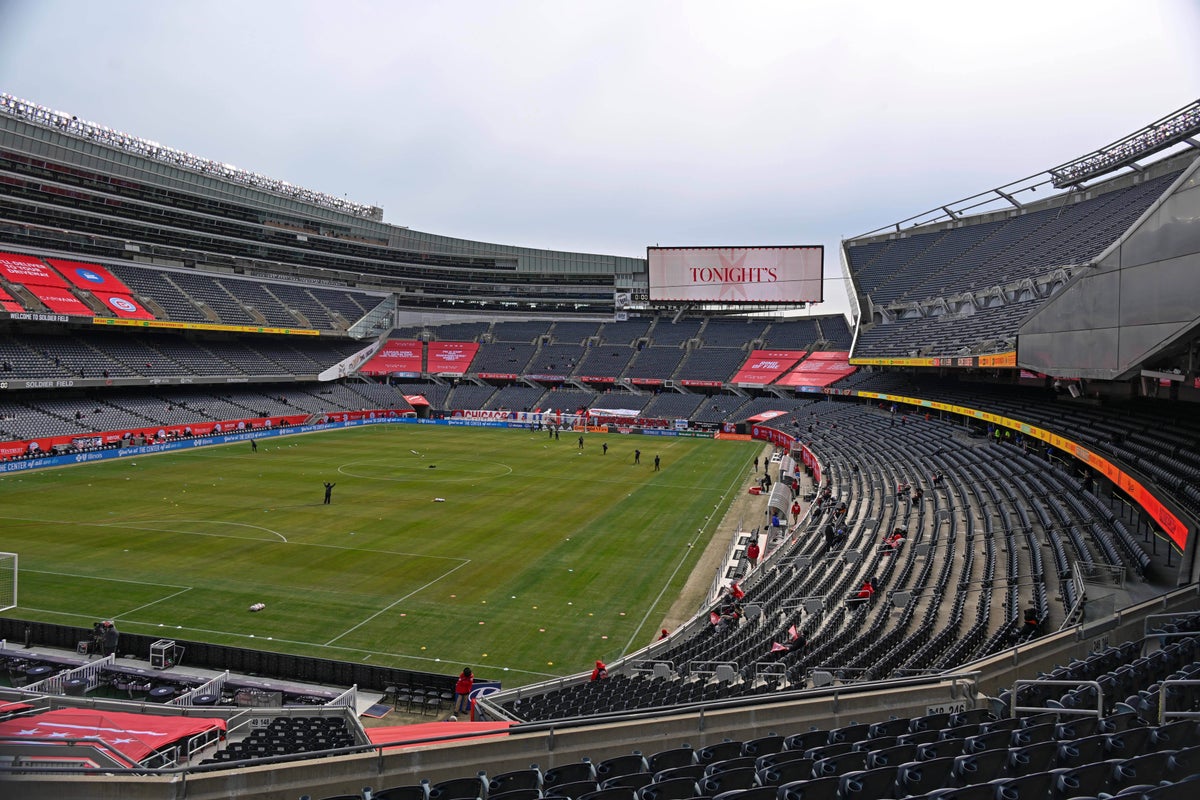
The Chicago Bears’ potential relocation to Northwest Indiana is not a sporting decision; it is an exercise in sovereign tax arbitrage and asset ownership optimization. While civic pride dominates the public discourse, the underlying mechanism is a struggle between a legacy franchise seeking to escape "tenant status" and a municipality—Chicago—handicapped by a $2.8 billion debt load within its Park District. The move to Indiana represents a credible threat because it shifts the negotiation from a political debate over public subsidies to a fundamental restructuring of the team’s Capital Expenditure (CapEx) model.
The Tenant Trap: Why Soldier Field is Obsolescent
The Chicago Bears are currently one of the few NFL franchises that do not own their stadium. This creates a structural deficit in three specific revenue streams that modern NFL valuations rely upon:
- Inventory Control: Under the current lease, the Chicago Park District retains significant control over scheduling and non-game day events. This limits the team’s ability to monetize the asset 365 days a year.
- Naming Rights and Sponsorships: Because the stadium is a war memorial, the Bears face unique restrictions on commercializing the "Soldier Field" brand. In a private stadium in Arlington Heights or Hammond, naming rights alone could generate an estimated $20 million to $30 million in annual recurring revenue.
- Ancillary Real Estate Development: The modern NFL "stadium" is actually a real estate play. By owning the surrounding land, a team captures the "Value Capture" of the infrastructure—retail, residential, and commercial rents—that a municipal park cannot legally or logistically provide.
The Indiana Play: Regulatory and Fiscal Divergence
Indiana’s recruitment of the Bears is built on a "Right-to-Build" framework that Illinois cannot currently match. The strategy involves three distinct pillars of competitive advantage:
The Tax Reciprocity Advantage
Indiana’s corporate and individual income tax rates are structurally lower than Illinois’. For a roster of elite athletes with high-earning contracts, the "jock tax" (the tax paid to the state where the game is played) becomes a significant recruiting tool. If the Bears play eight home games in Indiana, the cumulative tax savings for the organization and its employees represent a multi-million dollar annual dividend.
Expedited Entitlement and Zoning
The primary bottleneck for the Arlington Heights project was not the land purchase, but the property tax assessment and the bureaucratic friction of local school boards. Indiana offers a "Greenfield" regulatory environment. State-level intervention in Indiana can create Tax Increment Financing (TIF) districts with fewer stakeholders, accelerating the IRR (Internal Rate of Return) for the McCaskey family or any potential investment partners.
The Border-State Leverage Model
Indiana does not need to win the team to benefit from the negotiation. By providing a "Best Alternative to a Negotiated Agreement" (BATNA), Indiana forces the City of Chicago to make concessions it previously deemed impossible. This is a classic Game Theory application: the Bears increase their leverage by demonstrating that their exit costs are lower than the city’s cost of losing the franchise.
The Cost Function of Relocation
Moving a Tier-1 NFL franchise involves a massive capital outlay that must be weighed against the Net Present Value (NPV) of staying in Chicago. The cost function $C(r)$ can be defined by:
$$C(r) = S_c + I_{loss} + O_c - V_e$$
Where:
- $S_c$: Stadium construction costs (estimated at $3.2B - $5B).
- $I_{loss}$: Loss of the Chicago core-market premium (unlikely, as the market remains the same).
- $O_c$: Opportunity cost of delayed development.
- $V_e$: Value of the enhanced asset (full ownership and non-NFL revenue).
The "Arlington Heights Pivot" revealed a major flaw in the team’s strategy: the assumption that a suburban move would be met with universal municipal support. The Indiana offer solves this by introducing a state-level competitor that is willing to socialize the infrastructure costs that Illinois local boards are currently fighting.
Infrastructure and Connectivity Bottlenecks
A move to Northwest Indiana, while fiscally attractive, introduces an "Operational Friction" variable. The Chicago Bears’ brand value is inextricably linked to the Chicago Metropolitan Statistical Area (MSA).
The logistics of transporting 60,000+ fans across state lines every Sunday creates a dependency on the South Shore Line and I-94. If the infrastructure cannot handle the surge capacity, the "Game Day Experience"—a key metric in NFL fan satisfaction—degrades. The Indiana proposal must include a guaranteed "Infrastructure Rider" that commits state funds to transit expansion, or the team risks alienating its high-net-worth season ticket base in the North Shore and Western suburbs.
The Valuation Gap: Chicago vs. A Private Entity
The Forbes valuation of the Chicago Bears currently sits at approximately $6.3 billion. However, this is "under-indexed" compared to the Dallas Cowboys ($9 billion) or the Los Angeles Rams ($6.9 billion). The delta between these valuations is almost entirely attributed to Stadium Revenue and Real Estate.
- Premium Seating: Soldier Field has the smallest capacity in the NFL (61,500). A new stadium in Indiana or the suburbs would target 70,000+ with a significantly higher ratio of luxury suites to standard seating.
- Variable Pricing: Ownership of the venue allows for dynamic pricing models that the Park District currently complicates.
This is the "Brutal Breakdown" of the situation: The Bears are not looking for a new home; they are looking for a new balance sheet. If Chicago cannot provide a path to $500M+ in annual non-football revenue, the geographic location of the 50-yard line becomes irrelevant to the stakeholders.
Strategic Logic of the Indiana Threat
The Indiana move is highly improbable but tactically essential. It serves as a "Price Discovery" mechanism. By engaging with Indiana officials, the Bears are establishing the market rate for their presence. This forces the following reactions:
- Arlington Heights Tax Settlement: Local school districts in Illinois are suddenly incentivized to settle their tax disputes lest they lose the entire project to a neighboring state.
- Chicago Museum Campus Overhaul: The City of Chicago is forced to consider "De-landmarking" or radical restructuring of the lakefront to accommodate a domed stadium.
- State-Level Intervention: Governor Pritzker is forced to weigh the political cost of being the governor who "lost the Bears" against the fiscal cost of a state-funded stadium subsidy.
The second-order effect of this negotiation is the signal it sends to the NFL league office. The league prefers teams to stay in their home markets, but it prioritizes "Revenue Certainty." If Indiana provides a path to a top-tier, weather-proof facility, the NFL's relocation committee will provide the necessary "Relocation Fee" waivers or financing through the G-4 loan program.
The Structural Bottleneck of the Lakefront
The "Friends of the Parks" organization represents a non-financial hurdle that Indiana simply does not have. The legal precedent set during the failed Lucas Museum of Narrative Art project suggests that any significant expansion of Soldier Field will be tied up in litigation for a decade. This "Litigation Risk" is a hidden cost in the Chicago proposal. In contrast, Indiana’s "Pro-Development" legal climate reduces the timeline from groundbreaking to kickoff by an estimated 24 to 36 months.
Definitive Strategic Projection
The Chicago Bears will not move to Indiana, but they will use the Indiana proposal to secure a massive property tax "fix" for the Arlington Heights site or a total surrender of control from the Chicago Park District.
The strategic play for the Bears is to maintain the Indiana threat until the Illinois legislature passes a "Mega-Project" tax designation. This designation would freeze property assessments at pre-development levels for 20+ years, making the Arlington Heights project the most profitable real estate venture in the history of the franchise. The Indiana "play" is the catalyst required to break the legislative gridlock in Springfield.
To optimize the transition, the Bears must now secure a "Binding Letter of Intent" from Indiana officials. This document, even if non-binding in the long term, serves as the ultimate piece of leverage in the final 90 days of negotiations with the City of Chicago and the Arlington Heights school boards. The objective is not a move to Gary or Hammond; the objective is the total capitulation of the Illinois tax assessor.
Would you like me to analyze the specific tax-increment financing (TIF) structures used in other recent NFL stadium deals to compare them against the current Indiana and Illinois proposals?