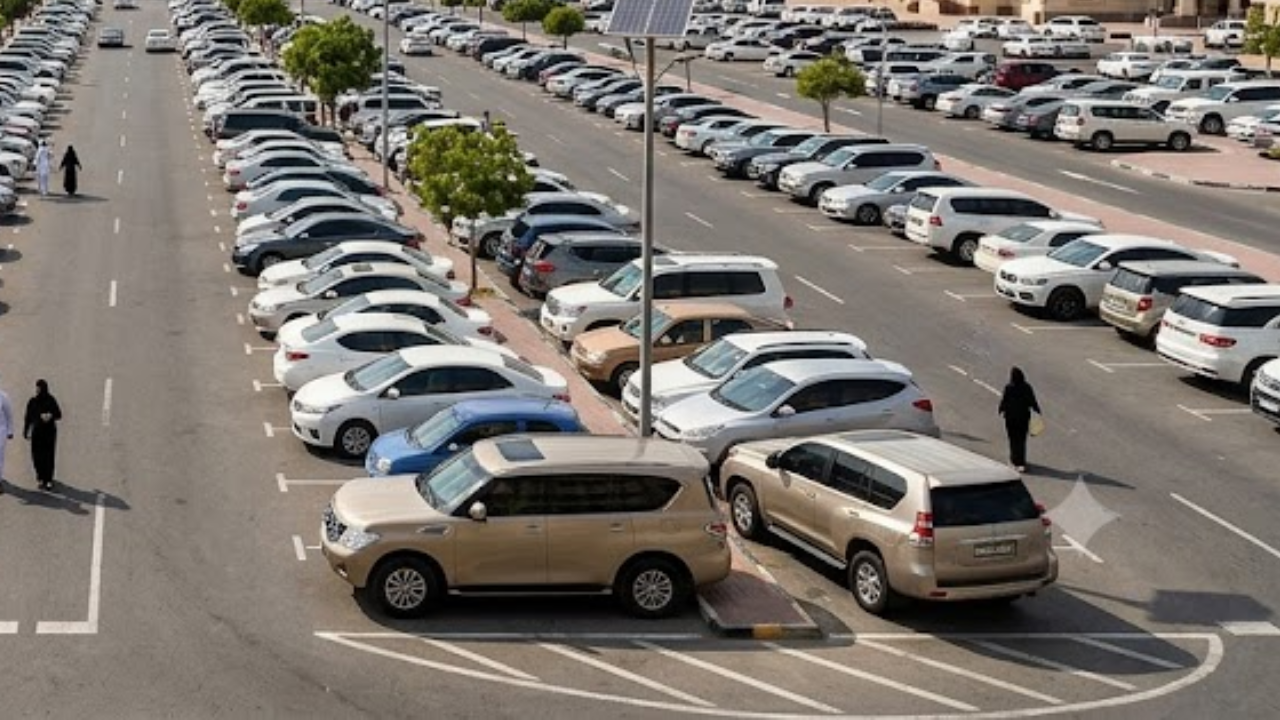
Urban centers optimize public infrastructure through pricing mechanisms that balance supply, demand, and municipal utility. The Sharjah Municipality extension of paid parking hours until midnight, effective July 1, represents a structural shift in the emirate's approach to asset utilization and traffic management. By expanding the daily enforcement window from its previous baseline to a continuous 16-hour operating schedule (08:00 to 00:00), the municipality is executing a classic regulatory correction aimed at addressing specific externalities born from shifting commercial and residential behaviors.
Understanding the implications of this policy shift requires moving beyond basic regulatory announcements. It demands an examination of urban density, the financial mechanics of municipal enforcement, and the behavioral elasticities of motorists within dense commercial zones.
The Dual Imperatives of Curbside Optimization
Municipalities manage curbside space under two competing frameworks: revenue generation and congestion mitigation. When public parking fees remain fixed while commercial activity extends late into the evening, a pricing mismatch occurs.
Demand Spikes and the Tragedy of the Commons
Free parking past 22:00 historically created a supply deficit in high-density sectors such as Al Majaz, Al Qasimia, and Muwaileh. Motorists engaged in "cruising"—the practice of driving looking for an open spot—which artificially inflated local traffic volumes, increased carbon emissions, and generated noise pollution. By extending paid hours to midnight, the city introduces a financial deterrent to prolonged vehicle storage.
The mechanism relies on price elasticity. Introducing a cost during the 22:00 to 00:00 window forces a re-evaluation of vehicle utility:
- Discretionary visitors migrate toward alternative transit, carpooling, or off-peak hours.
- Commercial delivery fleets optimize drop-off schedules to reduce idle dwell times.
- Long-term parkers migrate to dedicated private structures or residential spaces, freeing up high-turnover curbside assets for retail patrons.
Capital Expenditure Recovery and Enforcement Offsetting
Operating an urban monitoring infrastructure incurs substantial overhead. The maintenance of digital payment kiosks, smart scanning vehicles equipped with license plate recognition technology, and the administrative apparatus required to process compliance infractions demands consistent cash flow.
The two-hour extension shifts the economic burden of this infrastructure directly onto the active users of the system. This user-pays model ensures that the marginal cost of late-night enforcement is fully capitalized by the revenue generated during those exact operational hours.
Velocity of Turnover as a Metric of Commercial Health
A common misconception among retail stakeholders is that extended parking fees depress local business revenue. Empirical urban planning models indicate the opposite conclusion through the metric of parking turnover velocity.
$$V = \frac{T_s}{D_m}$$
Where $V$ represents turnover velocity, $T_s$ is the total operational time window, and $D_m$ is the mean duration of vehicle occupancy. When parking is unpriced, $D_m$ expands significantly as drivers face zero marginal cost for occupying a space indefinitely. This stagnation chokes off the supply of available spaces for incoming customers.
By pricing the 22:00 to 00:00 window, the municipality reduces $D_m$. A lower average duration increases $V$, meaning a single parking stall can service multiple consumers during the peak evening retail window. For businesses relying on high-volume, short-duration customer interactions—such as restaurants, pharmacies, and convenience stores—this policy systematically increases the pool of potential patrons who can successfully access the storefront.
Structural Bottlenecks and Policy Spillover Effects
While the primary objective of the policy focuses on commercial zone fluidity, systemic changes in public utility pricing trigger immediate secondary effects across adjacent ecosystems.
Residential Encroachment and Sub-Market Distortion
The immediate challenge introduces itself at the boundary lines between commercial zones and unregulated residential sectors. Drivers seeking to evade the extended pricing window will naturally shift their vehicles into the nearest free alternative. This displacement creates a localized supply shock in residential neighborhoods, altering the quality of life for residents who return home late at night to find non-resident vehicles occupying their traditional parking areas.
To counter this spillover, municipalities typically deploy targeted exemptions, such as residential parking permits or zone-restricted parking validation programs. Without these secondary safeguards, the extended commercial hours risk transferring traffic friction from main thoroughfares directly into residential feeder streets.
The Digital Infrastructure Stress Test
Transitioning an entire emirate's parking network to an extended schedule requires absolute synchronization across multiple digital platforms. The physical parking meters, SMS-based payment gateways, and dedicated mobile applications must update their tariff engines simultaneously.
[User Interface / Mobile App / SMS]
       │
       ▼
[Central Tariff Engine (Updated Configuration)]
       │
       ▼
[Enforcement Infrastructure / License Plate Recognition Vehicles]
Any latency in this system configuration creates an asymmetric enforcement risk, where citizens are penalized despite attempting compliance, or municipal systems fail to recognize valid transactions during the newly added hours. The reliability of this software architecture determines the public trust and compliance rate of the entire initiative.
Strategic Asset Realignment for Corporate Entities
For businesses operating within the affected zones, this regulatory shift dictates an immediate reassessment of operational logistics and employee benefit structures.
Corporations utilizing fleet vehicles must audit their evening parking footprints to prevent a sharp inflation in operational expenditures. Shifting fleet storage to private commercial depots before 22:00 emerges as an immediate cost-containment strategy.
Furthermore, businesses offering late-shift customer support or evening retail staff must evaluate the economic impact on employees who rely on personal vehicles. Forward-thinking enterprises will likely explore corporate parking subscriptions or subsidized transport allowances to preserve talent retention in highly competitive zones. The financial impact is predictable: organizations that fail to adapt their transport logistics will experience compressed margins driven by direct compliance costs and indirect labor frictions.