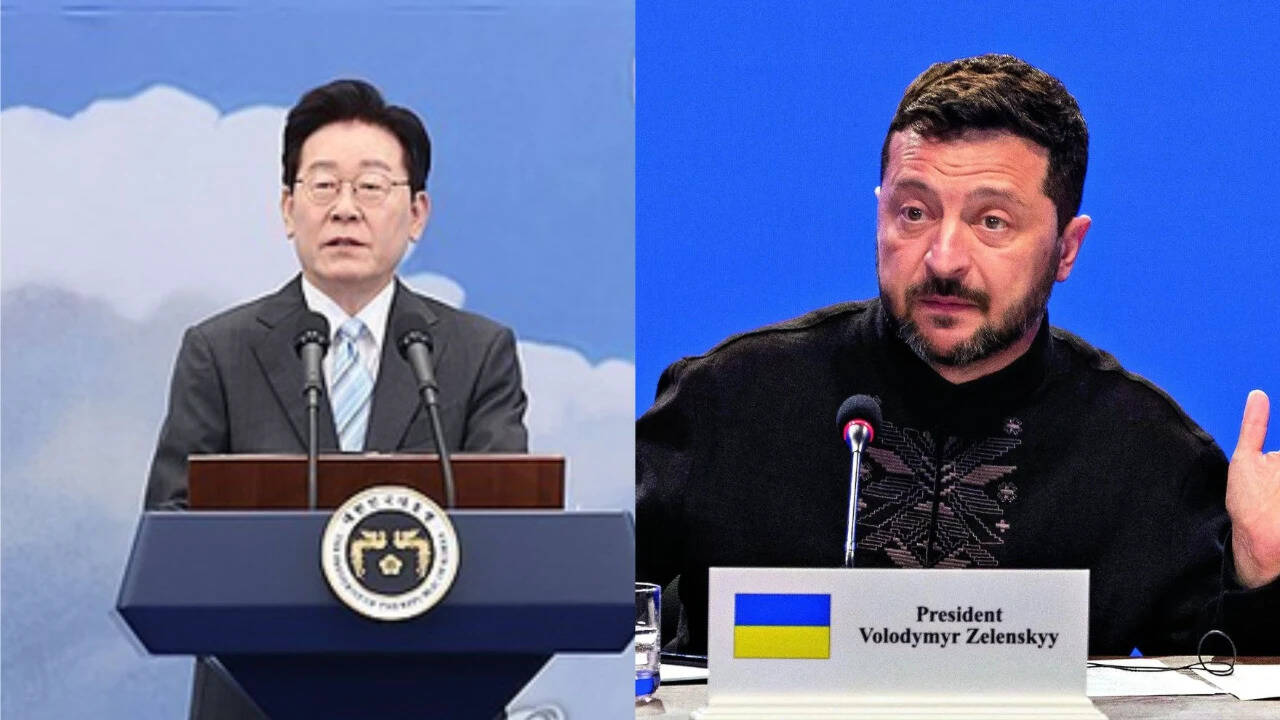
The systemic friction between Seoul and Kyiv over prisoner-of-war disclosures and subsequent diplomatic reprimands reveals a deeper structural vulnerability in transnational proxy warfare. When North Korea integrated more than 14,000 personnel into the Russian theater—primarily functioning within high-attrition sectors such as Kursk Oblast—it transformed a localized European conflict into an inter-Korean operational testing ground. The friction points between South Korea and Ukraine are not merely diplomatic misunderstandings; they are predictable friction points generated by asymmetric intelligence incentives, divergent security thresholds, and the monetization of military personnel as a state export commodity.
The Tripartite Strategic Calculus
To deconstruct the tensions surrounding North Korean troop deployment and the subsequent transfer mechanics of captured combatants, one must examine the cost-benefit matrix of the three primary actors involved.
For Pyongyang, the deployment of elite units such as the 11th Storm Corps operates as a high-yield capital and technology acquisition strategy. Decades of international sanctions have starved North Korea's conventional military complex of hard currency and modern electronic warfare data. By trading manpower for operational telemetry, space-launch data assistance, and conventional hard currency, Pyongyang externalizes the maintenance cost of its military while gaining live-fire data against Western-supplied hardware.
For Moscow, the infusion of foreign labor and combat units mitigates the domestic political friction of continuous force generation. Utilizing external forces in high-casualty counter-offensive operations—specifically within Russian territory—allows the Kremlin to defer or dilute the pressure of broad domestic conscription.
For Seoul, this convergence introduces an acute threat vector. The acquisition of modern combat experience by North Korean units directly compresses the conventional capability gap on the Korean Peninsula. Consequently, South Korea's strategic posture has shifted from passive humanitarian aid provider to an active deterrent calculator, weighing the threshold at which non-lethal support must pivot to direct material assistance.
The Intelligence Asymmetry and Prisoner Management
The diplomatic rupture triggered by public disclosures of prisoner transfers underscores the operational hazard of multi-lateral intelligence sharing. Intelligence collection in contested war zones relies on strict chain-of-custody protocols and absolute confidentiality to protect human sources and manage geopolitical blowback.
When captured personnel are utilized as geopolitical leverage, the mechanics of their transfer become vulnerable to premature public signaling. Seoul operates under stringent domestic legal frameworks and alliance-management imperatives with Washington and Tokyo. Unauthorized disclosure of prisoner custody disrupts the delicate legal and intelligence architecture required to manage defectors and POWs without triggering immediate retaliation from Pyongyang.
The resulting diplomatic standoff—characterized by demands for retractions or apologies over protocol breaches—illustrates how operational transparency can actively degrade coalition trust. Ukraine prioritizes international mobilization and public pressure to secure air defense systems and extended military provisions, whereas South Korea prioritizes operational security and the prevention of direct escalation vectors that could destabilize the Korean Peninsula.
The Escalation Ladder and Secondary Measures
South Korea's warnings of "additional measures" outline a measured escalation ladder designed to signal resolve without committing to total policy inversion. This framework operates across three distinct tiers:
- Diplomatic and Information Operations: Amplification of human rights abuses regarding North Korean overseas laborers and combat deployments, paired with multilateral sanctions coordination at the United Nations Security Council level.
- Economic and Technological Denial: Tightening financial channels utilized by front companies in third-party nations that funnel hard currency back to the Workers' Party of Korea procurement offices.
- Material Realignment: Re-evaluating the constitutional and legislative constraints governing the direct provision of defensive and potentially tactical hardware to nations facing unprovoked interstate aggression.
The constraint on Seoul's third tier is institutional. South Korean foreign policy has historically maintained a strict firewall against exporting lethal weaponry to active war zones, anchored in both domestic legal interpretations and a strategic desire to preserve diplomatic off-ramps with Moscow. However, the qualitative shift from artillery supply to active troop deployment fundamentally alters this risk equation.
Strategic Execution Path
To insulate allied cohesion from further degradation, intelligence-sharing frameworks must decouple tactical prisoner exploitation from public domestic messaging. Coalition partners must establish pre-negotiated communication protocols that categorize operational disclosures by sensitivity tier.
Simultaneously, Seoul must operationalize its threatened countermeasures not as reactive diplomatic rebukes, but as a calibrated deterrence schedule. By tying the scale of its industrial and technological support for Ukraine directly to the volume and capability tier of North Korean troop rotations into Europe, South Korea can impose measurable opportunity costs on Pyongyang's foreign deployment model. This ensures that every brigade rotated through the western Russian theater incurs an escalating, structural penalty on the Korean Peninsula's strategic balance.