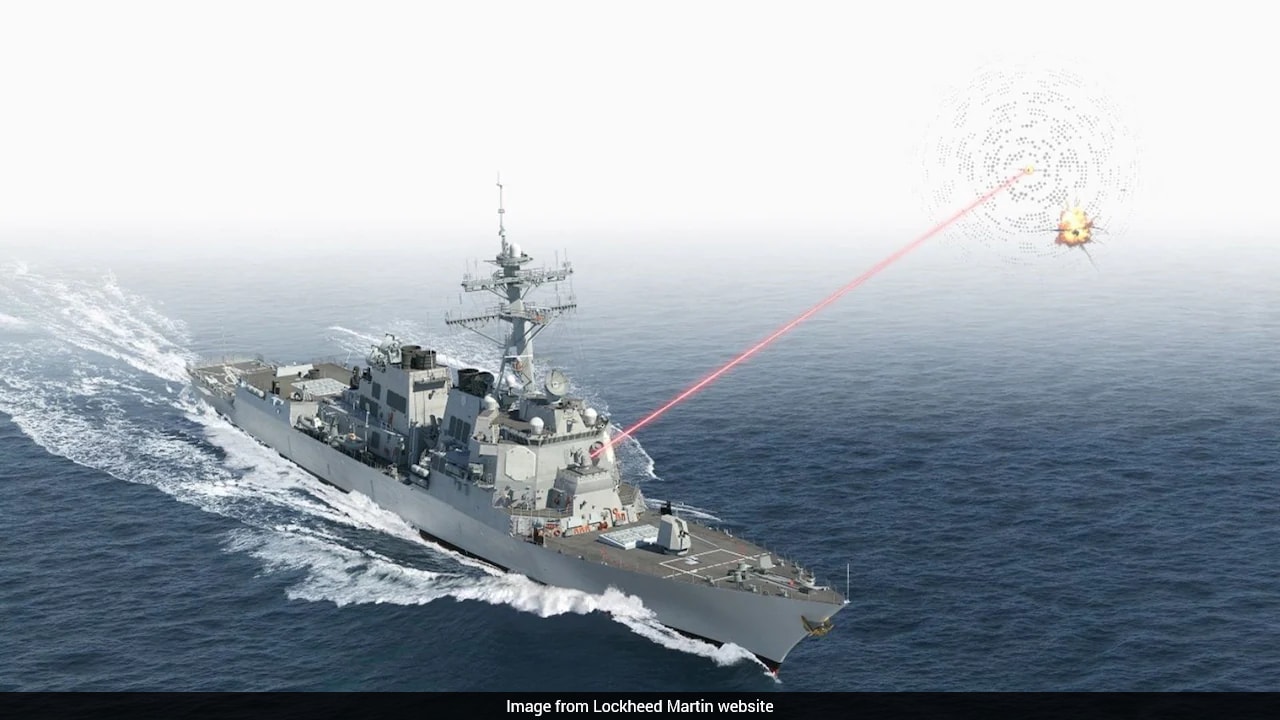
Naval air defense economics are dictated by an intractable asymmetry: intercepting a low-cost uncrewed aerial vehicle with a traditional surface-to-air missile incurs a cost ratio exceeding three orders of magnitude. Deploying systems such as the High-Energy Laser with Integrated Optical Dazzler and Surveillance system in littoral chokepoints like the Strait of Hormuz shifts this economic function by replacing consumable propellant-based munitions with directed thermal energy costing approximately thirteen dollars per engagement. This economic reconfiguration alters asset preservation calculus, yet the tactical utility of directed energy remains constrained by physical variables, power distribution limits, and human-system interface design.
The Thermodynamic Mechanics of Laser Engagement
A high-energy laser weapon does not destroy a target via kinetic impact; it relies on sustained thermal absorption. The system draws electrical power from shipboard gas turbine generators or dedicated battery banks, routing that energy through optical assemblies to project a coherent, invisible infrared beam.
When the beam intersects a target, surface material absorbs the photons, converting light into localized heat. Neutralizing a threat requires exceeding the structural failure threshold of critical components, such as flight control surfaces, optical sensors, or composite airframes. This necessitates a mandatory parameter known as dwell time. Unlike a kinetic interceptor that trades flight time for immediate momentum-based destruction, a directed energy weapon must maintain precise optical alignment on a single coordinate for multiple consecutive seconds.
Power Source (Turbine/Battery)
       │
       ▼
Optical Amplification & Beam Steering
       │
       ▼
Target Intersect & Dwell Time (Thermal Accumulation)
       │
       ▼
Structural Degradation or Sensor Blinding
This operational requirement introduces strict environmental dependencies. Atmospheric interference—including sea spray, high humidity, suspended particulate matter, and thermal bloom—scatters coherent light, degrading effective range and beam intensity. Consequently, directed energy performance varies directly with maritime microclimates, establishing operational windows where atmospheric attenuation neutralizes theoretical advantages.
The Interface Rationalization and C2 Optimization
Integrating complex weapon systems traditionally mandated custom, proprietary control consoles designed by defense contractors. These proprietary terminals introduced extended training pipelines, high maintenance overhead, and ergonomic friction for operators forced to learn niche hardware layouts.
The integration of commercially engineered, modified Xbox-style game controllers into tactical displays such as the HELIOS control architecture represents a divergence in military human factors engineering. Consumer gaming peripherals undergo iterative human-factors optimization backed by millions of hours of user testing, resulting in dual analog stick layouts and proportional trigger inputs that align naturally with spatial tracking and camera manipulation tasks.
Adopting these commercial interface standards yields two operational efficiencies:
- Cognitive Load Reduction: Operators leverage preexisting muscle memory, compressing initial qualification timelines from weeks to hours.
- Supply Chain Resilience: Replacing custom-machined military-spec joysticks with globally distributed commercial off-the-shelf hardware reduces component lifecycle costs and simplifies field replacement logistics.
However, substituting commercial gaming inputs for ruggedized military interfaces introduces failure points regarding electromagnetic shielding, seawater corrosion resistance, and tactile feedback fidelity under high-stress conditions.
Tactical Bottlenecks and Operational Scaling
While directed energy provides deep magazine depth—effectively bounded only by fuel and electrical generation capacity rather than missile cell inventory—scaling these systems across surface action groups exposes inherent systemic limits:
- Power Budget Allocation: Operating a multi-kilowatt laser requires massive electrical draw. On conventional destroyers, this demand must be balanced against propulsion and radar loads, risking power-sharing conflicts during high-tempo combat maneuvers.
- Saturation Vulnerability: Because directed energy relies on sequential thermal dwell times, multi-vector drone swarms present a geometric tracking problem. While a missile system can engage multiple targets concurrently via separate interceptors, a single-beam laser must serialize engagements, creating a throughput bottleneck against simultaneous inbound vectors.
- Thermal Dissipation: The inefficiency of solid-state laser generation creates waste heat that must be continuously evacuated from the weapon chassis using liquid cooling systems, limiting sustained firing rates during prolonged engagements.
The strategic deployment of maritime directed energy does not eliminate traditional kinetic defense layers. Instead, it creates a tiered defensive threshold where low-cost, short-range asymmetric threats are absorbed by high-efficiency thermal beams, preserving scarce missile inventories for high-speed, high-signature anti-ship cruise missiles.
Prioritize hardening interface controllers against maritime environmental degradation while expanding primary shipboard power generation redundancy to support concurrent multi-beam thermal tracking arrays.