Capital allocation for digital infrastructure within the European Union is governed by a strict matrix of regulatory compliance, energy cost arbitrage, and thermal management efficiency. TikTok's commitment of €1 billion toward a secondary data center facility in Lahti, Finland—following its initial €1 billion project in Kouvola—operationalizes its broader Project Clover mandate. This infrastructure buildout is an institutional response to jurisdictional friction, designed to enforce data localization for over 200 million European users through physical architecture rather than software partitioning alone.
The Three Economic Drivers of Nordic Site Selection
Hyperscale site selection in Northern Europe relies on structural cost advantages that offset initial capital expenditure.
- Power Cost and Grid Stability: Industrial electricity pricing in Finland benefits from high shares of low-carbon generation, specifically nuclear and wind capacity. High-density compute clusters require predictable power purchase agreements (PPAs) to hedge against wholesale market volatility.
- Coefficient of Performance and Free Cooling: Ambient sub-zero temperatures for a significant portion of the calendar year lower the Power Usage Effectiveness (PUE) ratio. Facilities leverage direct free cooling, reducing the auxiliary energy load required for mechanical refrigeration chillers.
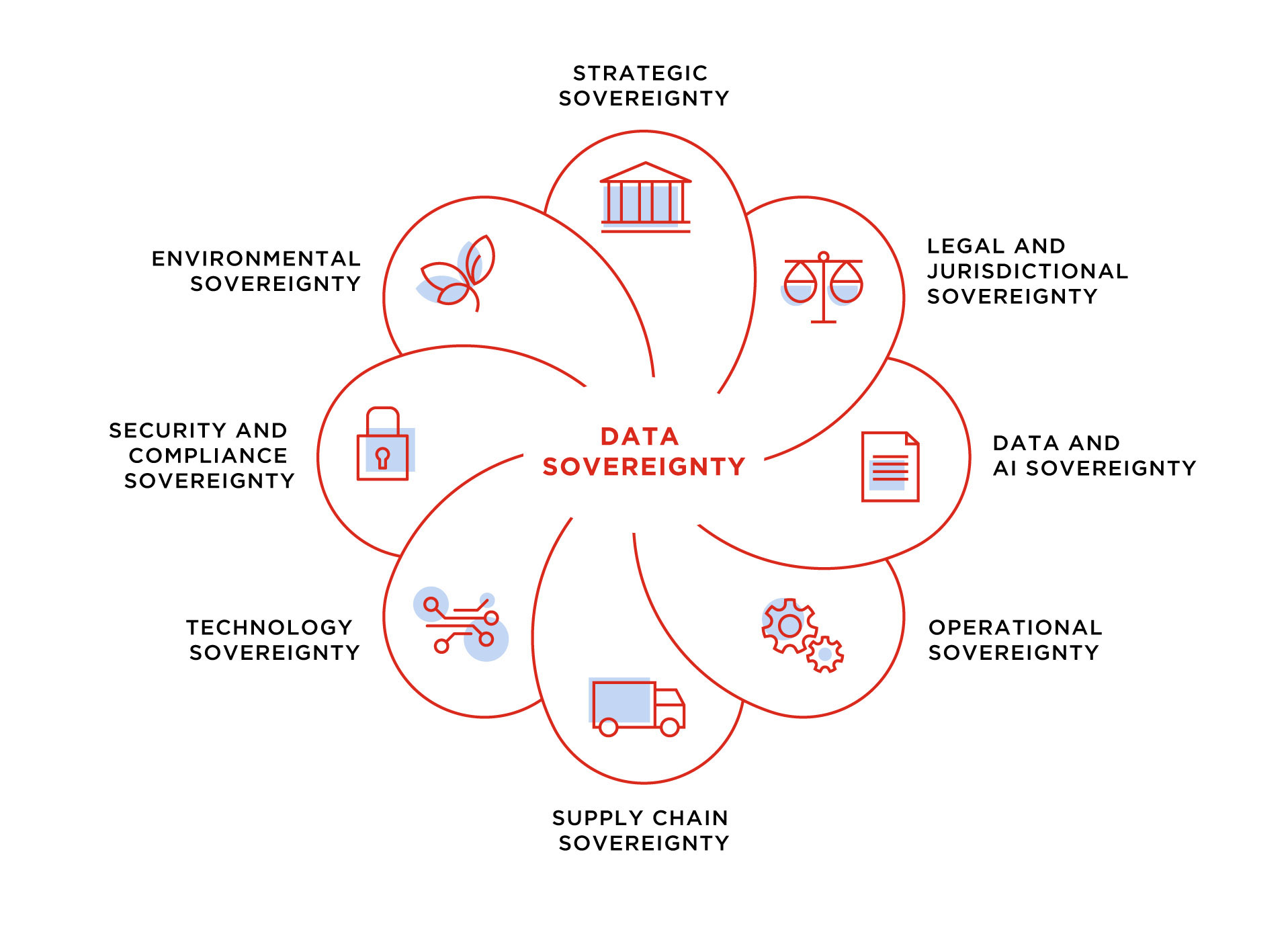
- Regulatory Hedging: Constructing dedicated enclaves inside EU borders satisfies institutional demands for data sovereignty. By isolating European traffic storage away from foreign jurisdictions, the enterprise mitigates systemic compliance risks tied to cross-border data transfer regulations.
Deconstructing Project Clover Architecture
Project Clover operates as a segregated technical enclave. Standard hyperscale architectures prioritize low-latency global routing and distributed redundancy across multi-tenant clusters. Conversely, sovereignty-mandated infrastructure imposes strict geographic boundaries on data ingress and egress.
The Lahti facility is engineered with an initial IT capacity of 50 megawatts, scheduled to scale incrementally to 128 megawatts. This capacity sizing corresponds directly to the compute density required for localized data ingestion, validation, and real-time processing pipelines. Independent third-party validation, managed via continuous oversight providers like NCC Group, introduces continuous structural overhead. Network traffic must pass through dedicated security gateways where inspection logs and anomaly detection metrics are compiled for regulatory auditing. This governance model transforms the data center from a passive storage utility into an actively monitored compliance zone.
The Capital Expenditure and Capacity Constraints
Deploying capital into greenfield Nordic data centers exposes operators to specific engineering and supply chain bottlenecks.
Transmission grid interconnection queues represent the primary constraint on scaling timelines. While local municipalities welcome multi-million-euro regional tax bases and construction employment, high-voltage substation availability dictates whether a 50-megawatt initial phase can transition to its maximum planned output without extensive grid reinforcement.
Furthermore, supply chain lead times for high-capacity step-down transformers and uninterruptible power supply (UPS) units stretch construction horizons. While the Kouvola site targets operational status, the Lahti campus requires phased deployment milestones extending toward 2027. This staggered deployment schedule mirrors the risk mitigation strategies employed by cloud service providers managing multi-billion-dollar capital expenditure cycles.
Strategic Execution Playbook
Infrastructure strategists evaluating parallel regional localization plays must decouple political motivations from pure engineering metrics. Compliance-driven builds demand a tripartite framework balancing thermal efficiency, localized PPA security, and third-party validation overhead. Future expansions must factor in grid connection latency as the definitive critical path item, superseding both local tax incentives and raw land availability.