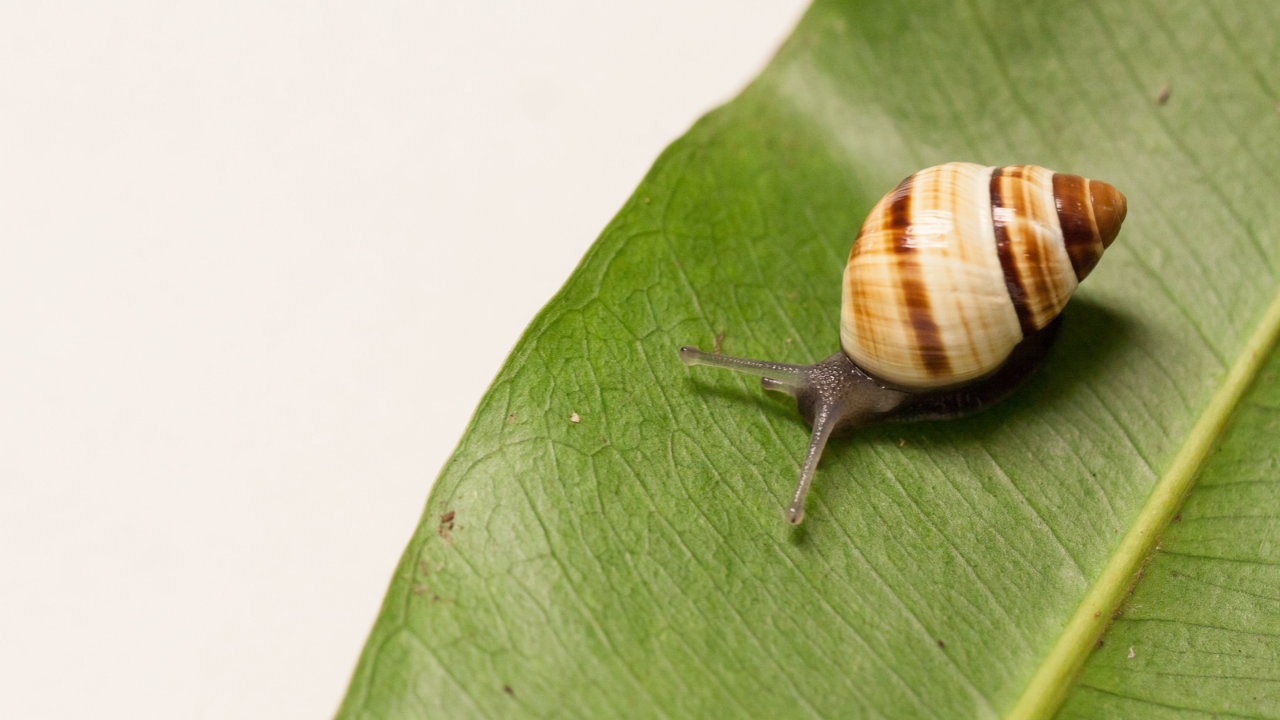
Reintroducing an endemic species after 33 years of functional extinction in the wild is not a celebratory milestone; it is a high-stakes operational test of predator exclusion engineering. When a single biological control agent—the rosy wolfsnail (Euglandina rosea)—collapses an entire adaptive radiation down to 11 surviving individuals, recovery requires dismantling the exact ecological mechanisms that caused the failure. The return of Hawaii’s rare tree snails (Achatinella and related genera) to native forest habitats demonstrates how decades of ex-situ captive breeding must be paired with physical and chemical barrier systems to prevent immediate re-extirpation.
The Architecture of a Trophic Cascade Failure
Standard conservation narratives treat invasive species introductions as isolated accidents. In operational reality, the collapse of Hawaiian land snails was the predictable outcome of a flawed biological control model executed without trophic containment.
In the mid-20th century, agricultural authorities introduced the giant African land snail (Lissachatina fulica) to Hawaii, where it quickly became an agricultural pest. To suppress Lissachatina fulica, managers introduced Euglandina rosea, a predatory snail native to the southeastern United States, in 1955. This intervention failed on two distinct operational levels: target specificity and reproductive asymmetry.
Target Specificity Failure
Euglandina rosea tracks prey by following slime trails. Rather than specializing in the large, ground-dwelling agricultural pest it was imported to control, the predator exhibited a strong preference for smaller, arboreal native snails. Because Hawaiian tree snails evolved in isolation without terrestrial molluscan predators, they lacked behavioral avoidance mechanisms, chemical defenses, or physical shell adaptations to deter Euglandina rosea. The predator ascended native trees, systematically consuming entire localized populations.
Reproductive Asymmetry and Life History Mismatch
The second driver of the collapse lies in the life history traits of the native fauna versus the invader. Hawaiian tree snails are K-selected specialists characterized by extreme longevity, delayed sexual maturity, and remarkably low fecundity:
- Delayed Maturation: Many Achatinella species require four to seven years to reach reproductive maturity.
- Low Output: Unlike continental snails that lay hundreds of eggs per clutch, Hawaiian tree snails are viviparous (live-bearing) and typically produce only one to seven offspring per year.
- High Habitat Fidelity: Individual snails often spend their entire lives on a single host tree, preventing rapid dispersal away from localized predation fronts.
By contrast, Euglandina rosea reproduces rapidly, laying clutches of dozens of eggs, and matures within months. When an r-selected generalist predator is introduced into an ecosystem dominated by K-selected endemic specialists, population collapse follows a steep exponential decay curve. By the early 1990s, dozens of species were extinct, and surviving lineages—such as specific populations of Achatinella—were reduced to emergency rescue cohorts, including the bottleneck of just 11 individuals collected from the wild to establish a captive insurance population.
The 33-Year Ex-Situ Bottleneck
Maintaining a population from a founder base of 11 individuals over three decades presents severe genetic and husbandry challenges. When wildlife managers extract the last survivors of a collapsing lineage, the operational priority shifts from ecological management to intensive micro-habitat engineering.
Environmental Simulation and Biosecurity
Captive propagation facilities in Hawaii had to replicate the exact microclimatic parameters of high-elevation cloud forests—specifically stable temperature gradients, high relative humidity, and precise light cycles. More critically, technicians had to identify and cultivate the specific epiphyllous fungi and algae growing on native leaf surfaces (Metrosideros polymorpha, or ʻōhiʻa lehua) that constitute the snails' obligate diet. Standardizing this microbial food source in a laboratory setting required decades of trial and optimization to prevent nutritional deficiencies and shell deformities.
Genetic Drift Management
A founder population of 11 individuals carries an extreme risk of inbreeding depression and genetic drift. Over 33 years—representing roughly five to seven snail generations—managers had to track lineage pairings meticulously within environmental chambers. While hermaphroditic, these snails rely primarily on cross-fertilization to maintain heterozygosity.
The limitation of any 33-year captive program is unavoidable selection for captivity. Traits that favor survival in sterile, predator-free chambers—such as altered foraging rhythms or reduced responses to environmental stressors—can inadvertently proliferate, potentially reducing fitness once individuals are returned to stochastic wild environments.
Predator Exclusion Engineering in the Wild
Releasing captive-bred snails back into unprotected Hawaiian forests would result in 100% mortality within months. Because Euglandina rosea remains established across the islands, alongside secondary invasive threats like black rats (Rattus rattus) and Jackson’s chameleons (Trioceros jacksonii), reintroduction is viable only inside engineered predator-free exclosures.
Modern snail recovery relies on multi-layered physical and chemical perimeter defenses designed to exploit the physiological vulnerabilities of each predator class:
- Structural Overhangs: Exclosure walls are constructed from smooth, non-porous materials topped with sharp downward-facing angles to mechanically block climbing rodents and chameleons.
- Copper Barriers: Strips of solid copper sheeting are mounted along the exterior perimeter. When a terrestrial mollusk such as Euglandina rosea contacts copper, its mucus reacts with the metal to generate a mild electrical current, disrupting locomotion and deterring entry.
- Saline and Desiccant Zones: Gravel borders treated with salt or desiccants create an osmotic barrier that dehydrates soft-bodied invertebrates attempting to breach the base of the fence.
- Canopy Isolation: Vegetation surrounding the exclosure is aggressively trimmed to eliminate arboreal bridges. Rats and chameleons routinely bypass ground fences by dropping from overhanging branches; maintaining a strict spatial gap between exterior canopy and interior host trees is mandatory.
Even with these systems active, perimeter integrity is vulnerable to severe weather events. High winds in Hawaiian montane forests frequently drop branches across fence lines, creating immediate ingress routes for predators. Continuous telemetry, camera trapping, and manual sweeps are required to detect and remove breaches before a single Euglandina rosea can enter and decimate a newly released cohort.
Ecosystem Function and Nutrient Cycling
Restoring these snails is not merely an exercise in preserving taxonomic diversity; it restores a degraded ecological process. Hawaiian tree snails function as specialized microbial grazers. By consuming fungal films and epiphytic algae from the leaves of native trees, they clean the foliar surface, which directly optimizes photosynthetic efficiency and reduces the incidence of foliar fungal pathogens on host plants like ʻōhiʻa.
Furthermore, their movement and waste deposition redistribute micronutrients across the forest canopy. Removing an entire guild of arboreal grazers alters leaf longevity and canopy microbial composition in ways that weaken forest resilience against invasive plant encroachment and fungal diseases such as Rapid ʻŌhiʻa Death.
Operational Constraints and Scaling Realities
The transition from 11 captive founders to a wild release after 33 years validates the technical feasibility of long-term invertebrate rescue, yet it exposes a severe scaling bottleneck. Predator-proof exclosures are capital-intensive to construct and labor-intensive to maintain in rugged, remote terrain. Currently, these enclosures protect tiny fractions of a hectare—functioning as managed ecological islands rather than landscape-level restorations.
Relying indefinitely on physical fences and copper strips is not a permanent solution for conservation at scale. True landscape recovery requires shifting from passive exclusion to active, species-specific biological or genetic suppression of the invasive predators themselves. Until technologies such as targeted gene drives, species-specific pathogens, or pheromone-based trapping networks can suppress Euglandina rosea and Rattus rattus across entire watersheds, conservation managers must allocate capital strictly toward expanding high-elevation exclosure networks where cooler temperatures naturally slow invader metabolic and reproductive rates, maximizing the survival probability of every released cohort.


