Seven in the morning in southwestern Yemen smells like cardamom, diesel, and damp earth.
Before the sun climbs high enough to bleach the sky into a blinding, metallic white, the local market is the closest thing to a heartbeat a besieged region possesses. Wooden carts groan under the weight of bruised tomatoes, sacks of sorghum, and bundles of qat wrapped in damp banana leaves to keep them fresh. Men haggle in sharp, rhythmic bursts of Arabic, their voices overlapping with the clatter of tin scales and the low rumble of aging pickup trucks idling at the edge of the dirt square.
Then, the sound changes.
It is not a gradual crescendo. It is a sudden, tearing rip in the fabric of the air, followed instantly by a concussion that turns solid ground into liquid and sends thirty human lives—and dozens more hanging by a thread—into the dust.
When wire services report that airstrikes on a market in southwestern Yemen have killed at least thirty people, according to Houthi authorities, the sentence arrives on our screens sterile, pre-digested, and mathematically neat. Thirty. A round number. A statistic easily absorbed between a sip of morning coffee and a scroll past a celebrity scandal. Yet behind that single digit lies an anatomy of devastation that standard dispatches rarely touch, leaving us numb to the reality of what happens when modern aerial warfare meets a crowded civilian square.
To understand the weight of those thirty lives, we must step away from the cold ledger of casualty counts and walk through the market before the blast.
The Architecture of an Ordinary Morning
Consider a hypothetical stall owner—let us call him Tariq—whose reality mirrors that of thousands of merchants across Taiz, Hodeidah, and the southwestern governorates. Tariq is not a strategist, a diplomat, or a fighter. He is forty-two years old, supports seven extended family members on the erratic margins of vegetable sales, and measures the geopolitical climate not by United Nations resolutions, but by the price of a twenty-liter jerrycan of fuel.
For Tariq, the market is non-negotiable. You cannot work remotely when your livelihood depends on weighing onions on a rusted balance scale. You cannot shelter in place when an empty stall means your children go to bed with nothing but watered-down tea in their stomachs.
In southwestern Yemen, markets function as the nervous system of survival. Because banking infrastructure has largely collapsed and supply chains are fractured by years of frontlines, checkpoints, and shifting blockades, physical gathering places are where food, medicine, and cash actually circulate. A market is not a luxury; it is an emergency room for an economy on life support.
I have stood in the aftermath of open-air strikes in conflict zones, and the first thing that strikes you—long after the smoke clears and the sirens fade—is the sheer intimacy of the destruction. There are no military bunkers here. You see a single plastic sandal melted into the tarmac beside a spilled crate of pomegranates. You see shredded banknotes fluttering like dead moths against corrugated iron. The blast wave does not distinguish between a combatant and a grandfather buying flatbread. In an enclosed or semi-enclosed market space, concrete walls and tin roofs do not shield people; they amplify the pressure, turning everyday building materials into lethal shrapnel.
The Fog Between the Strike and the Headline
Why did the bombs fall here? And why does the headline carry that cautious, four-word qualifier: Houthis say?
If you have ever felt a flash of frustration or skepticism reading conflict coverage, you are experiencing the friction of information warfare in real time. In Yemen, truth is often the first casualty buried under the rubble.
Let us strip away the diplomatic jargon and look at how casualty reporting actually works on the ground. When an airstrike hits a territory controlled by the Houthi movement—officially known as Ansar Allah—their health ministry and media outlets are almost always the first to reach the scene. They control access, ambulances, and hospitals. When they announce that at least thirty people are dead, international journalists sitting in bureaus hundreds of miles away face an agonizing dilemma. Independent verification is nearly impossible within the first twenty-four hours. Airspace is contested, visas are restricted, and roads are mined or bisected by active frontlines.
Does that mean the number is fabricated? Historically, no. Human rights investigators and United Nations monitors who eventually gain access to the wreckage—sometimes weeks or months later—have repeatedly found that initial civilian death tolls from market strikes in Yemen are tragically accurate, and occasionally conservative.
Yet the framing of the strike itself becomes a battlefield. One side calls it a massacre of innocent shoppers; the other side, whether a regional coalition or an international naval task force conducting retaliatory strikes, typically maintains that they were targeting legitimate military infrastructure—a weapons depot, a drone launch site, or a command post tucked dangerously close to civilian life.
Think of it like a crowded apartment building where someone allegedly stores fireworks in the basement, and the neighbor across the street decides to demolish the entire structure with a wrecking ball to neutralize the threat. Even if the allegation about the basement is true, the people living on the upper floors are the ones crushed by the ceiling. Under international humanitarian law, the principle of proportionality is supposed to prevent this exact scenario. A military advantage cannot legally be bought at the cost of excessive civilian slaughter.
In practice, however, legality is argued in air-conditioned courtrooms years after the funerals are over. On the dirt floor of a southwestern Yemeni market, law is an abstraction. Gravity and high explosives are the only rules that apply.
Why Southwestern Yemen Remains a Powder Keg
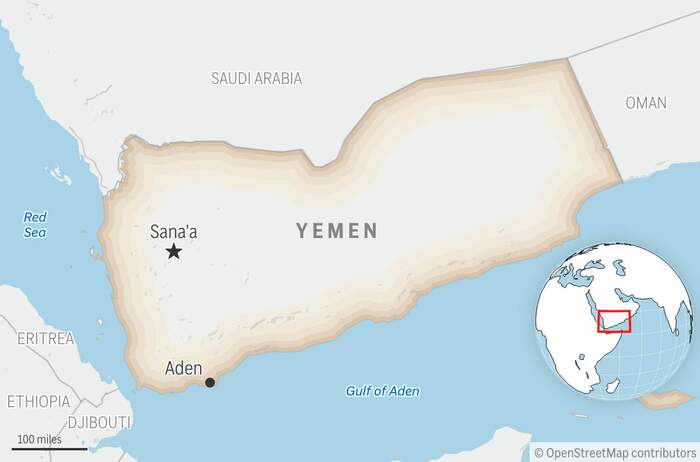
To grasp why southwestern Yemen bleeds with such grim regularity, you have to look at a map—not as a collection of borders, but as a chokepoint of global survival.
The southwest corner of the Arabian Peninsula borders the Bab el-Mandeb Strait, a narrow ribbon of water separating the Red Sea from the Gulf of Aden. Through this maritime corridor passes a massive share of the world's container ships, oil tankers, and commercial freight. When the Houthis began targeting international shipping in the Red Sea—framing their attacks as solidarity with Palestinians in Gaza—this quiet, impoverished stretch of coastline was suddenly thrust back into the crosshairs of global superpowers.
Suddenly, the skies over southwestern Yemen were no longer just patrolled by regional aircraft. American and British fighter jets, alongside naval assets, entered the fray, launching waves of strikes aimed at degrading Houthi radar, missile batteries, and drone capabilities.
Here is the brutal irony that rarely makes it into the breaking news alerts: the global economy worries about shipping delays and rising insurance premiums on cargo vessels, while the people living along the coastal plains and inland valleys of southwestern Yemen absorb the kinetic fallout.
Every time a missile is launched toward the sea, the retaliation lands near the villages. And because southwestern Yemen sits at the volatile intersection of Houthi-controlled highlands and territories held by rival Yemeni factions backed by regional powers, the region is a patchwork of overlapping frontlines. Taiz, Yemen’s third-largest city, has lived under a suffocating siege for nearly a decade, divided by snipers and landmines. Hodeidah, the vital port city to the northwest, remains a fragile lifeline through which the vast majority of Yemen's food imports must pass.
When an airstrike hits a market in this corridor, it does not happen in a vacuum. It lands on a population already hollowed out by ten years of war, cholera outbreaks, currency collapse, and the quiet, grinding violence of chronic malnutrition.
The Invisible Casualties
Thirty dead is the number that makes the ticker. It is the number that prompts a brief statement of "deep concern" from a foreign ministry spokesperson before the news cycle pivots to the next crisis.
Nobody counts the thirty-first casualty—the diabetic grandmother whose insulin clinic was flattened in the adjacent alley. Nobody counts the seventy-two people pulled from the debris with severed limbs, ruptured eardrums, and lungs scorched by superheated dust, who will now spend the rest of their lives navigating a healthcare system where hospitals lack electricity, anesthesia, and basic antibiotics.
Consider what happens next in a town after a market strike.
First comes the silence, heavy and suffocating, broken only by the high-pitched ringing in survivors' ears. Then comes the frantic digging—not with heavy cranes or thermal imaging equipment, because none exist here, but with bare hands, shovels, and bent pieces of sheet metal. Neighbors pull neighbors from beneath collapsed cinderblocks. They load the wounded into the backs of battered Toyota Hilux pickups, racing down cratered roads toward regional clinics that were already overwhelmed before the first bomb fell.
And then comes the psychological contagion.
Once a market is bombed, fear becomes a permanent resident of every public square. Mothers hesitate to send their sons to fetch water. Farmers think twice before driving their produce into town, which immediately drives up the price of tomatoes, flour, and cooking oil for everyone else. A single airstrike does not just kill the people standing under the blast; it starves the people who survive it by severing the fragile threads of local commerce.
A Pattern Written in Ash
If this story feels hauntingly familiar, it is because we have watched this exact tragedy unfold across Yemen for a decade.
In 2016, airstrikes tore through a bustling market in Mastaba, in northern Hajjah province, killing nearly a hundred civilians, including dozens of children. In 2018, a strike hit a crowded fish market and the entrance to a hospital in Hodeidah, leaving scores dead among the stalls of freshly caught mackerel and tuna. In 2019, missiles struck a detention center in Dhamar and markets along the Saudi border.
Each time, the choreography of outrage and deflection repeats itself with mechanical precision. Wire agencies publish the initial death toll attributed to Houthi authorities. Western capitals express regret over civilian casualties and reiterate their commitment to self-defense or regional stability. Human rights groups demand independent investigations that rarely materialize with any teeth.
And within forty-eight hours, the world moves on.
We tell ourselves that Yemen is too complicated, too distant, too entrenched in ancient grievances for outsiders to ever truly untangle. That confusion is comforting because it absolves us of attention. When a conflict feels incomprehensible, numbness feels like a rational response.
Yet there is nothing complicated about a vegetable market at seven in the morning. There is nothing ambiguous about a merchant weighing grain on a tin scale, or a child waiting beside a cart for a piece of warm bread, or the sudden, blinding flash that erases them both in a fraction of a second.
By late afternoon in southwestern Yemen, the smoke from the market eventually dissipates, carried away by the hot desert wind toward the Red Sea. Neighbors sweep the shattered glass and splinters of wooden crates into neat piles along the edge of the dirt square. Someone sets up a makeshift wooden table where a stall used to stand, laying out a small row of bruised tomatoes and bundles of herbs, because tomorrow morning people will still wake up hungry, and the living have no choice but to keep trading beneath a sky that offers no guarantees.


