The defense establishment is currently obsessed with the idea of a "drone gold rush." Analysts are salivating over the "oil-like" demand for loitering munitions, claiming we are witnessing a revolutionary shift in military procurement.
They are wrong. They are mistaking a desperate, low-tech survival pivot for a high-tech evolution.
What is happening in Ukraine and the Middle East isn't the birth of a sophisticated new industry. It is the commodification of airborne junk. To compare the current demand for FPV (First Person View) drones and Shahed-style mopeds to the global oil trade is an insult to the complexity of energy markets. Oil is a foundational resource; the current drone surge is a frantic race to see who can build the most effective flying pipe bomb out of plastic and hobbyist circuitry before the electronic warfare (EW) environment renders it obsolete.
The Quality Death Spiral
The industry consensus says that scale is the answer. If Russia can churn out 100,000 drones a month and Ukraine can match it, the side with the most "pixels in the sky" wins. This logic is fundamentally flawed because it ignores the Electronic Warfare Entropy Law.
In a traditional arms race, $Capability + Scale = Dominance$.
In the drone war, the equation is breaking. As soon as a specific frequency or flight controller becomes standard enough to "scale," it becomes a massive, glowing target for EW suppression. The moment you achieve the "oil-like" volume the pundits crave, your entire fleet becomes useless. We aren't seeing a "rush" toward a stable asset; we are seeing a frantic, short-term churn of disposable tech that has a shelf life of about three weeks.
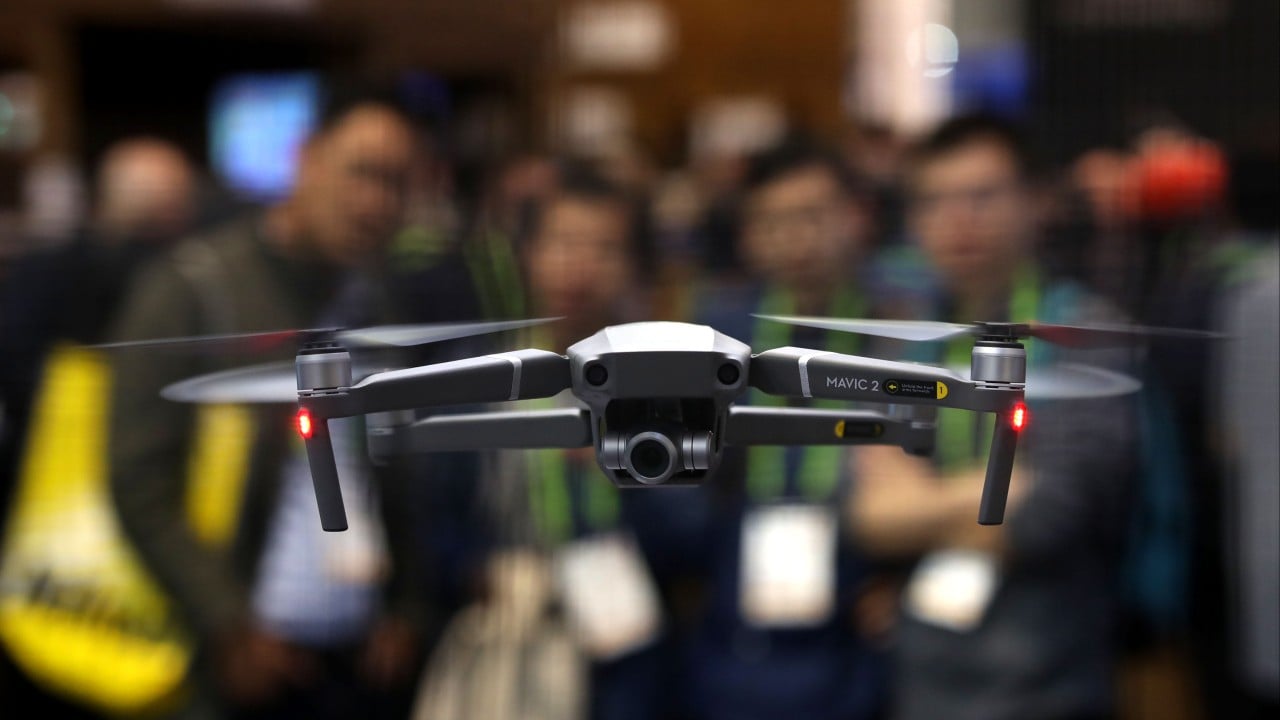
I have watched defense contractors pitch "modular drone architectures" to the Pentagon for years. They talk about "interoperability" and "robust ecosystems." Meanwhile, on the ground in the Donbas, soldiers are duct-taping analog signals to Chinese racing frames because the "robust" systems are too slow to update and too expensive to lose.
The "demand" isn't for drones. The demand is for a solution to the fact that traditional artillery is too slow and traditional air power is too vulnerable. Drones are merely a temporary, fragile Band-Aid.
The Myth of the Iranian Mastermind
The media loves to paint Iran’s drone industry as a shadowy, high-tech powerhouse. It’s a compelling narrative, but it's a lie. The Shahed-136 is not a feat of engineering; it is a feat of logistics and cynicism.
It uses a civilian-grade MD 550 piston engine—essentially a lawnmower motor—and GPS components you can find in a delivery truck. Iran hasn't "unlocked" some new tier of warfare. They simply realized that if you send 50 pieces of cheap trash at a $2 million Patriot missile battery, the math eventually works in your favor.
This isn't an "Oil Rush." Oil has intrinsic value. A Shahed has negative value the second it is detected. It is a one-way ticket that relies entirely on the incompetence or resource exhaustion of the defender. When the West finally scales its directed-energy weapons (lasers and high-powered microwaves), the entire Iranian "drone doctrine" will vanish overnight. You can't "deplete" a laser's magazine.
The False Economy of Cheap
We are being told that "cheap is the new lethal."
- The Argument: A $500 drone taking out a $5 million tank is the ultimate ROI.
- The Reality: That $500 drone requires a pilot who took months to train, a sophisticated EW support team to keep the signal live, and a localized logistics chain that is constantly being hunted.
When you factor in the attrition rates—where some units report losing 90% of their drones to jamming before they even see a target—the "cheap" drone starts looking exceptionally expensive. We are burning through human capital and specialized talent to pilot hobby toys.
I’ve spoken with electronic warfare officers who find the current "drone rush" hilarious. They aren't worried about the drone; they are worried about the spectrum. The real war is being fought in the invisible frequencies, yet the "insiders" are still counting how many plastic shells are coming off a factory line in Tatarstan. It’s like counting how many horses a cavalry has while the enemy is building a tank.
Why Your "Drone Stocks" Are a Trap
Investors are flocking to drone manufacturers thinking they’ve found the next Lockheed Martin. They haven't.
Traditional defense giants make money through proprietary "moats"—technology that is impossible to replicate. The current drone market is the opposite. It is a race to the bottom. If anyone can build a drone in their garage using parts from AliExpress, where is the profit margin?
The "Oil Like" demand exists only because the current conflict is stagnant and stuck in a trench-warfare loop. If the front moves, or if EW capabilities jump forward one generation, these "revolutionary" drone companies will be left holding warehouses full of specialized e-waste.
The Fatal Flaw in "Sovereign Supply Chains"
Governments are screaming about "onshoring" drone production to avoid reliance on China. This is a noble, expensive, and ultimately futile gesture.
The entire global drone economy is built on a foundation of Chinese components. From the flight controllers (Betaflight/ArduPilot) to the brushless motors and the lithium-polymer batteries, the "West" is effectively trying to build a wooden car while China owns all the trees.
Trying to create a "sovereign" supply chain for $1,000 drones is a financial suicide mission. You cannot compete with the scale of Shenzhen while paying Western wages and adhering to Western environmental regulations. The "rush" for domestic drones is just a taxpayer-funded subsidy for an industry that cannot survive a free market.
The Coming Silence
The drone era as we see it now—thousands of buzzing quadcopters filling the sky—is a fluke. It is a specific result of a specific type of war where neither side has total air superiority and neither side has perfected wide-area frequency denial.
We are currently in the "biplane" phase of this technology. Everyone is excited because it’s new and it’s killing people in novel ways. But just as the biplane was wiped out by the monoplane and then the jet, the "consumer-grade" drone war is about to hit a wall.
The next phase isn't "more drones." It’s total spectrum dominance.
When the sky goes silent because every signal is being crushed by localized high-altitude jamming, all those "oil-like" drone assets will become very expensive paperweights. The companies building them will go bust. The generals who relied on them will be left blind.
Stop looking at the drones. Start looking at the silence.
Would you like me to analyze the specific electronic warfare counter-measures that are currently making 80% of hobbyist-derived drones obsolete on the front lines?