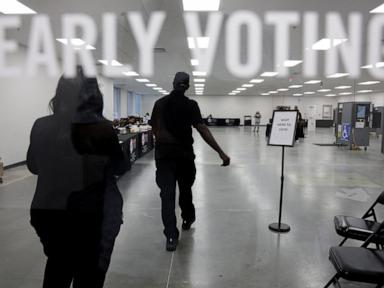
The Department of Justice issued a stark warning to local election administrators. Preserve your records, or pack a toothbrush for federal prison.
Mainstream coverage treated this as a heroic stand for democratic accountability. They parroted the official press release, nodded gravely at the statutory citations, and moved on to the next news cycle. That coverage misses the entire plot. In other developments, we also covered: The Operational Mechanics of Captive Megafauna Milestone Enrichment.
Threatening overworked, underpaid county clerks with federal incarceration does not secure an election. It accelerates the exact institutional collapse it claims to prevent. When Washington weaponizes criminal statutes against local administrators over paperwork compliance, the result is not pristine record-keeping. The result is a mass exodus of institutional knowledge, replaced by terrified bureaucrats who prioritize legal self-preservation over running a functional voting precinct.
The Lazy Consensus Around Federal Enforcement
Every time the DOJ reminds local officials about Title 52 of the United States Code—specifically the Civil Rights Act of 1960—pundits applaud the toughness. The surface-level logic sounds great on cable news. Laws exist. People break them. Threaten jail time, and compliance follows. The New York Times has also covered this critical issue in extensive detail.
This perspective ignores how elections actually function on the ground.
Local election administration in the United States is wildly decentralized. Over 10,000 individual jurisdictions manage voting across the country. Many are run by small municipal clerks who also handle dog licenses, property tax assessments, and marriage certificates. They operate on shoestring budgets, rely on temporary seasonal workers, and navigate labyrinthine state and federal mandates that frequently contradict one another.
I have sat in county commission meetings where a clerk had to beg for $4,000 to buy locked filing cabinets just to meet basic chain-of-custody requirements. When federal prosecutors wave the threat of felony charges at these administrators, they are not deterring masterminds of election subversion. They are terrifying sixty-two-year-old civil servants who already deal with daily death threats from conspiracy theorists.
What Title 52 Actually Requires (And Where It Breaks Down)
To understand why the DOJ's saber-rattling is counterproductive, look at the actual mechanics of federal retention laws.
Under 52 U.S.C. § 20701, election officers must retain and preserve all records and papers relating to any application, registration, payment of poll tax, or other act requisite to voting for twenty-two months following a federal election. Willful failure to comply carries a fine of up to $1,000, imprisonment for up to one year, or both.
Notice the word willful.
In federal criminal law, proving willfulness requires establishing that a defendant acted with knowledge that their conduct was unlawful. A clerk who accidentally overwrites a temporary server log during a routine software update has not committed a federal crime. An administrator who misfiles a batch of provisional ballot envelopes in the wrong storage box has not violated Title 52.
Yet, the DOJ's public posture blurs the line between malicious destruction and administrative error. By broadcasting jail-time warnings without emphasizing the high bar of criminal intent, federal officials turn every clerical mistake into a potential existential crisis for local staff.
The Digital Retention Trap
Paper is easy to put in a box and tape shut. Data is a nightmare.
Modern elections generate massive digital footprints. Ballot images, cast vote records, audit logs, poll book check-in timestamps, and router traffic all fall under the broad umbrella of "records and papers" in the eyes of aggressive litigators.
Most local jurisdictions do not employ dedicated cybersecurity engineers or enterprise data architects. They buy turnkey systems from a handful of private vendors. Imagine a scenario where a county clerk updates their electronic poll book software six months after an election because a vendor pushes a mandatory security patch. That patch inadvertently purges local cache files from the previous November.
Under the current climate of hyper-litigation and federal threats, that clerk is now looking over their shoulder wondering if a federal prosecutor will view a routine IT update as evidence tampering. The law was written in 1960 for paper ledgers, yet it is being enforced with maximum rhetorical aggression in an era of cloud infrastructure and proprietary black-box software.
Dismantling the Wrong Questions
When the public searches for information on election record retention, they usually fall into two traps. Either they assume massive fraud is being covered up by shredded ballots, or they assume local officials are completely above the law. Both premises are broken.
Are election officials routinely destroying ballots to hide fraud?
No. The overwhelming majority of record retention failures stem from incompetence, inadequate storage facilities, obsolete technology, and ambiguous state guidelines—not coordinated criminal conspiracies.
When a precinct loses a memory card or fails to retain a specific type of envelope, partisan operatives immediately scream cover-up. In reality, it is almost always a failure of standard operating procedures. Treating systemic underfunding as a criminal conspiracy guarantees you will never fix the underlying operational flaws.
Does threatening jail time deter bad actors?
If someone is genuinely willing to commit felony election fraud to alter the outcome of a federal race, a reminder about a misdemeanor retention statute will not stop them.
Think about the asymmetry here. A rogue actor attempting to subvert an election is already risking decades in prison under conspiracy, wire fraud, and deprivation-of-rights statutes. Telling them they might also get a year in jail for throwing away the paperwork is like telling a bank robber they will get a parking ticket for blocking the hydrant outside. Criminal threats only deter people who care about following the rules—which means they exclusively stress out the honest administrators.
The Exodus of Institutional Memory
The real damage of the DOJ's approach shows up in turnover rates.
Data from the Bipartisan Policy Center and Reed College highlights a massive wave of departures among senior election officials over the last several years. Nearly one in five local election officials planned to leave their jobs before the 2024 cycle even began, and the trend has only accelerated into 2026.
When an experienced county director quits, twenty years of muscle memory walks out the door. They are replaced by someone brand new who has never managed a recount, never calibrated an optical scanner, and never dealt with a sudden surge in mail-in ballots.
Who is more likely to violate federal record retention laws? The seasoned veteran who knows every form by heart, or the panicked rookie learning the ropes three months before a primary?
By leading with punitive threats instead of operational support, the federal government actively manufactures the exact errors it claims to police. You cannot prosecute your way to administrative competence.
The Downside of Backing Off
Let us be completely candid about the flip side. If the DOJ stops issuing stern warnings and takes a purely hands-off approach, bad things happen too.
Without clear federal guardrails, hyper-partisan local boards could easily decide to purge voter rolls, destroy audit trails, or withhold public records to shield their own mismanagement from scrutiny. In recent cycles, we have already seen rogue county commissioners refuse to certify legitimate results based on debunked theories. Removing the threat of federal prosecution entirely would hand a blank check to ideologues who view administrative rules as optional.
The problem is not that federal enforcement exists. The problem is that enforcement is being used as a substitute for infrastructure, funding, and clear technical standards.
What Actually Fixes Election Record Compliance
If the Department of Justice and Congress actually want bulletproof record retention across all 10,000 jurisdictions, they need to stop issuing press releases about prison cells and start fixing the operational pipeline.
- Standardize Digital Chain-of-Custody Protocols. The Election Assistance Commission (EAC) needs to establish rigid, uniform data-export standards for all certified voting systems. Local clerks should not have to guess which log files constitute a federal record. Pressing a single button at the end of an election cycle should generate an immutable, encrypted archive ready for twenty-two months of cold storage.
- Fund Dedicated Compliance Infrastructure. Federal grants through the Help America Vote Act (HAVA) are chronically erratic and tangled in red tape. Congress must establish permanent, predictable funding specifically earmarked for physical storage security, enterprise data backups, and legal counsel for local election offices.
- Create a Safe Harbor for Good-Faith Errors. Federal guidelines should explicitly distinguish between administrative negligence and willful destruction. If a jurisdiction self-reports an accidental data loss or storage failure and submits to a state-led remediation audit, criminal liability should be off the table. Transparency thrives when officials are not terrified of self-incrimination.
- Decouple Routine IT Maintenance from Retention Violations. Vendors must be legally barred from pushing software updates that alter or wipe historical election partitions without triggering an automated, third-party backup. Put the compliance burden on the multi-million-dollar software companies, not the minimum-wage poll workers.
The Cost of Theater
Washington loves a tough-on-crime headline. Issuing memos about federal prison sentences lets political appointees look decisive without spending a dime on actual election infrastructure.
Meanwhile, in basement offices across the country, exhausted clerks are staring at overflowing cardboard boxes and glitchy software, wondering if a simple filing mistake will ruin their lives. You can threaten them with jail all day long, but when the last competent administrator turns in their keys and locks the door, nobody will be left to count the votes—let alone preserve the receipts.