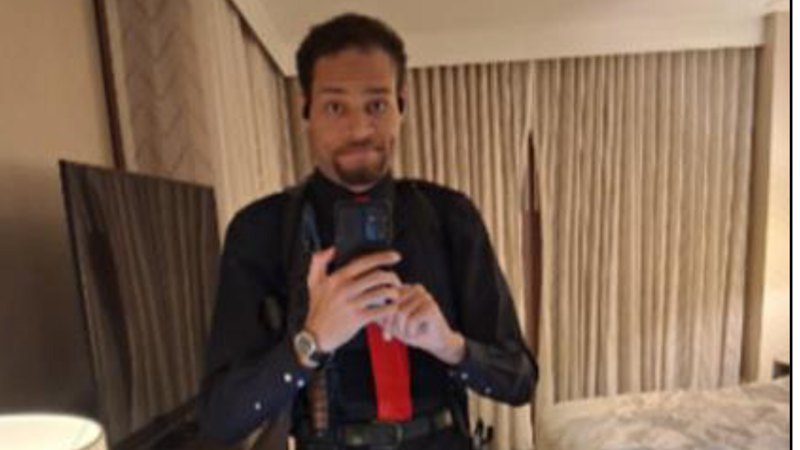
The modern era of political violence has traded the shadows for the glow of a smartphone screen. Recent investigations into an alleged assassination plot reveal a detail that is as baffling as it is characteristic of the current age. Before moving to carry out a high-stakes strike, the suspect paused to take a selfie in their hotel room. This was not a mistake born of technical ignorance. It was a symptom of a fundamental shift in how extremist actors view their own actions and their place in the historical record.
The selfie, often dismissed as a mark of vanity, has become a critical piece of forensic evidence. In this specific case, the image captured more than just a face. It documented the suspect’s psychological state, their physical environment, and the mundane reality that precedes a moment of intended chaos. Law enforcement officials and intelligence analysts are now forced to reckon with a new breed of threat. These individuals do not seek to disappear. They seek to be seen, even if the seeing happens through the lens of a self-incriminating photograph recovered from a cloud server. For a deeper dive into this area, we recommend: this related article.
The Psychology of the Pre-Crime Selfie
Security experts have long studied the "manifesto" as the primary psychological outlet for the lone-wolf actor. Historically, these were dense, typewritten screeds designed to explain a warped worldview. Today, the manifesto has been replaced by the metadata of a lifestyle. When a suspect takes a photo of themselves in a nondescript hotel room before an alleged attempt, they are engaging in a form of self-mythologizing.
This behavior suggests a detachment from the gravity of the act. The digital interface acts as a buffer. By framing themselves within the familiar context of social media aesthetics, the suspect attempts to normalize an extreme outlier of human behavior. They are the protagonist in a movie of their own making. This "protagonist syndrome" creates a trail of digital breadcrumbs that investigators are increasingly adept at following. It is a paradox of modern security. The very narcissism that fuels the desire for such an act often provides the tools for its own undoing. For broader context on this issue, comprehensive analysis is available on The Guardian.
Tactical Errors Hidden in Plain Sight
Beyond the psychological implications, these images are a goldmine for forensic investigators. A selfie is rarely just a selfie.
- Geolocation and Timing: Every digital image contains EXIF data. Even if GPS is disabled, the lighting, the view from a window, or specific furniture patterns can pinpoint a location with terrifying accuracy.
- Logistical Reveals: In the background of a seemingly innocent photo, investigators might find receipts, specific brands of equipment, or discarded packaging that indicates where the suspect has been and what they have purchased.
- Behavioral Indicators: The presence of certain items—or the lack thereof—tells a story about the suspect's level of preparation. Is the room meticulously organized, or is it a mess of last-minute panic?
The Failure of Traditional Surveillance
We live in a world saturated with cameras, yet we still miss the most obvious threats. The fact that a suspect can check into a hotel, prepare for an attack, and document their progress suggests a massive gap in how we monitor high-risk environments. Traditional surveillance relies on external observation. It looks for people acting "suspiciously" in public spaces. It does not account for the person who looks perfectly normal while documenting their own descent into violence from behind a locked door.
Hotel security is notoriously porous. Staff are trained in hospitality, not counter-terrorism. A guest taking a selfie in their room is the most unremarkable event in the world. This creates a blind spot. The suspect’s digital trail exists in a private sphere that is legally and technically difficult to penetrate until after a crime has been committed or a tip-off occurs. We are effectively playing a game of catch-up, analyzing the data of a tragedy rather than using that data to prevent it.
The Metadata Trap
The reliance on digital documentation creates a "metadata trap" for the modern extremist. They want the glory of the act, but they cannot resist the urge to record the process. This tension between operational security and the need for recognition is a vulnerability that intelligence agencies are starting to exploit.
By monitoring specific patterns of digital behavior—not just keywords, but the way individuals interact with their devices in specific geographic clusters—authorities can occasionally flag anomalies. However, the sheer volume of data is overwhelming. For every one suspect taking a selfie before an alleged crime, there are millions of tourists doing the same thing. Finding the signal in that noise is the defining challenge of 21st-century policing.
Rethinking the Lone Wolf Narrative
The term "lone wolf" is increasingly inaccurate. While these individuals may act alone physically, they are digitally tethered to communities that radicalize and encourage them. The selfie is often intended for this audience. It is a signal to the tribe.
The investigation into the hotel room photo reveals a person who likely felt they were part of something larger than themselves. They were not just a suspect; they were a content creator for a radicalized niche. When we look at that photo, we shouldn't just see a person with a camera. We should see the end result of an ecosystem that rewards extreme visibility. The digital world has stripped away the anonymity that used to be a prerequisite for an assassin.
Hard Targets and Soft Security
Current security protocols focus heavily on the "hard target"—the dignitary, the building, the event. We spend billions on armored cars and metal detectors. But the "soft security" of the surrounding infrastructure remains weak. Hotels near high-profile events are often the weakest link. They provide the staging ground, the privacy, and the internet access required for a suspect to finalize their plans and upload their intent.
There is a growing argument for more integrated communication between hospitality management and local law enforcement during high-risk periods. This doesn't mean violating guest privacy on a whim. It means establishing clearer red flags for behavior that transcends the typical guest experience. A suspect staying in a room for days without leaving, refusing housekeeping, and maintaining a heavy digital presence might be nothing—or it might be the next headline.
The Evolution of Evidence
The transition from physical evidence to digital artifacts has changed the courtroom forever. A selfie taken moments before an arrest is a powerful tool for a prosecutor. It establishes presence, intent, and state of mind in a way that eyewitness testimony rarely can. It removes the "reasonable doubt" of whether a suspect was actually in a specific location at a specific time.
However, this reliance on digital evidence also introduces new risks. Deepfakes and metadata manipulation are becoming more sophisticated. While there is no evidence of that in this current case, the future of investigative journalism and legal proceedings will have to account for the possibility that the "digital breadcrumbs" could be planted. For now, the suspect’s own hand remains their most effective accuser.
The selfie in the hotel room is a chilling reminder that the line between private life and public threat has vanished. We are no longer looking for the man in the tan coat standing on the corner. We are looking for the person in room 402, staring into their own camera, waiting for the right moment to step out of the screen and into history.
Law enforcement agencies must stop treating digital footprints as an afterthought and start treating them as the primary theater of operations. The investigation shouldn't start after the shot is fired. It should start the moment the first pixel is uploaded. If the goal of these actors is to be seen, then we must ensure we are looking in the right direction long before they press the shutter button for the last time.
The reality of modern security is that we are swimming in a sea of self-generated intelligence. The suspects are doing half the work for us, documenting their own path to a cell. The challenge isn't a lack of information. It is the courage to act on the patterns that are staring us right in the face.