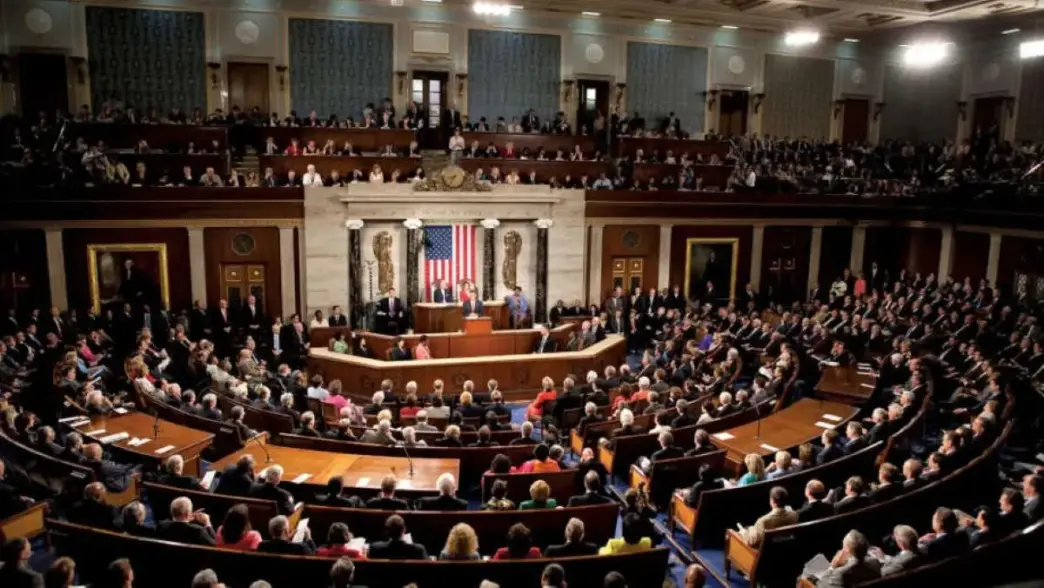
Democrats have captured control of both the House of Representatives and the Senate in the US midterms, ending divided government on Capitol Hill and handing the party unified legislative power for the next two years. The sweep defied historical midterm trends that almost always punish the party in power or leave Congress deadlocked. By flipping critical suburban House districts and holding vulnerable Senate seats across battleground states, Democratic strategists executed a targeted turnout operation that neutralized traditional off-year voter drop-off and reshaped the immediate legislative calendar.
Most post-election coverage focuses on the top-line seat counts and the raw drama of election night. That misses the structural mechanics of how this happened. You do not win both chambers in a midterm cycle by accident, nor do you do it on national messaging alone. You win by exploiting specific vulnerabilities in the opposing party's coalition while building an invisible ground infrastructure months before the first ballot is cast. For an alternative look, check out: this related article.
The Myth of the Inevitable Midterm Backlash
For decades, political analysts treated midterm elections like a law of physics. The president's party loses seats. Voters get restless, the opposition is angry, and the pendulum swings back. When pundits looked at the map heading into the US midterms, they saw a familiar setup. Economic anxiety lingered in the background, incumbent approval ratings were bruised, and historical precedent pointed toward a split Congress or an outright Republican wave.
History failed to repeat itself because the underlying electorate has fundamentally changed. Further insight on the subject has been shared by The Washington Post.
In previous eras, low-propensity voters stayed home during non-presidential years, leaving the field to older, more conservative demographics. Over the last several cycles, however, high-propensity voters—specifically college-educated suburbanites—have shifted decisively toward the Democratic column. These are the people who vote in school board elections, municipal primaries, and off-year midterms without needing a presidential race to drag them to the polls.
When you combine a reliable, high-turnout suburban base with targeted issue mobilization, the traditional midterm penalty evaporates. Republicans relied on historical gravity to pull them across the finish line. Democrats relied on math.
The Ticket-Splitting Extinction
Another major factor was the near-total disappearance of ticket-splitting. Twenty years ago, a voter in a swing district might comfortably back a Republican for Senate while choosing a Democrat for the House, evaluating candidates on local personality and constituent service. Today, federal races are almost entirely nationalized.
In state after state, the gap between the top of the ticket and down-ballot races shrank to a rounding error. This dynamic hurt Republican candidates in purple districts who tried to distance themselves from their party's national brand. Voters simply refused to separate the local candidate from the national party apparatus. When the national mood broke slightly toward Democrats in the final weeks, it lifted every Democratic boat in the harbor simultaneously, turning toss-up House races into narrow victories and saving endangered Senate incumbents.
Where the Maps Actually Turned
To understand the scale of the US midterms takeaways, you have to look past the cable news graphics and examine the county-level shifts. The battle was not won in deep-blue urban cores or deep-red rural counties. It was won in the sprawling, fast-growing ring suburbs surrounding major metropolitan areas, alongside a handful of mid-sized industrial towns where economic messaging finally found traction.
Consider how a hypothetical suburban district outside a major Sun Belt city behaves under pressure. Five years ago, that district leaned Republican by four points, anchored by chamber-of-commerce conservatives who cared primarily about tax rates and deregulation. Today, rapid population growth has brought in younger professionals, healthcare workers, and tech employees. While those voters still care about inflation and the cost of living, they are deeply alienated by hardline social policies and institutional instability.
Democrats stopped trying to win those voters over with broad ideological arguments and instead ran hyper-local campaigns focused on two things: protecting personal freedoms and delivering tangible infrastructure investments.
| Electoral Factor | Traditional Midterm Pattern | What Happened in This Cycle |
|---|---|---|
| Suburban Turnout | Drops sharply compared to presidential years | Remained near presidential-cycle levels in key districts |
| Ticket Splitting | Common in swing states and moderate districts | Virtually nonexistent; races moved as a unified bloc |
| Candidate Quality | Secondary to national economic mood | Decisive in tight Senate races where flawed nominees lost |
| Early Voting | Used primarily for convenience by base voters | Functioned as a defensive firewall against late GOP surges |
In the Senate, candidate quality proved to be the ultimate tiebreaker. Political operatives love to talk about macro trends, but individual candidates still matter when margins dip below two percent. In multiple battleground states, Republican primary voters nominated ideological purists who struggled to pivot toward general-election moderates. Democrats, by contrast, largely fielded disciplined incumbents or seasoned local officials who knew how to take a punch and stay on message.
The Money Machine and the Early Vote Firewall
Campaign finance reports tell a story that television ads never will. While national headlines obsessed over viral debate moments and polling fluctuations, Democratic fundraising platforms quietly built a massive cash advantage in the third quarter. More importantly, they spent that money differently than they had in past cycles.
Instead of dumping millions into expensive, last-minute broadcast television buys—where diminishing returns set in quickly—campaign managers poured resources into relational organizing and mail-in ballot chasing.
- Early Ballot Banking: Campaigns identified occasional Democratic voters early and tracked their ballot status daily through public voter rolls. Once a voter returned a mail-in ballot, the campaign immediately removed them from its target universe and redirected ad dollars and canvassers to remaining non-voters.
- Peer-to-Peer Outreach: Rather than relying solely on strangers knocking on doors, field directors used digital tools to prompt local volunteers to text their own friends, neighbors, and family members. Data consistently shows that a text from someone you know carries roughly ten times the persuasive weight of a cold call from a campaign headquarters.
- Micro-Targeted Digital Persuasion: Instead of running one message for an entire congressional district, campaigns served distinct digital ads to distinct households based on consumer data, emphasizing healthcare costs to seniors and local job creation to younger families.
By the time Election Day arrived, Democrats had already banked hundreds of thousands of votes in critical battleground states. Republicans, many of whom remained skeptical of early and mail-in voting due to years of internal party messaging, were forced to rely on massive single-day turnout. When bad weather, long lines, or simple daily life intervened on Tuesday, the GOP had zero margin for error.
What Unified Control Actually Means for Policy
Winning both chambers of Congress sounds like an unlimited mandate, but anyone who has spent time watching the legislative machinery on Capitol Hill knows better. Unified control does not mean effortless governance. It means the battle shifts from fighting the opposing party to managing your own.
With control of the House and Senate, Democrats immediately reclaim the gavel on every major committee. That gives them total control over the legislative calendar, floor votes, and investigative subpoenas. Dead-on-arrival bills suddenly have a path to the president's desk, and judicial confirmations—which stall out instantly when the opposition holds the Senate—can proceed at full speed.
Yet the math inside both chambers remains tight. A narrow majority empowers individual lawmakers to act as gatekeepers. Every moderate representing a Trump-won district and every progressive representing an urban stronghold now holds disproportionate influence. If five members in the House decide a bill goes too far, or if two senators balk at the price tag of a major spending package, leadership has to go back to the drawing board.
The Budget Reconciliation Trap
Because the Senate filibuster remains intact for standard legislation, Democrats will once again lean heavily on budget reconciliation—the arcane parliamentary procedure that allows tax, spending, and debt-limit measures to pass with a simple majority.
Reconciliation is a blunt instrument. Under the Byrd Rule, every provision in a reconciliation bill must have a direct, non-incidental impact on federal revenues or outlays. You cannot use it to pass sweeping voting rights reforms, overhaul federal labor laws, or codify social protections. You can only use it to move money.
This creates a predictable friction point. The party's base will demand bold action on campaign promises now that Democrats hold all the levers of power. Leadership, constrained by Senate rules and slim margins, will have to explain why sweeping structural reforms remain blocked by the 60-vote threshold. Managing that expectation gap will be the single hardest job for Democratic leaders over the next twenty-four months.
The Reckoning Inside the Republican Party
While Democrats celebrate a rare midterm sweep, the Republican Party faces an immediate and uncomfortable post-mortem. For the second consecutive cycle, strategies built around grievance politics and ideological purity failed to persuade the decisive middle of the American electorate.
The internal fault lines are already visible. Institutional Republicans and major donors are pointing directly at the primary process, arguing that partisan primary voters keep selecting candidates who cannot win general elections in purple states. Meanwhile, the populist wing insists the problem was not the candidates, but a failure by national party committees to spend enough money defending them in the final stretch.
Both arguments miss the deeper structural problem. The GOP coalition is becoming increasingly dependent on non-college-educated rural voters while steadily losing ground in the suburbs where population and economic growth are concentrated. You can win plenty of statewide races in conservative states with that formula, and you can remain competitive in the Electoral College, but it makes winning a national House majority or a durable Senate majority mathematically grueling.
Republicans also have to confront their self-inflicted handicap on voting mechanics. Treating mail-in voting and early ballot collection as inherently suspect ceded an enormous tactical advantage to Democrats. Until the GOP builds an equally aggressive, unapologetic early-vote operation, they will continue entering every Election Day playing from behind.
The Oversight Shift Nobody Is Watching
Beyond the headline-grabbing legislative battles, unified Democratic control completely transforms the oversight landscape in Washington. Under divided government, House committees spend years issuing subpoenas, holding televised hearings, and investigating executive branch agencies, grinding normal legislative business to a halt.
That entire apparatus just vanished.
Instead of investigating the administration, Democratic committee chairs will pivot their oversight powers toward corporate price gouging, private equity consolidation, pharmaceutical pricing, and the implementation of previously passed federal infrastructure and clean energy grants. Executive branch officials who would have spent fifty hours preparing for hostile congressional depositions can now focus on writing federal regulations and distributing billions in authorized funding.
At the same time, the Senate Judiciary Committee retains an unobstructed runway to confirm federal district and appellate judges. While Supreme Court vacancies capture all the public attention, the real day-to-day law of the land is shaped by the hundreds of circuit and district judges who issue final rulings on regulatory authority, environmental standards, labor disputes, and civil rights. Confirming dozens more lifetime appointees over the next two years will cement a judicial legacy that outlasts any single congressional session.
The Trap of Overreading the Mandate
Every party that defies historical expectations falls prey to the same temptation: believing the voters endorsed every single item on their wish list. That is a fatal miscalculation.
The coalition that handed Democrats control of the House and Senate is broad, fragile, and deeply pragmatic. Millions of swing voters pulled the lever for Democratic candidates not because they suddenly embraced progressive orthodoxy, but because they wanted competence, stability, and protection from what they viewed as extreme alternatives. Those voters are renting their support to the Democratic Party, not signing a lifetime lease.
If Democratic lawmakers spend the next two years chasing ideological purity tests or ignoring persistent cost-of-living pressures on working families, the suburban firewall that saved them in the midterms will crumble just as quickly as it formed. The voters who broke the midterm curse have already proven they are willing to cross party lines when they feel ignored—and they will not hesitate to do it again.