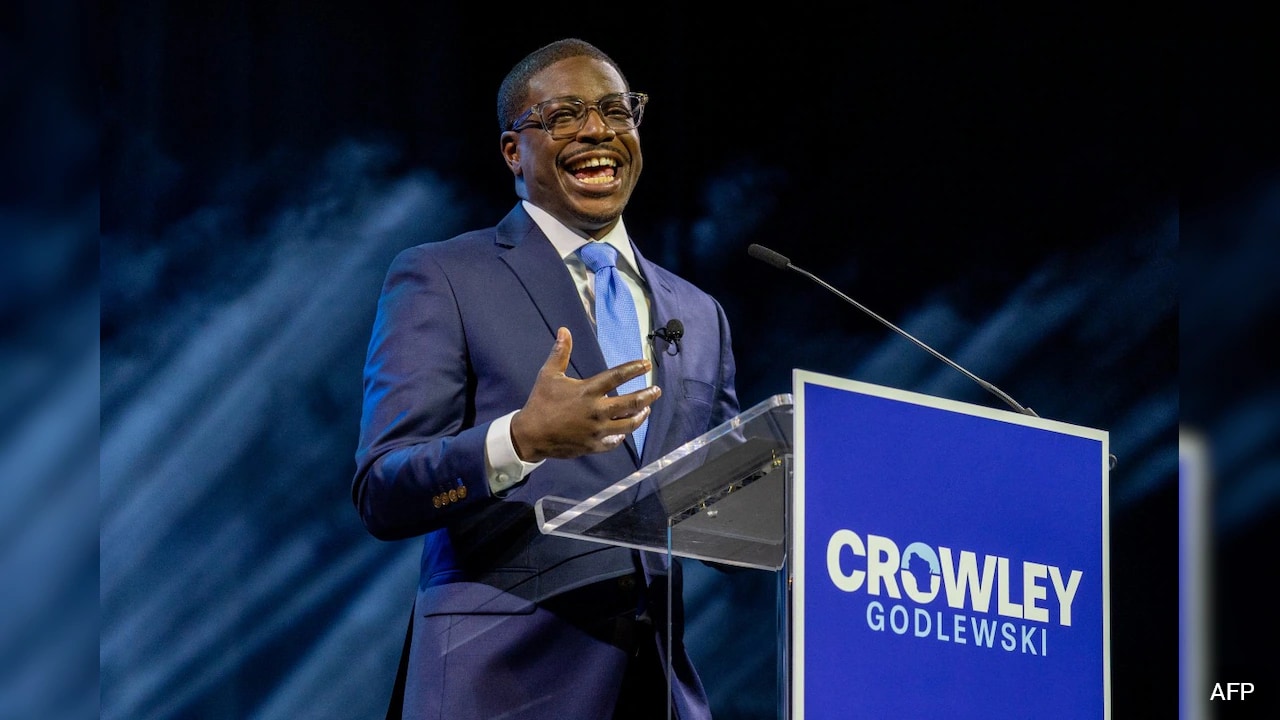
The Democratic surge in the U.S. midterm elections delivered a decisive check on Donald Trump’s second-term agenda, flipping the balance of power in Congress and exposing deep vulnerabilities in the Republican coalition. While surface-level photo essays capture the celebratory balloons and concession speeches, the real story lies in the structural mechanics of how the opposition party turned voter fatigue, suburban realignment, and localized economic grievances into a national electoral firewall.
Elections are rarely won on a single slogan. They are won in the trenches of voter turnout operations, district-level demographic shifts, and the quiet defection of independent voters who grow weary of executive chaos. Across battleground states, Democrats capitalized on a classic midterm dynamic—the "thermostatic" backlash against the party holding the White House—while executing a targeted ground game that bypassed national media narratives in favor of hyper-local kitchen-table issues.
The Anatomy of a Thermostatic Backlash
Political scientists have long observed that the American electorate acts like a thermostat. When one party controls the executive branch and pushes an aggressive agenda, voters instinctively dial back the heat two years later. In the 2026 midterms, that thermostatic reaction was turbocharged by two years of relentless executive actions, tariff disputes, and institutional friction under the Trump administration.
Historical precedent offers a clear roadmap here. From Bill Clinton in 1994 to Barack Obama in 2010 and Donald Trump himself in 2018, presidents almost invariably lose seats in their first midterm cycle. Yet the scale of the Democratic rebound suggests more than mere historical gravity. It points to an acute miscalculation by Republican strategists who assumed that a strong base turnout would compensate for hemorrhaging support among moderate, college-educated voters in the suburbs.
In swing districts stretching from the Rust Belt to the Sun Belt, independent voters broke decisively toward Democratic challengers. These were not ideological converts suddenly embracing progressive orthodoxy. Instead, they were pragmatic voters reacting to the tangible consequences of federal policy—specifically, the inflationary pressures triggered by broad trade tariffs and the ongoing instability surrounding federal healthcare subsidies. When voters feel that Washington is prioritizing ideological combat over administrative competence, they reach for the emergency brake.
Why the Suburbs Abandoned the GOP Again
If you want to understand the modern American electorate, stop looking at state-level maps and start looking at county-level ring roads. The suburban counties surrounding major metropolitan areas—places like Oakland County in Michigan, Chester County in Pennsylvania, and Maricopa County in Arizona—have become the undisputed kingmakers of federal elections.
During the presidential cycle, Republicans made notable inroads with working-class voters across racial lines, temporarily masking their structural decline in the suburbs. Without Donald Trump physically at the top of the ballot, however, that working-class coalition proved notoriously difficult to mobilize. Low-propensity voters who turn out every four years for a presidential spectacle frequently stay home during a November midterm.
Meanwhile, high-propensity suburban voters showed up in record numbers. Driven by concerns over reproductive rights, public education funding, and governance stability, these affluent, educated precincts delivered massive margins for Democratic House and Senate candidates. Republicans tried to counter this trend by nationalizing every race around border security and cultural grievances. That strategy worked in deep-red rural districts where GOP candidates were already guaranteed victory, running up the score in places that yielded zero additional seats. In competitive suburban districts, the message fell flat.
The Ground Game Advantage
Money matters in politics, but organizational infrastructure determines how efficiently that money converts into actual ballots. Over the past two years, Democratic campaign committees quietly poured hundreds of millions of dollars into year-round field offices, local precinct captains, and early-vote chasing operations.
Consider a hypothetical congressional race in a closely divided swing district. A candidate who relies heavily on late-cycle television advertisements and national cable news appearances might generate impressive social media engagement, yet fail to move the needle with undecided voters who tune out political commercials. Conversely, a campaign that invests early in neighbor-to-neighbor canvassing, targeted direct mail addressing local property taxes or hospital closures, and relentless ballot-curing efforts builds an insurmountable structural edge.
This organizational asymmetry became glaringly obvious on election night. In tight races decided by fewer than five thousand votes, Democratic field operations systematically outperformed polling averages. Republican campaigns, many of which had outsourced their traditional ground game to outside political action committees with varying degrees of competence, struggled to match the sheer volume of door knocks and phone calls executed by union networks and grassroots Democratic volunteers.
Economic Anxiety Cuts Both Ways
For much of the past decade, Republicans held a commanding polling advantage on the economy. Voters trusted the GOP more on inflation, job creation, and deregulation. That advantage eroded significantly heading into the midterms, largely because governing requires owning the economic reality on the ground.
When a party controls the White House, it cannot easily blame the opposition for high prices. While macroeconomic indicators like unemployment remained relatively stable, the cumulative cost of living continued to squeeze middle-class households. Housing affordability remained a severe crisis for younger voters, and broad import tariffs introduced by the administration began filtering down to consumer goods, squeezing retail margins and raising prices at the checkout counter.
Democrats seized on this vulnerability with surgical precision. Rather than debating abstract macroeconomic theory, successful Democratic candidates hammered specific, relatable costs. They talked about prescription drug prices, grocery bills, utility rates, and the threat to Social Security and Medicare. By framing themselves as defenders of middle-class financial security against corporate price gouging and erratic trade wars, Democrats neutralized the GOP's strongest traditional talking point.
The Limits of Nationalized Politics
One of the most overlooked factors in this midterm cycle was the deliberate decoupling of local Democratic brands from the national party apparatus. In previous cycles, Republican strategists successfully tied every moderate Democrat in a swing district to the most progressive voices in Congress, painting them as out-of-touch coastal elites.
This time, Democratic candidates in purple and light-red districts aggressively tailored their profiles to fit their local constituencies. Veterans, former prosecutors, small business owners, and local mayors dominated the Democratic recruitment slate. These candidates were not afraid to break with national party orthodoxy on energy policy, border enforcement, or fiscal spending when local conditions demanded it.
They ran on hyper-local records. A candidate in a rural agricultural district focused on farm bill subsidies and rural broadband access. A challenger in a manufacturing hub emphasized domestic supply chain investments and vocational training. By refusing to take the bait on national culture war controversies, these candidates denied Republican attack ads the ammunition they needed to alienate moderate voters.
What the Visuals Miss About Voter Sentiment
Photojournalism excels at capturing human emotion—the exhaustion of a poll worker at midnight, the tears of a losing candidate, the euphoria of a campaign headquarters erupting as networks project a flip. Yet images of cheering crowds inherently distort the reality of how Americans actually cast their ballots in a midterm election.
Most of the voters who powered the Democratic wave were not waving signs at rallies or wearing political merchandise. They were quiet, skeptical citizens filling out mail-in ballots at their kitchen tables or stopping by a local elementary school on their way home from work. Their votes were less an endorsement of a grand ideological vision and more a demand for normalcy, predictability, and institutional restraint.
Polling exit data consistently reinforces this nuanced reality. A significant portion of the electorate expressed dissatisfaction with both major political parties. Voters did not give Democrats a blank check to pursue sweeping legislative overhauls. Rather, they hired Democrats to serve as an institutional counterweight—to conduct oversight, block extreme judicial or cabinet appointments, and force bipartisan negotiation on basic government funding.
The Structural Headache Facing Republicans
For the Republican Party, the midterm losses expose a profound structural dilemma that goes far beyond a single election cycle. Over the last ten years, the GOP has successfully transformed itself into a populist, working-class party centered heavily around the personal brand and political instincts of Donald Trump.
That transformation unlocked massive electoral potential in rural America and former industrial strongholds, allowing Republicans to win the presidency twice. However, it has created a severe off-year turnout problem. The coalition that delivers victory in a presidential year relies disproportionately on voters who are deeply skeptical of traditional political institutions and largely disengaged from midterm elections.
When Trump is not on the ballot, the party struggles to transfer his unique political appeal to down-ballot senators, representatives, and governors. Candidates who attempt to mimic his combative style often alienate suburban moderates without inspiring the populist base to show up in November. Conversely, traditional conservative candidates who distance themselves from Trump risk depressing base turnout and inviting devastating primary challenges from the right.
Institutional Consequences for the Next Two Years
The immediate consequence of the Democratic victory is the end of unified Republican control in Washington, ushering in an era of divided government that will fundamentally alter the legislative calendar. With Democrats holding the gavel in the House—and potentially flexing newfound leverage in the Senate—the administration's unilateral policy sprint hits a brick wall.
Sweeping tax cuts, aggressive deregulation packages, and controversial judicial confirmations will face immediate procedural roadblocks. More importantly, the power of the congressional subpoena shifts hands. Democratic committee chairs now possess the authority to launch formal investigations into executive branch agencies, cabinet secretaries, and administration policies, dominating the daily news cycle and putting the White House constantly on the defensive.
Budget negotiations will become the primary battleground. With the federal debt ceiling and annual appropriations bills requiring bipartisan compromise to avoid government shutdowns, congressional Democrats will wield immense leverage to extract policy concessions and protect existing social programs from budget cuts.
The Danger of Democratic Overreach
History offers a stern warning to any party celebrating a midterm landslide: misinterpreting a mandate is the fastest way to lose it. In 1994, Republicans interpreted their historic wave as a mandate to dismantle federal programs, only to overplay their hand during government shutdown battles and hand Bill Clinton an easy reelection in 1996. In 2010, the Tea Party wave propelled Republicans to massive gains, yet internal party divisions repeatedly paralyzed legislative governance.
Democrats face that exact same trap. The coalition that delivered their midterm victories is ideologically fragile, stretching from democratic socialists in dense urban cores to cautious centrist pragmatists in suburban and rural swing districts. Attempting to use a narrow congressional majority to force through polarizing partisan legislation—rather than focusing on tangible economic relief and disciplined oversight—would immediately alienate the very independent voters who made the victory possible.
Voters sent a clear message that they want checks and balances, lower living costs, and functional governance, not endless partisan warfare. The party that figures out how to deliver measurable results inside a divided government will hold the upper hand when the presidential cycle begins anew, while any faction that mistakes a defensive protest vote for an ideological blank check will quickly find itself on the wrong side of the electorate's thermostat.