Mohammad Baqer Qalibaf, the Speaker of the Iranian Parliament, recently took to the airwaves to demand a ceasefire in Lebanon and the unfreezing of Iranian assets as a prerequisite for negotiations. The mainstream media dutifully reported this as a "stiffening" of the Iranian position or a strategic opening for diplomacy.
They are wrong.
What we are witnessing isn't a power play. It’s a distress signal masked as an ultimatum. The "lazy consensus" among geopolitical analysts suggests that Tehran holds a deck of high-value cards and is simply waiting for the right price to play them. This perspective ignores the fundamental reality of the current regional shift: Iran’s proxies are failing, its economy is a hollow shell, and its "red lines" have been erased with impunity over the last twelve months.
The Asset Freeze Fallacy
The demand to "unfreeze assets before talking" is the oldest trick in the book of failing regimes. It’s not a negotiation tactic; it’s a survival mechanism. Analysts treat these billions as a bargaining chip for the West. In reality, they are the only thing keeping the Iranian rial from a total, irreversible collapse.
When Qalibaf demands the deblocking of funds, he isn't looking for "economic cooperation." He is looking for a bailout to fund a domestic security apparatus that is increasingly terrified of its own population. I have watched analysts for decades treat these financial freezes as "incentives" for good behavior. They aren't. They are the only form of non-kinetic pressure that actually reaches the inner sanctum of the IRGC. Releasing them now, under the guise of "jumpstarting diplomacy," is akin to giving a fading arsonist more gasoline because he promised to help put out the fire.
The Lebanon Ceasefire Smoke Screen
The call for a ceasefire in Lebanon is framed as a humanitarian or regional stability concern. Let’s be blunt: Tehran doesn't care about the stability of Lebanon. It cares about the survival of Hezbollah’s missile infrastructure, which acts as Iran’s forward-deployed insurance policy.
The competitor narrative suggests that Iran is "mediating" for Lebanon. This is a fundamental misunderstanding of the client-patron relationship. Hezbollah is not a partner; it is a limb. When that limb is being systematically dismantled, the brain in Tehran screams for a "ceasefire" to allow for regrouping and re-arming.
- The Trap of Symmetric Diplomacy: We often fall into the trap of assuming both sides want the same outcome: peace.
- The Reality of Asymmetric Survival: For the Iranian leadership, "peace" is merely the interval between the current defeat and the next escalation.
If you want to understand the desperation, look at the timing. These demands didn't come when Hezbollah was at its peak. They came after the command structure was decapitated and the communication networks were compromised. A ceasefire now isn't a diplomatic win; it’s a strategic retreat disguised as a moral high ground.
Why "De-escalation" is a Dirty Word
The "People Also Ask" section of the internet is obsessed with one question: "How can we de-escalate the Middle East?"
This is the wrong question. It assumes that escalation is a mistake or a technical error. It isn't. Escalation is the direct result of a decade of failed deterrence.
The status quo that the "insiders" want to return to—the one where Iran funds regional chaos while the West occasionally unfreezes a few billion dollars—is exactly what led to the current explosion. Seeking "de-escalation" back to that point is like trying to fix a broken dam by putting the water back in the reservoir with a bucket.
True stability in the region doesn't come from a negotiated ceasefire that leaves the underlying terror infrastructure intact. It comes from a decisive shift in the balance of power. The idea that we can "negotiate" Iran out of its core revolutionary ideology is a fantasy sold by people who have never stepped foot in the region without a diplomatic escort.
The Failure of the "Rational Actor" Model
Western academia loves the "rational actor" model. It posits that if you increase the cost of an action, the actor will stop. This fails to account for ideological sunk costs.
The Iranian leadership has staked its entire legitimacy on the "Axis of Resistance." To expect them to pivot to a Western-style diplomatic settlement because of a few frozen bank accounts is to fundamentally misread the psychology of the regime. They aren't looking for a seat at the table. They are looking to flip the table over.
I’ve seen intelligence assessments that bend over backward to find "moderates" within the Iranian parliament. Qalibaf is often painted as one of these "pragmatists." But pragmatism in Tehran doesn't mean moving toward the West; it means finding the most efficient way to maintain the clerical dictatorship.
The Actionable Truth
If you are an investor, a policy-maker, or even a casual observer, stop waiting for the "Big Deal." It isn't coming.
The Middle East is currently undergoing a violent re-calibration. The old rules—where Iran could hide behind proxies and avoid direct consequences—are gone. Any "ceasefire" negotiated under the current terms will be temporary, fragile, and ultimately ignored by the players on the ground who are actually doing the fighting.
- Ignore the Ultimatums: When Tehran demands assets, it shows you where it is weakest. Double down on the freeze.
- Redefine Negotiation: Negotiations should only happen when the proxy threat is neutralized, not as a way to prevent that neutralization.
- Accept the Friction: Stop fearing escalation. Fear the "stability" that allowed the current crisis to bake for twenty years.
The world keeps asking when things will get back to "normal." This is the new normal. It is the sound of a regional order being rebuilt in real-time, and no amount of parliamentary posturing from Tehran can stop the momentum of a failing strategy meeting its inevitable conclusion.
Stop listening to the demands of a Speaker who can't even guarantee the safety of his own proxies. The era of buying temporary silence with frozen billions is over.
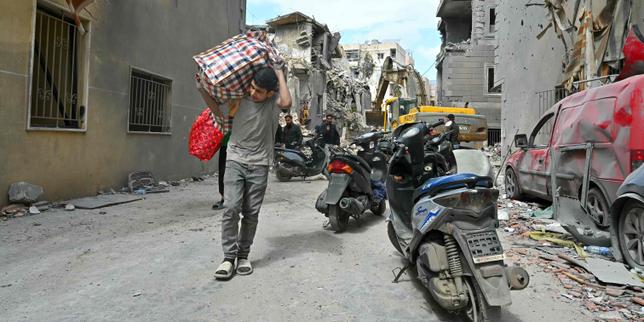
Pay attention to the silence from the streets of Tehran and the craters in Beirut. That’s where the real negotiation is happening. Everything else is just noise.