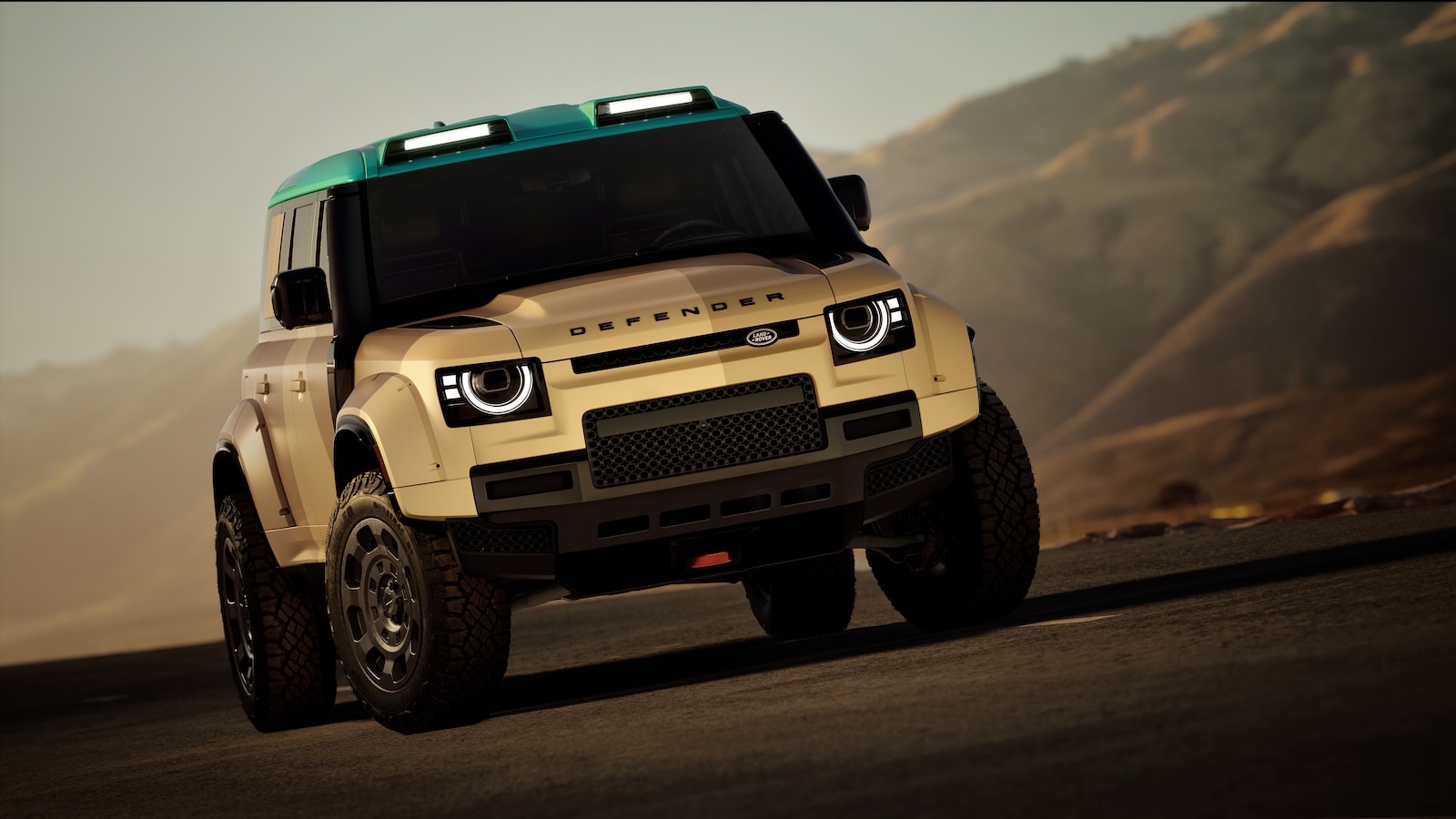
Automakers love the fantasy of the weekend warrior. They build machines capable of conquering the Rubicon, then sell them to commuters who never venture further off-road than a gravel shoulder on a rainy Tuesday. The Defender Dakar aims to shatter that cycle. By taking the architecture of the 2026 Dakar Rally winner—the D7X-R—and stripping away the restrictive FIA race regulations, Land Rover has created a monster. It packs an unrestricted 4.4-litre twin-turbocharged V8 churning out 635 horsepower and 750Nm of torque. It is a terrifyingly capable machine, but it raises a fundamental question about the future of performance luxury.
Is a race car for the road actually a good idea, or are we witnessing the pinnacle of automotive marketing excess?
The mechanical specifications are undeniable. You are looking at a wider track, increased ride height, and a suspension setup that relies on coil springs paired with motorsport-proven Bilstein Advanced Dampers. This is not the standard air-sprung setup found on the typical luxury SUV. It is a rigid, purpose-built system designed to handle the violent compression of high-speed desert crossings. The 35-inch all-terrain tires wrapped around forged 20-inch wheels are there to bite into loose surfaces, not to look pretty in a suburban driveway.
Then, there is the so-called Flight Mode. It sounds like a gimmick plucked from a flight simulator, but in the context of extreme terrain, it is a functional necessity. Developed specifically for the competition vehicle, this system manages damping rates to stabilize the vehicle when it becomes airborne. It essentially prepares the suspension for the inevitable impact of a landing. It is a bold piece of engineering, one that assumes the driver will actually treat their six-figure SUV like a long-travel rally raid truck.
The Reality of Rally Provenance
When a brand claims a vehicle is a road-legal version of a rally winner, there is often a vast disconnect. Usually, that involves a livery, some stickers, and maybe a slightly stiffer set of sway bars. The Defender Dakar approaches this differently. It retains the core D7X body architecture, transmission, and driveline directly from the race car. It is based on the Defender OCTA, which itself is no slouch, but the Dakar package pushes that foundation into a different tier of mechanical intensity.
However, we need to be realistic about what this represents. Driving this vehicle on a public road will be a study in compromises. High-performance off-road tires provide a specific feedback loop that is vastly different from the rubber on a standard passenger vehicle. The suspension tuning required to soak up massive desert whoops is fundamentally incompatible with the supple ride quality most buyers in this price bracket expect.
Land Rover knows this. They are betting on the desire for authenticity. Buyers today are tired of "adventure-themed" crossovers. They want to know that the tech under their seats has actually endured the hellscape of a competitive rally raid. It is a strategy that leans heavily on prestige. If you have the ability to drive the same engineering that won the 2026 Dakar, you are buying into a narrative of absolute capability. Even if you never jump the car, you own the fact that you could.
Engineering for the Impossible
The interior further highlights this departure from standard luxury norms. You are greeted by a 2+2 seating configuration, with race seats specifically designed to hold you in place during high-G maneuvers. The optional four-point harnesses are a dead giveaway that this is not meant for the school run. They have even engineered specific storage in the rear for helmets. It is a space designed for focus, not comfort.
The decision to include carbon fibre air intakes and a carbon fibre bonnet is not just about weight reduction. It is about heat management and durability. In the brutal heat of a rally, every degree counts. By bringing these components to a road-legal model, the engineers are trying to ensure that the 635hp V8 does not suffer from heat soak during spirited driving.
Yet, there is a gray area here. Does an unrestricted engine in a heavy SUV chassis create a liability for the average driver? 750Nm of torque is a monumental amount of twist to put through any drivetrain, regardless of how reinforced it is. The vehicle is designed to be pushed, but the limits of public roads and the skill levels of typical buyers do not always align with such high-performance hardware. This is a machine that requires a driver who understands vehicle dynamics, not just someone who wants the most expensive toy on the block.
The Cost of Exclusivity
We are looking at a limited-run project that will open for reservations in early 2027, with the full technical specs scheduled to drop at the 2027 Dakar Rally. This creates a vacuum of information that allows the legend of the car to grow before anyone has even driven it. By the time the first keys are handed over, the anticipation will likely have reached a fever pitch.
This model is not for the person who wants a sensible daily driver. It is for the collector who values the "unstoppable DNA" mentioned by management. The branding is masterful, playing on 75 years of heritage while simultaneously pushing into the future of extreme performance. They have managed to bridge the gap between historic off-road innovation and modern, high-horsepower rally raid technology.
But let us be clear about the nature of this vehicle. It is a race car that has been permitted to inhabit the civilized world. It will be loud. It will be stiff. It will be demanding. It is designed to expose the limitations of the environment it is placed in, rather than conforming to them. If you buy one, do not expect it to be a refined cruiser. Expect it to be a tool that demands constant engagement.
When Capability Becomes Excess
There is a point where engineering capability moves past necessity and into the territory of pure excess. We reached that point years ago, but the Defender Dakar seems to embrace it as a design philosophy. Why do you need Flight Mode for a grocery run? You do not. But the existence of that mode transforms the vehicle from a car into an object of fascination. It serves as a totem of what the brand can do when it stops worrying about market research and starts worrying about physics.
Ultimately, this vehicle stands as a testament to the current era of internal combustion. We are seeing engineers pour every bit of remaining potential into the traditional V8 architecture before the industry shifts elsewhere. The Defender Dakar is a final, loud, and incredibly fast statement. It is a visceral experience in a world that is becoming increasingly sterile and automated.
Whether it succeeds in the long term depends on how many owners are willing to treat it with the respect such hardware deserves. If it becomes a garage queen, it is a waste of genius engineering. If it is used exactly as its designers intended—hammered across dirt, dunes, and gravel—then it might just be one of the most important vehicles the company has ever produced. The choice is with the buyers, but the machine is ready for the assault.