The Structural Economics of Heavy Orbital Transport
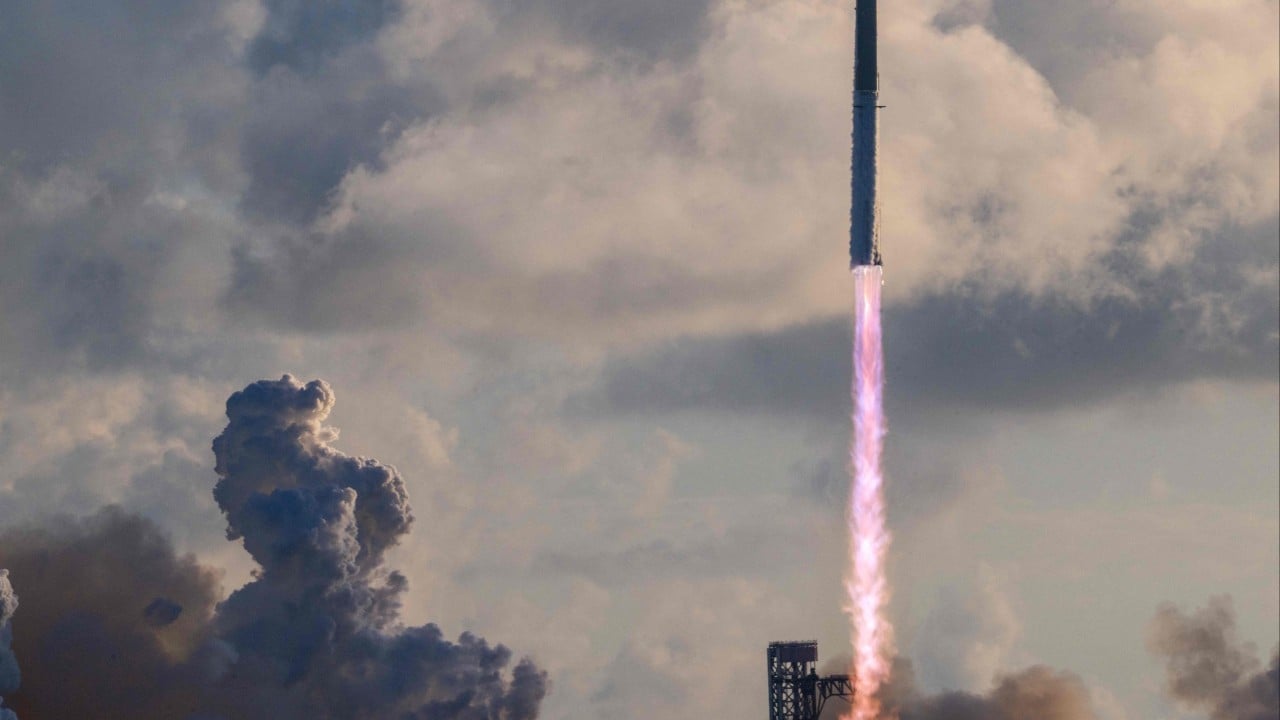
The transition of a multi-engine heavy-lift vehicle into stable Earth orbit marks a structural break in the aerospace cost curve. For six decades, commercial and government launch providers operated under an inherent constraint: payload mass was strictly bounded by the volumetric and thermal limits of expendable upper stages. When SpaceX executed orbital insertion with Starship, the engineering calculus shifted from minimizing structural dry mass to maximizing gross orbital delivery efficiency. This shift alters the economics of space-based infrastructure by replacing marginal optimizations with brute-force mass scaling.
To understand the operational reality behind this milestone, one must deconstruct the vehicle into its foundational economic and physical variables. Traditional launch architecture treats every kilogram of dry mass as a permanent loss of revenue potential. By integrating full reusability across both the Super Heavy booster and the Ship upper stage, the marginal cost of flight converges toward the cost of propellant and minor refurbishment. However, achieving this state requires solving a series of compounding mechanical, thermal, and fluid-dynamic bottlenecks that have historically plagued heavy-lift development.
The Propulsion and Stage Separation Vector
At the heart of Starship lies a propulsion architecture unprecedented in civil or commercial rocketry. Powered by thirty-three Raptor engines burning liquid methane and liquid oxygen in a full-flow staged combustion cycle, the Super Heavy booster generates over sixteen million pounds of thrust at liftoff. This cycle routes 100 percent of the oxidizer and fuel through separate preburners, driving both turbine pumps in gas phase before combustion in the main chamber. This architecture yields significantly higher operating pressures and specific impulse than traditional gas-generator or staged-combustion cycles, maximizing thermal efficiency and thrust-to-weight ratios.
This sheer power output introduces extreme vibrational and acoustic loads across the airframe, requiring advanced metallurgical choices, specifically high-strength stainless steel alloys (such as 301 steel), which maintain ductility and structural integrity at cryogenic temperatures while retaining strength during high-heat atmospheric reentry.
The physics of stage separation dictate the survival of the entire stack. Starship utilizes a hot-staging ring, allowing the upper stage engines to ignite while the booster is still firing. This technique maintains positive acceleration, eliminating the zero-g coast phase that traditionally destabilizes propellant settling in large tanks.
[Super Heavy Booster Active] ---> [Hot-Staging Ring Ignition] ---> [Starship Upper Stage Separation]
The fluid dynamics during hot-staging involve high-velocity exhaust plume management. Directing the energetic exhaust away from sensitive avionics and structural joints demands precise timing algorithms and structural venting. The success of this maneuver demonstrates that brute-force thrust can be managed through precise digital control loops, neutralizing the traditional trade-off between vehicle size and structural integrity.
Thermal Protection and Atmospheric Interception
Returning a 124-metre vehicle from orbital velocities requires an atmospheric entry profile that subjects the airframe to extreme thermal and mechanical stresses. Traditional spacecraft rely on single-use ablative shields or fragile ceramic tiles that demand weeks of post-flight hand-inspection. Starship utilizes a second-generation thermal protection system comprising hexagonal ceramic tiles backed by a secondary metallic heat shield layer and radiative cooling gaps.
During atmospheric entry, the vehicle executes a controlled belly-flop maneuver, utilizing its aerodynamic body flaps to manage descent velocity and attitude. This high-drag configuration distributes thermal loads over a broad surface area rather than concentrating them on a single stagnation point. The mechanical interplay between aerodynamic drag, active flap actuation, and thermal dissipation governs the survivability of the upper stage.
Orbital Velocity (7.8 km/s)
       |
       v
Atmospheric Entry (Belly-Flop High-Drag Profile)
       |
       v
Thermal Dissipation (Hexagonal Ceramic Tile Matrix)
       |
       v
Subsonic Flip and Landing Burn
The primary engineering challenge lies in tile retention under severe vibrational shear. Early test flights suffered from tile shedding due to acoustic resonance and differential thermal expansion between the steel hull and the ceramic matrices. Resolving this required shifting from mechanical pin-mounting to flexible elastomeric bonding agents combined with mechanical standoffs, ensuring that structural flexing does not fracture the thermal barrier. Furthermore, the interstitial gaps between tiles act as thermal expansion joints, preventing buckling under extreme thermal gradients ranging from absolute zero in space to over 1,400 degrees Celsius during plasma compression.
The Ground Infrastructure and Recovery Matrix
Rocket reusability is incomplete without ground infrastructure capable of matching the turnaround cadence of commercial aviation. The introduction of mechanical capture arms—colloquially termed chopsticks—on the launch and catch tower represents a fundamental break from traditional ocean splashdown recovery.
Catching a descending booster or upper stage mid-air eliminates the mass penalty of landing legs. Landing legs add dead weight to the vehicle, permanently reducing payload capacity because every extra kilogram of structural dead weight requires exponential increases in propellant mass at liftoff. By shifting the structural landing mechanisms to the fixed ground tower, the vehicle sheds hundreds of kilograms of dry mass on every flight, directly translating into higher payload margins.
| Infrastructure Component | Traditional Architecture | Starship Tower Catch Architecture |
|-------------------------|--------------------------|-----------------------------------|
| Landing Legs            | Airborne (Carried wet)   | Removed (Zero airborne dry mass)  |
| Recovery Basin          | Open Ocean / Barges      | Precision Launch Mount / Tower    |
| Turnaround Logistics    | Multi-week port transit  | Immediate pad inspection/stacking |
The operational complexity of a tower catch is governed by positioning accuracy under variable wind gradients. The guidance systems must calculate lateral wind shear in real time, adjusting grid fin deployment and throttle profiles to match the stationary capture envelope of the mechanical arms within centimeters. When wind velocities exceed structural safety margins, automated abort protocols must safely divert the vehicle to a controlled water-landing zone, balancing operational cadence with risk mitigation.
Propellant Transfer and Orbital Logistics
Reaching orbit is merely the foundational step; sustaining deep-space operations requires solving the orbital propellant transfer problem. Cryogenic propellants—liquid oxygen and liquid methane—are subject to boil-off caused by solar radiation, infrared Earth albedo, and thermal soakback. Storing hundreds of tons of cryogenic fluids in low Earth orbit demands active refrigeration loops, multi-layer insulation (MLI) blankets, and pressure-stabilization algorithms.
To execute lunar landing or interplanetary transit missions, a Starship vehicle in low Earth orbit must be refueled by multiple tanker flights. This requires precise orbital rendezvous, automated docking interfaces, and fluid transfer management in microgravity. Liquid sloshing dynamics inside large tanks can destabilize the vehicle's attitude control system during propellant transfer, requiring closed-loop dampening algorithms and low-thrust settling burns using cold-gas thrusters.
The economic viability of deep-space logistics hinges on tanker flight rate efficiency. If the turnaround time between tanker launches spans weeks, thermal boil-off will deplete the propellant inventory faster than it can be replenished. Therefore, the strategic bottleneck is no longer lifting mass to orbit, but achieving a high-frequency launch cadence capable of completing a full depot fill within a compressed operational window.
Fleet Economics and Payload Distribution Mechanics
The deployment of large satellite constellations, such as Starlink V3, provides a baseline commercial utility that funds ongoing development iterations. A single Starship flight can deliver dozens of heavy-class satellites into orbit, collapsing the cost per kilogram compared to smaller, expendable launch vehicles.
+-------------------------------------------------------+
|                Payload Scaling Matrix                 |
+-------------------------------------------------------+
| Vehicle Class    | Payload to LEO (t) | Cost per kg   |
+-------------------------------------------------------+
| Falcon 9 (Exp.)  | ~22.8 t            | Moderate      |
| Starship (Full)  | 150+ t             | Low           |
+-------------------------------------------------------+
This structural shift in payload capacity alters the design constraints of satellite manufacturers. Instead of miniaturizing components to fit within restrictive fairing volumes and mass budgets, engineers can design larger, higher-power payloads with redundant commercial-off-the-shelf hardware. The reduction in launch cost per unit mass changes the financial risk profile of space infrastructure investments, enabling high-risk, capital-intensive science and commercial projects that were previously economically unviable.
Operational Constraints and Failure Modes
Despite milestones in orbital insertion and recovery, significant failure modes remain unmitigated. Engine reliability across a thirty-three-engine cluster presents a statistical vulnerability. While the Super Heavy booster can tolerate the loss of multiple engines due to engine-out capability algorithms, correlated failures caused by manifold pressure drops or fuel contamination can lead to catastrophic structural loss.
Furthermore, thermal protection system durability under rapid reflight conditions remains unproven. Inspecting thousands of individual ceramic tiles after every flight introduces labor-intensive bottlenecks that contradict the objective of rapid aircraft-like operations. Until automated non-destructive evaluation systems can verify tile integrity within hours of landing, the operational cadence will remain constrained by manual maintenance checks.
Strategic Fleet Scaling and Capital Allocation
Transitioning Starship from a development program to an operational transport system requires aligning capital expenditure with manufacturing throughput. The traditional aerospace model relies on bespoke, low-volume craftsmanship. Starship production requires automotive-scale manufacturing lines capable of fabricating large stainless steel airframes with precise dimensional tolerances.
Capital allocation must prioritize three parallel vectors:
- Manufacturing automation to drive down airframe unit costs.
- Avionics redundancy and software-driven fault tolerance to increase flight reliability.
- Ground infrastructure expansion across multiple spaceports to secure regulatory launch approvals and decouple flight operations from localized weather disruptions.
Organizations failing to adapt to this high-cadence, high-mass operational framework will find their legacy launch models economically obsolete. The future of orbital logistics belongs to entities capable of iterating through hardware failures at high velocity while maintaining strict mass-to-orbit cost efficiencies. The successful orbital insertion and tower capture milestones prove the underlying physics; the remaining challenge is purely one of operational execution and industrial scaling.