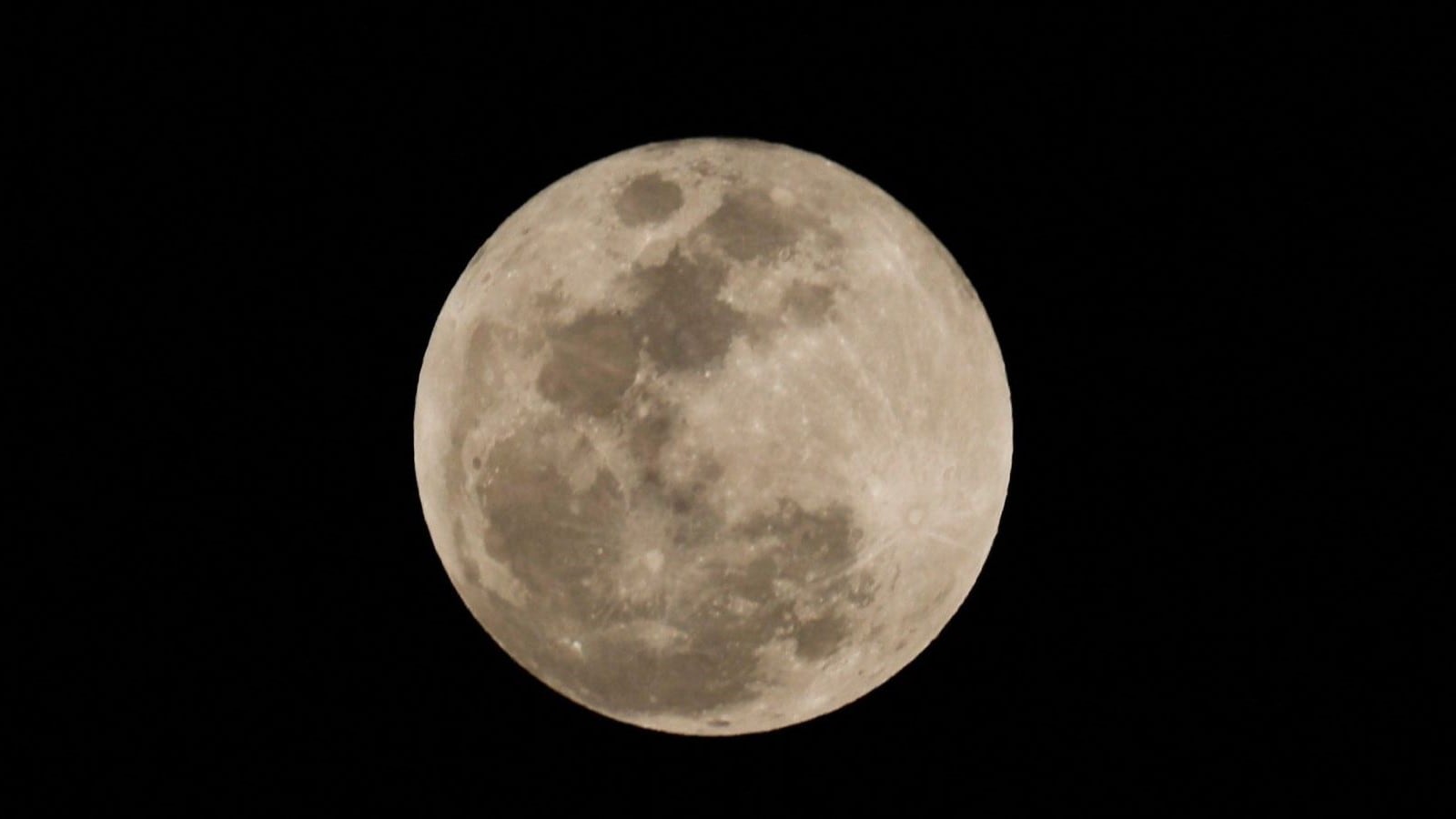
Predicting and observing celestial mechanics requires moving past generalized astronomical summaries and evaluating precise orbital geometries. The upcoming partial lunar eclipse on August 27 and 28, 2026, presents an optimal case study in shadow projection, orbital node alignment, and geographic visibility windows. Deconstructing this event demands an analysis of umbral entry metrics, atmospheric refraction coefficients, and regional observation constraints.
The Orbital Mechanics of the August 2026 Alignment
Lunar eclipses occur exclusively during the full moon phase, when the Earth's orbital plane (the ecliptic) and the Moon's orbital plane intersect at points known as nodes. However, because the Moon's orbit is inclined by approximately 5.14 degrees relative to the ecliptic, a precise alignment resulting in a total or deep partial shadow requires the moon to cross the node precisely when its phase angle reaches 180 degrees relative to the Sun.
The August 28, 2026 event is cataloged as a deep partial lunar eclipse belonging to Saros Series 138. The vital metrics defining this transit include:
- Penumbral Magnitude: 1.9645
- Umbral Magnitude: 0.9299
- Gamma Parameter: 0.4964
The umbral magnitude of 0.9299 indicates that approximately 93% of the Moon's diameter—or roughly 96.2% of its total surface area—will penetrate the Earth's innermost shadow, the umbra, at maximum eclipse. The remaining thin strip of the lunar disc stays exposed to direct solar radiation, preventing the complete Rayleigh scattering effect across the entire profile that characterizes a total "Blood Moon".
Temporal Breakdown and Phase Progression
The event spans a total duration of 5 hours and 38 minutes from initial penumbral contact to exit. The timeline unfolds across Universal Time (UTC) coordinates, dictating precise local observation windows:
- Penumbral Eclipse Begins: 01:24 UTC on August 28
- Partial Eclipse Begins (Umbral Contact): 02:34 UTC
- Maximum Eclipse (Peak Shadow Occlusion): 04:13 UTC
- Partial Eclipse Ends: 05:52 UTC
- Penumbral Eclipse Ends: 07:02 UTC
For observers in North American time zones, the operational window maps to the late evening of August 27. Eastern Time Zone viewers experience penumbral onset at 9:23 p.m. EDT, with peak occlusion occurring at 12:12 a.m. EDT on August 28. Pacific Time Zone observers witness peak eclipse at 9:12 p.m. PDT on August 27, capturing the central phase shortly after dusk.
Atmospheric Refraction and the Copper Hue Variable
A common point of confusion in public reporting is the classification of high-percentage partial eclipses as total blood moons. While the event is technically partial, the sheer depth of umbral penetration (96.2%) triggers significant optical phenomena.
As sunlight passes through the periphery of the Earth's atmosphere, shorter wavelengths (blue and violet) scatter via Rayleigh scattering, while longer wavelengths (red and orange) refract toward the lunar surface. Because 93% of the lunar disc sits inside the umbra, the shadowed region receives its illumination entirely through this filtered atmospheric lens. Consequently, observers will note a distinct copper-red coloration across the primary shadowed zone, juxtaposed against the brilliant white sliver remaining outside the umbra.
Geographic Visibility Constraints
Observation feasibility is governed by a singular planetary variable: whether the Moon is positioned above the local horizon during the active phase sequence.
- The Americas: South America and the vast majority of North America hold optimal viewing parameters, possessing uninterrupted visibility across the entire duration of the umbral transit.
- Europe and Africa: Western regions in Europe and Africa secure favorable visibility, though observations are frequently constrained by low horizon angles near moonset as the final phases conclude.
- Asia and Oceania: Eastern Asia, India, and Australia fall outside the functional visibility footprint entirely, as the eclipse occurs during local daytime hours when the Moon is sub-horizon.
Equipment Calibration and Optimization Protocol
Unlike solar events, lunar observation carries zero retinal hazard coefficient. The human eye processes reflected sunlight safely without attenuation filters. To maximize data collection and visual fidelity, execution protocols should prioritize the following parameters:
- Target the 60-minute window centered on 04:13 UTC to capture maximum umbral contrast.
- Utilize low-magnification binoculars (7x50 or 10x50) to retain a wide field of view while resolving the sharp boundary of the Earth's umbra against distinct lunar maria and crater rims.
- Deploy a stabilized tripod mounting for any telephoto optical systems to eliminate micro-vibrations during extended exposure adjustments.
Model local horizon profiles prior to the event window, ensuring that terrestrial obstructions such as urban architecture or elevated terrain do not obscure the low-altitude geometries characteristic of European or western North American viewing angles.