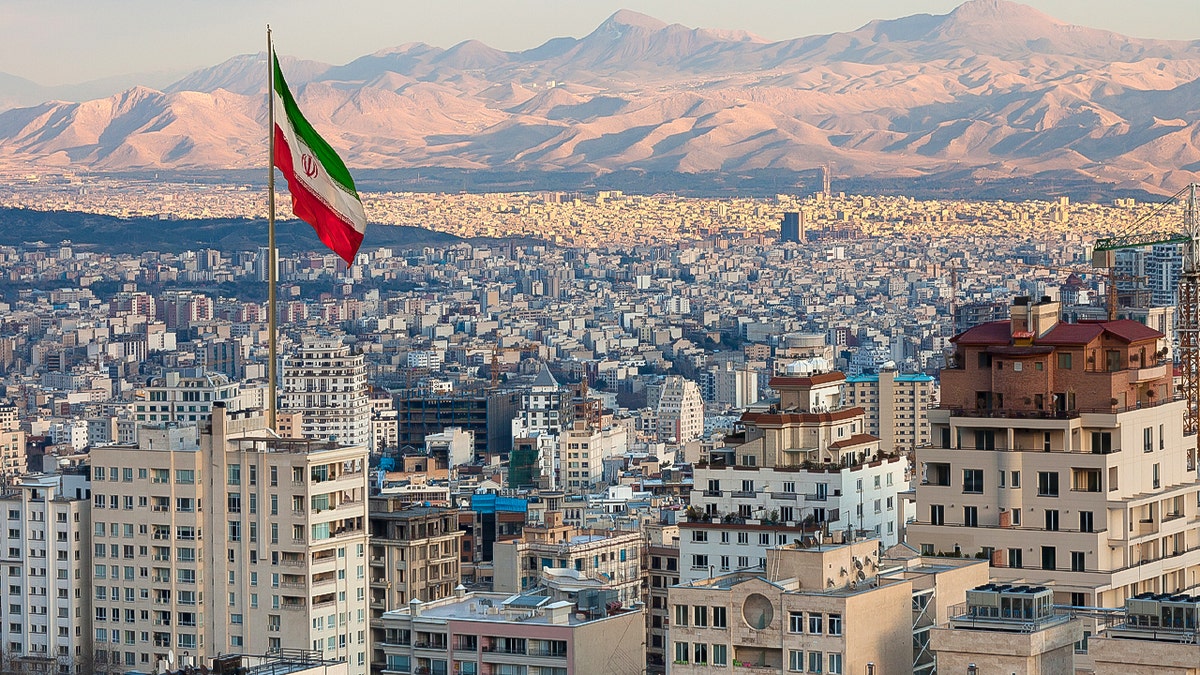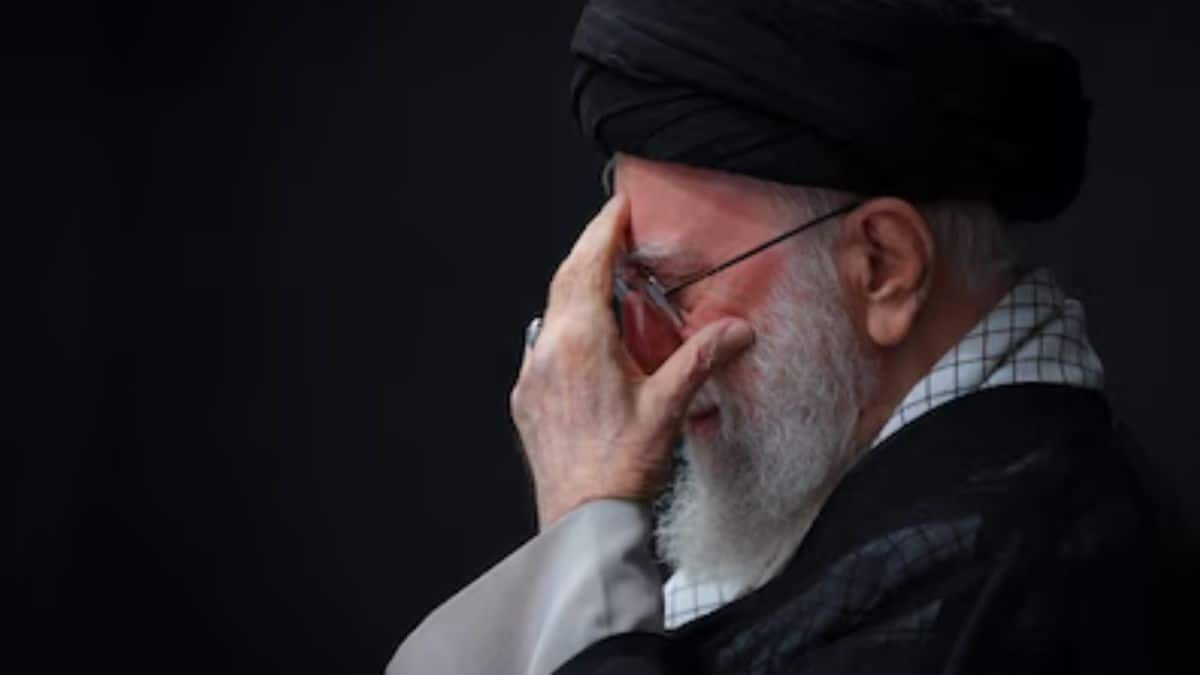
The death of Supreme Leader Ayatollah Ali Khamenei via targeted kinetic action represents more than a leadership vacuum; it is the instantaneous dissolution of the central arbiter within Iran’s complex "Deep State" architecture. While mainstream reporting focuses on the immediate shock of the Israeli-U.S. strikes, the actual strategic fallout is found in the collapse of the informal patronage networks that held the Islamic Revolutionary Guard Corps (IRGC) and the clerical establishment in a state of managed tension. The Iranian state operates on a principle of supervised competition. Without the supervisor, the competition reverts to a zero-sum struggle for survival among three primary power blocs: the IRGC High Command, the Assembly of Experts, and the "Bonyad" economic conglomerates.
The Architecture of Power Vacuum
To understand the instability following Khamenei’s death, one must quantify the structural role he occupied. Unlike a Western head of state, the Supreme Leader (Vali-e Faqih) serves as the ultimate bottleneck for all security, religious, and economic finality.
- The Security Bottleneck: The IRGC does not report to the President; it reports to the Office of the Supreme Leader. His removal severs the chain of command for the Quds Force and the domestic Basij militia.
- The Clerical Bottleneck: The Assembly of Experts is constitutionally mandated to select a successor, but the process is historically opaque and subject to extreme vetos by the Guardian Council—half of whom were personally appointed by Khamenei.
- The Economic Bottleneck: The Bonyads (charitable foundations) control an estimated 20% to 30% of Iran’s GDP. These entities operate outside parliamentary oversight, answering only to the Leader.
The removal of the singular figurehead creates an immediate "Authority Gap." In high-stakes authoritarian regimes, the first 72 hours are dictated by the Preemptive Security Protocol. The IRGC must consolidate physical control over Tehran to prevent a popular uprising, while simultaneously signaling continuity to avoid a "run on the state" by mid-level bureaucratic defectors.
Tactical Breakdown of the Kinetic Event
The reports of a joint Israeli-U.S. strike suggest a high-tier intelligence penetration that bypassed the "passive defense" (Padafand-e Gheyr-e Amel) infrastructure Iran has spent two decades hardening. This operation required the synchronization of two distinct failure points in Iranian security:
SigInt and Human Intelligence Fusion
For a strike to hit the Supreme Leader, the attackers required real-time telemetry on a "High-Value Target" (HVT) whose movements are among the most guarded secrets in the Middle East. This implies a compromise within the Ansar-al-Mahdi Protection Corps, the elite unit responsible for the Leader's personal safety. The failure is not merely one of radar or anti-missile batteries like the S-300 or Khordad-15; it is a failure of the internal counter-intelligence apparatus.
The Suppression of Enemy Air Defenses (SEAD)
Executing a strike within Iranian airspace against a hardened target necessitates a sophisticated electronic warfare envelope. The ability to "blind" the Integrated Air Defense System (IADS) suggests the use of advanced cyber-kinetic tools that likely exploited zero-day vulnerabilities in the command-and-control software used by the Khatam al-Anbiya Air Defense Base.
The Triple Crisis Framework
Iran now faces three simultaneous crises that will determine if the Islamic Republic survives as a cohesive entity or fragments into a military junta.
1. The Succession Crisis (The Assembly of Experts)
Article 107 of the Iranian Constitution dictates that the Assembly of Experts must choose a successor. However, the two most discussed candidates—Ebrahim Raisi (now deceased in a prior incident) and Mojtaba Khamenei (the Leader’s son)—face significant legitimacy hurdles.
- Mojtaba Khamenei: While he commands significant influence within the intelligence services, his elevation would transform the Islamic Republic into a de facto hereditary monarchy, undermining the "revolutionary" anti-monarchical foundations of 1979.
- The Council of Leadership: There is a high probability of the Assembly forming a temporary "Leadership Council" (Shoraye Rahbari). This creates a fragmented decision-making process, making Iran unpredictable in international negotiations.
2. The IRGC Autonomy Pivot
With the Clerical head gone, the IRGC is no longer an "army of the ideology" but a self-interested corporate-military entity. The IRGC manages telecommunications, construction, and oil smuggling. Their primary goal will be protecting these assets. We should expect the IRGC to move from "defenders of the faith" to "owners of the state." This transition often involves a purge of more "quietist" or moderate clerics who might favor a rapprochement with the West to save the economy.
3. The Proxy Network Centrifugation
The "Axis of Resistance" (Hezbollah in Lebanon, the Houthis in Yemen, and various PMFs in Iraq) is coordinated through the Quds Force, which receives its funding and strategic directives directly from the Supreme Leader’s office.
- Decentralization: Without a central figure to adjudicate disputes between proxy leaders (e.g., Hassan Nasrallah and Iraqi militia heads), these groups may begin acting according to local incentives rather than Tehran's regional grand strategy.
- The Funding Cliff: If the domestic Iranian economy enters a hyper-inflationary spiral due to the succession chaos, the hard currency flows to Lebanon and Yemen will be the first to be cut, potentially leading to the "cannibalization" of these proxy groups as they seek alternative funding.
Economic Implications and Market Volatility
The removal of the Supreme Leader triggers an immediate "Risk Premium" on global energy markets. Iran’s control over the Strait of Hormuz—through which 20% of the world’s petroleum liquids pass—is its most potent retaliatory lever.
- The Hormuz Bottleneck: A leaderless IRGC may engage in "limited escalatory" actions in the Strait to prove its relevance and force a ceasefire or a cessation of further strikes.
- The Rial Collapse: The Iranian Rial (IRR) typically devalues sharply during periods of political uncertainty. Since the Bonyads control the flow of foreign exchange, any internal struggle between them will result in a total halt of imports, leading to severe shortages of medicine and basic goods.
Strategic Forecast and The "Junta" Path
The most likely outcome is not a democratic transition, but a Military-Clerical Synthesis where the IRGC holds the actual power while maintaining a puppet Supreme Leader as a source of religious legitimacy. This "Pakistanization" of Iran—where a military elite controls the nuclear and foreign policy while a civilian/clerical facade manages the day-to-day bureaucracy—is the path of least resistance for the current regime elites.
The critical variable to watch is the Artesh (the regular national army). Historically sidelined by the IRGC, the Artesh maintains a more nationalist, less ideological stance. If the succession crisis leads to prolonged civil unrest, the friction between the IRGC (loyal to the "System") and the Artesh (loyal to the "State") could lead to localized kinetic friction within the Iranian borders.
Foreign policy will likely enter a period of "strategic patience" masked by "aggressive rhetoric." The regime cannot afford a full-scale war with the U.S. or Israel while its internal succession is unresolved. However, to maintain domestic credibility, it must conduct "symbolic retaliation"—likely cyber-attacks on critical infrastructure or asymmetric strikes on soft targets globally.
The immediate tactical priority for Western intelligence is to monitor the movement of the "Nuclear Priesthood"—the scientists and commanders overseeing the Natanz and Fordow facilities. In a state of total leadership collapse, the risk of "rogue" nuclear acceleration or the loss of "custodial control" over radioactive materials becomes the primary global threat. The transition period is the window of maximum danger; the old rules of deterrence are dead, and the new ones have yet to be written.
Monitor the "Grey Zone" activities in the Persian Gulf. If the IRGC Navy (IRGCN) begins minership operations without a direct order from Tehran, it signals that the central command has fragmented, and the regional commanders are now operating on autonomous "survival" logic. This is the indicator for a permanent shift in Middle Eastern power dynamics.