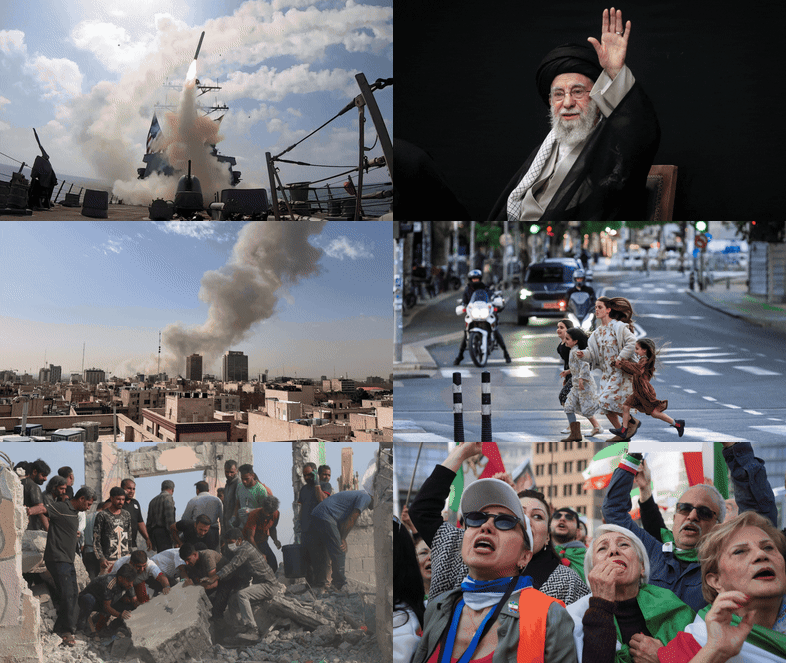
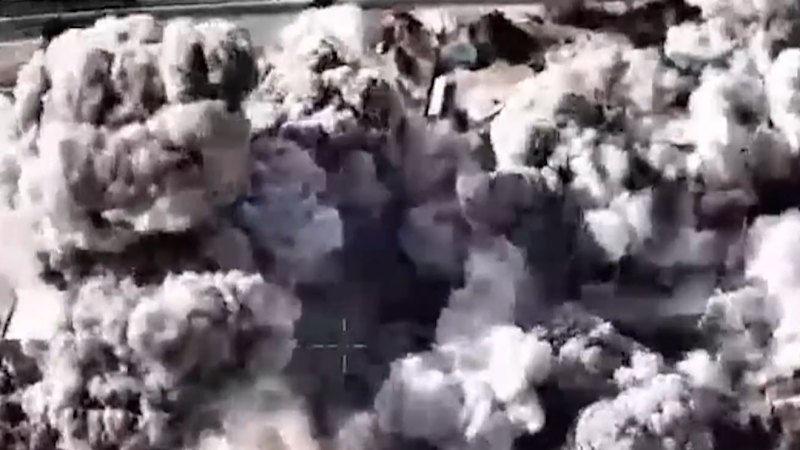
The confirmation from Tehran arrived at dawn, ending forty-eight hours of frantic speculation and digital fog. Ayatollah Ali Khamenei, the man who steered the Islamic Republic through nearly four decades of defiance, is dead. He was killed alongside members of his immediate family and high-ranking security officials in a coordinated aerial bombardment that has effectively decapitated the Iranian leadership. This was not a localized skirmish but the opening salvo of a high-stakes campaign by the United States and Israel aimed at total regime change. While the immediate focus is on the cratered remains of the Supreme Leader’s compound, the real story is the explosive chain reaction now tearing through the Middle East.
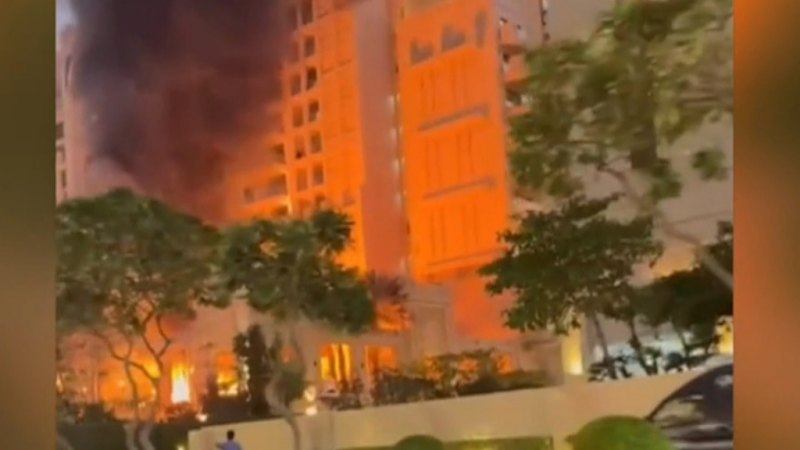
Retaliation was not slow. Within hours of the official announcement, Iran launched a massive, multi-front offensive targeting U.S. military assets and strategic hubs across the Gulf. At least 27 U.S. bases, including Al Udeid in Qatar and the Fifth Fleet headquarters in Bahrain, have come under fire from a cocktail of ballistic missiles and suicide drones. The strike reached beyond military perimeters, hitting civilian infrastructure in Dubai and Abu Dhabi, signaling that the regional "rules of engagement" have been set on fire.
The Intelligence Coup That Changed Everything
For years, the consensus among Western intelligence agencies was that Khamenei was untouchable, protected by layers of human shields and deep-bore bunkers. That myth evaporated on February 28, 2026. The success of the strike points to a catastrophic failure of Iranian internal security or, more likely, a high-level betrayal.
Reports indicate that the CIA and Mossad utilized precise "locations intelligence" to pinpoint a gathering of the regime’s inner circle. This was a decapitation strike in the literal sense. It didn't just target the figurehead; it took out the ideological and operational nervous system of the state. The death of Khamenei’s daughter and grandchild in the same strike adds a layer of personal vendetta to a conflict that was already dripping with historical grievance.
Chaos in the Streets and the Power Vacuum
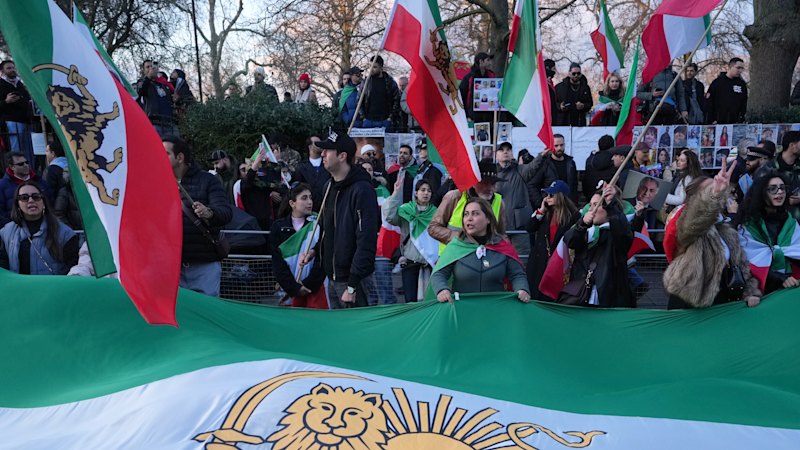
Tehran is currently a city of two realities. In the northern districts, videos smuggled out via satellite links show pockets of raucous celebration—people dancing on rooftops and honking car horns. For a segment of the population exhausted by economic decay and the brutal suppression of the January protests, the death of the "Shadow of God" is a liberation.
However, the celebratory mood is tempered by a terrifying presence on the ground. The Basij paramilitary and the Islamic Revolutionary Guard Corps (IRGC) have flooded the streets. These forces are not retreating; they are lashing out. Reports from Rasht and Kermanshah describe security forces dragging citizens from cars for any sign of jubilation.
The political structure is in a state of frantic improvisation. An interim leadership council, featuring President Masoud Pezeshkian and Ayatollah Alireza Arafi, has been hastily assembled. But this is a band-aid on a severed artery. Under Article 107 of the Iranian constitution, the Assembly of Experts must choose a successor, but the assembly itself is a collection of clerics who have never known an Iran without Khamenei’s shadow. The IRGC, fearing a loss of their vast economic and military empire, is likely to bypass the constitutional niceties to install a hardline military-technocratic council.
A Region Under Fire
The Iranian response has been designed to maximize economic pain for the West and its regional partners. By closing the Strait of Hormuz, Tehran has effectively put a noose around the neck of global energy markets.
- The UAE and Qatar: These nations, long-standing hosts of U.S. forces, are paying a heavy price. The Burj Al Arab in Dubai and international airports in Abu Dhabi and Kuwait have sustained damage. This is a deliberate message: if the U.S. uses your soil to strike us, your prosperity is forfeit.
- The Maritime Front: The IRGC has begun targeting commercial shipping with "unspecified projectiles." A Palau-flagged tanker off the coast of Oman was recently struck, forcing a crew evacuation. This isn't just about revenge; it's about making the cost of this war unbearable for the international community.
- Iraq and Jordan: Pro-Iranian militias in Iraq have claimed dozens of operations against U.S. bases like Ain al-Asad. Meanwhile, Jordan has struggled to intercept missiles over its territory, with debris falling in civilian areas of Irbid.
The Strategy of No Return
The U.S. and Israel have gambled on the idea that killing the leader kills the system. History suggests a far more volatile outcome. When a centralized, theocratic authority is removed overnight, the result is rarely a smooth transition to democracy. It is more often a descent into "warlordism," where various factions of the IRGC and internal security services vie for control of the country's remaining assets.
The White House has promised a "massive, ongoing" campaign, but the objectives remain dangerously opaque. If the goal is a stable, pro-Western Iran, the current strategy of leveling compounds and assassinating family members may have backfired by creating a martyrological vacuum. For the surviving hardliners, Khamenei is now more powerful as a martyr than he ever was as a frail, 86-year-old leader.
The missiles falling on Tel Aviv and the smoke rising over Manama are only the beginning. We are no longer discussing the possibility of a regional war. We are witnessing its first week. The coming days will determine if the Iranian state collapses under the weight of its own internal contradictions or if it transforms into a wounded, hyper-violent entity with nothing left to lose.
Identify the specific IRGC commanders now moving to fill the void and monitor the shifting loyalties within the regular army to see if the regime’s backbone is truly broken.