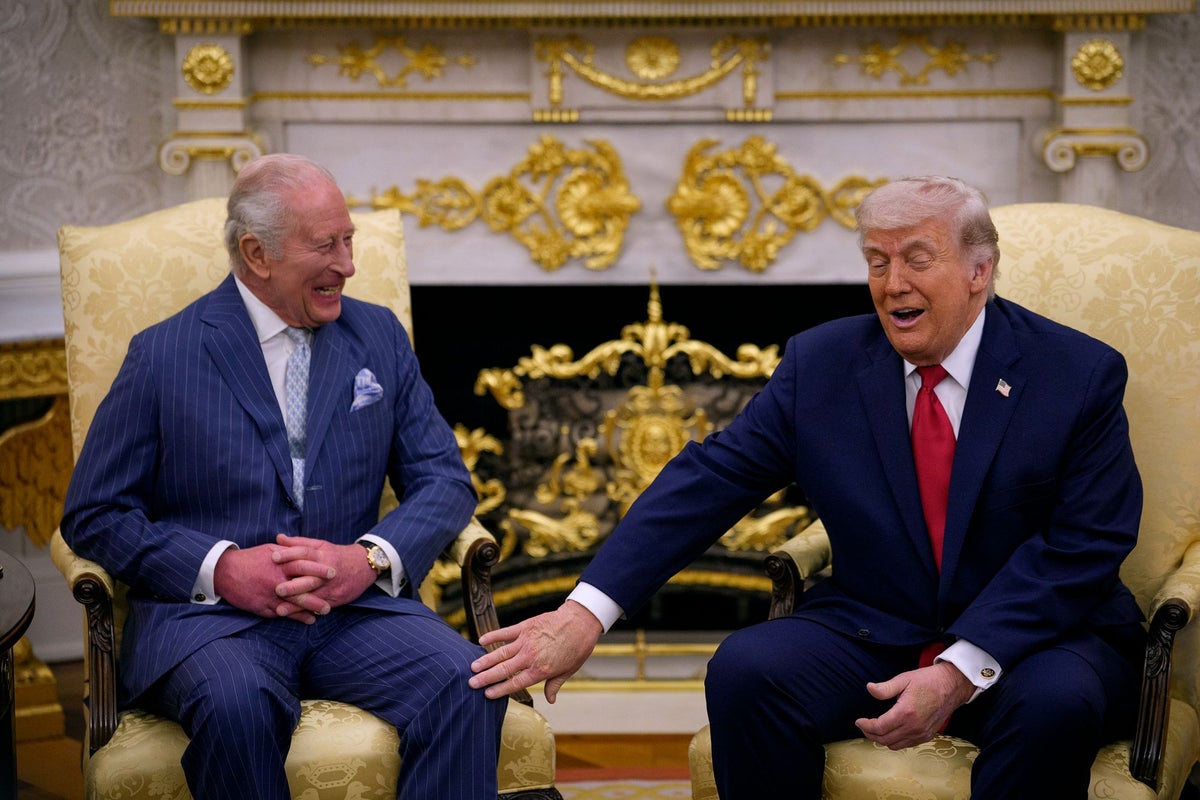
The pearl-clutching over Donald Trump’s habit of "leaking" private conversations with King Charles III isn't just predictable—it’s fundamentally misguided. The media remains obsessed with the breach of protocol. They treat the unwritten rules of the British Monarchy like sacred geometry. They argue that by sharing snippets of a private phone call regarding the King’s health or personal views, Trump "defied" centuries of tradition and risked a diplomatic freeze.
That narrative is a relic. It belongs in a museum next to powdered wigs and telegrams.
In reality, the breakdown of these starchy, opaque boundaries is the most honest development in international relations we’ve seen in decades. We are living through the end of the "Gentleman’s Agreement" era, and frankly, it’s about time. The obsession with royal silence doesn't protect the Crown; it protects a lack of accountability that no longer serves the public interest.
The Myth of Productive Secrecy
The core argument from the traditionalist camp is that "private" must mean "secret" to be effective. The logic goes like this: If world leaders can’t speak candidly to a Monarch without it ending up on Truth Social or in a memoir, they won’t speak at all.
This is a logical fallacy.
Diplomacy has never been about two people whispering in a mahogany-lined room. That is theater. Real diplomacy is the alignment of national interests, trade flows, and military posturing. Whether or not the King of England expressed a specific sentiment about environmental policy or his recovery process during a 10-minute check-in call is irrelevant to the gears of statecraft.
What the "protocol" crowd is actually mourning is their own sense of exclusive access. They want the world to be run by a small circle of people who keep secrets for the sake of keeping secrets. When Trump breaks that seal, he isn’t "endangering" the relationship; he is demystifying a power structure that thrives on being perceived as untouchable.
Protocol as a Weapon of the Status Quo
Let’s define "protocol" for what it actually is: a social lubricant designed to mask friction.
When a leader adheres to royal protocol, they are consenting to a specific brand of British soft power. It is an acknowledgment that the King sits above the fray of messy, daily politics. But when the world is on fire—economically, socially, and militarily—the idea of an "above the fray" figurehead is an expensive hallucination.
By relaying details of the conversation, Trump effectively pulled the King back into the real world. He treated the Monarch like a human being and a political actor rather than a porcelain doll. Traditionalists call this "disrespectful." I call it a refusal to play a part in a high-stakes costume drama.
I’ve spent years watching bureaucrats hide behind "confidentiality" to avoid explaining why certain deals fell through or why specific alliances shifted. It’s a convenient shield. "We can’t comment on private discussions" is the ultimate get-out-of-jail-free card for the ruling class. When that shield is smashed, we actually get a glimpse of the personalities driving the ship. That’s not a bug; it’s a feature.
The Counter-Intuitive Strength of Transparency
The competitor article suggests that things "could’ve been much worse." This implies a precariousness that simply doesn't exist. The UK-US "Special Relationship" is built on intelligence sharing (Five Eyes), massive cross-border investment, and NATO obligations. It is not built on whether a former President kept quiet about the King’s "very kind" words.
In fact, there is a distinct advantage to this brand of radical transparency:
- It Flattens the Hierarchy: It signals that no one is too "royal" to have their words repeated in the public square.
- It Forces Authenticity: If leaders know their words might leak, they are forced to say things they are actually willing to stand by.
- It Humanizes the Office: Despite the outrage, the public actually likes knowing what these people talk about. It bridges the gap between the gated estate and the high street.
Imagine a scenario where every diplomatic meeting was transcribed and released within 24 hours. The initial shock would be seismic. Markets would jitter. But within six months, the quality of discourse would skyrocket because the performative nonsense would be stripped away. Trump’s "breaches" are just a clumsy, unintentional beta test for this world.
The "Damage" is a Paper Tiger
The press loves to quote anonymous Palace sources who are "appalled" or "disappointed." Of course they are. Their entire job description is maintaining the illusion of a vanished century.
But look at the data of history. Has a single US-UK trade deal been derailed because of a protocol breach? Has the military cooperation slowed down? No. In 2019, when Trump walked in front of Queen Elizabeth II during a guard inspection—a "major" protocol violation—the world didn't end. The alliance remained intact because the alliance is made of steel, not lace.
The idea that the King is a fragile entity who must be shielded from the rough-and-tumble of modern communication is actually more insulting to the Monarchy than anything Trump said. Charles III is a man who has navigated decades of complex global politics. He isn't going to collapse because a billionaire from Queens told a rally that they had a "great talk."
The Wrong Question
People are asking: "How can we stop leaders from breaking protocol?"
They should be asking: "Why do we still value a protocol that rewards opacity over clarity?"
We are obsessed with the process of the conversation rather than the content of the relationship. The media focuses on the breach because it’s easy to write about. It’s "Celebrity News" disguised as "International Affairs." It requires zero deep analysis of foreign policy to say, "He shouldn't have said that."
The Shift to Raw Diplomacy
We are entering an era of "Raw Diplomacy." It is messy. It is loud. It happens on social media, in leaked transcripts, and in off-hand remarks at campaign stops.
This shift is terrifying to the establishment because they cannot control the narrative. In the old world, the Palace and the State Department would issue a joint, sanitized statement that said absolutely nothing. Now, the public gets the unvarnished (if slightly hyperbolic) version directly from the source.
Is there a downside? Sure. It can lead to misunderstandings. It can bruise egos. But if the price of a more transparent world is a few bruised royal egos, that is a price we should be sprinting to pay.
Stop Coddling the Institution
The British Monarchy survives by adapting, not by remaining static. If it wants to remain relevant in the 21st century, it has to survive the digital age’s lack of privacy. Trying to enforce 19th-century etiquette in a 24-hour news cycle is like trying to stop a tidal wave with a parasol.
Trump didn't "defy" protocol so much as he rendered it obsolete. He acted according to the norms of the current attention economy, where information is the only currency that matters. The "could have been worse" crowd is still waiting for the world to return to a state of quiet, dignified secrets.
It isn't happening.
The era of the "private royal conversation" is dead. The sooner the diplomats and journalists accept that, the sooner we can start having honest conversations about power.
Stop mourning the etiquette. Start watching the play.
Don't look for the apology; it's never coming. Instead, watch how the next leader handles the same situation. They’ll likely do the exact same thing, perhaps with more polished language, but the seal is broken. The transparency trend isn't a fluke of one personality; it’s the new baseline for global interaction.
Get used to it.