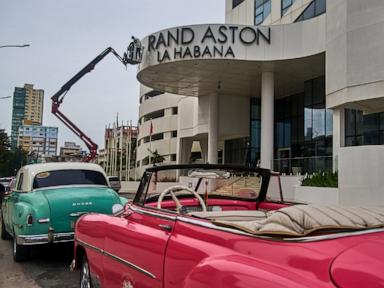
The chrome-heavy 1950s Chevrolets and Fords that define Havana’s skyline are not mere tourist props. They are the backbone of a makeshift, private transportation network that keeps the Cuban capital moving. Today, that backbone is snapping. While international headlines focus on the tightening of the U.S. embargo—specifically the restrictions on Venezuelan oil shipments—the reality on the ground in Cuba is a far more complex cocktail of failed state planning, a decaying power grid, and the terminal collapse of Soviet-era infrastructure.
The "almendrones," as these classic cars are known, are disappearing from the streets. It is not because they have finally succumbed to rust after seventy years. It is because the fuel required to run them has become a black-market luxury that few drivers can afford, and even fewer can find. Cuba is currently facing its most severe energy deficit since the "Special Period" of the 1990s, but this time, there is no ideological fervor left to cushion the blow.
The Myth of the Simple Blockade
To blame the current crisis solely on Washington is to ignore the structural rot within the Cuban energy sector. For decades, the island survived on a lopsided trade agreement with Venezuela: Cuban doctors and security advisors in exchange for subsidized crude oil. This was never a sustainable business model. As Venezuela’s own oil production cratered due to mismanagement and its own set of sanctions, the lifeblood of the Cuban economy began to dry up.
The U.S. energy blockade certainly acts as a throttle. By sanctioning tankers that transport Venezuelan oil to Cuban ports, the U.S. Treasury Department has made the logistics of energy procurement a nightmare of shell companies and high-risk premiums. However, the Cuban government has also failed to diversify its energy matrix. Despite boasting year-round sunshine and significant wind potential, the island remains tethered to inefficient, sulfur-heavy crude oil and aging thermoelectric plants that were built during the Brezhnev era.
These plants are failing. In the last year, the national grid has suffered multiple total collapses. When the lights go out, the demand for diesel and gasoline spikes as businesses and wealthy individuals fire up private generators. This creates a vicious cycle where the fuel intended for the transportation sector is diverted to keep the refrigerators running in state-run hotels and hospitals.
The Mechanics of a Transport Collapse
The antique cars of Havana are mechanical chimeras. Almost none of them retain their original American engines. Under those long, sweeping hoods, you will find four-cylinder diesel engines pulled from Mitsubishi trucks or old Soviet tractors. They were designed to run on low-grade, heavily subsidized diesel.
The Black Market Pricing Death Spiral
When the state gas stations—the CUPETs—run dry, the price of fuel on the informal market triples overnight. A liter of gasoline can cost as much as a week’s wages for a state worker. For an independent taxi driver, the math no longer works. If they raise their prices to cover the cost of black-market fuel, their customers, who are already struggling to buy bread and eggs, simply stop riding.
- The State Sector: Buses are cannibalized for parts, leaving the remaining fleet overwhelmed.
- The Private Sector: Drivers are parking their cars and pivoting to the "bicitaxi" or electric scooters imported from China.
- The Logistics Chain: Without fuel for trucks, food distribution from the countryside to the cities has ground to a near-halt.
The result is a city that feels strangely quiet. The roar of the modified diesel engines, once the constant soundtrack of the Malecón, has been replaced by the silence of empty intersections.
Why Foreign Investment Won’t Save the Almendrón
There is a persistent belief among some analysts that a sudden influx of foreign capital or a lifting of the embargo would "save" Cuba’s car culture. This is a misunderstanding of the current economic trajectory. The Cuban government recently legalized the importation of modern vehicles, but only for those with access to hard currency—specifically U.S. dollars or Euros.
This policy shift signals the end of the antique car era. If a Cuban entrepreneur can suddenly buy a modern, fuel-efficient Kia or Toyota through a third-party importer in Florida or Mexico, they will not continue to sink thousands of dollars into maintaining a 1954 Buick. The antique cars are being replaced not by bicycles, but by modern Chinese and Japanese imports that the average Cuban will never be able to afford. The "almendrón" is moving from a vital utility to a niche collector's item for the tiny fraction of the population with ties to the exterior.
The Infrastructure Trap
The energy crisis is not just about fuel; it is about the "last mile" of delivery. Cuba's refineries are old and prone to frequent shutdowns. When a shipment of oil does manage to bypass the blockade and reach a Cuban port, the country often lacks the functional tanker trucks or the electricity to pump that fuel into storage tanks.
The government has attempted to implement a digital rationing system via an app called Ticket. Drivers must register and wait for a notification that it is their turn to buy a limited amount of fuel. In practice, this has led to "virtual lines" that last for weeks. Drivers sleep in their cars near the gas stations, waiting for a tanker that may never arrive.
The Breakdown of the Social Contract
For decades, the Cuban government’s legitimacy was tied to its ability to provide basic services: education, healthcare, and subsidized transport. The fuel crisis has punctured that narrative. When a doctor cannot get to a hospital because there is no fuel for the bus, and an ambulance cannot respond because its tank is empty, the systemic failure becomes impossible to mask with political rhetoric.
The "US energy blockade" is a convenient scapegoat, but it does not explain why the government has spent the last five years building luxury hotels in Havana while the national power grid was clearly on the verge of a catastrophic meltdown. Investment in tourism infrastructure has outpaced investment in the energy sector by a factor of five to one.
The Hard Reality of the Transition
We are witnessing the terminal phase of a specific type of Cuban resilience. For sixty years, the island’s mechanics performed miracles with baling wire and recycled parts. But you cannot fix a lack of fuel with ingenuity. The antique cars are not "sitting idle" because of a temporary shortage; they are being phased out by a reality where the cost of operation has finally exceeded the value of the service.
The transition is brutal. It is not a move toward a green, electric future, but a slide into a fractured economy where movement is a luxury. The streets of Havana are becoming a visual representation of the wealth gap: the silent, empty classic cars of the poor parked next to the gleaming, modern imports of the new merchant class.
The ghost of the Soviet logistics model—centralized, oil-dependent, and rigid—still haunts every decision made in Havana. Until the island can break its dependence on imported hydrocarbons and address the chronic underinvestment in its own grid, the "almendrón" will remain a symbol of a stalled nation. The fuel crisis is the symptom; the systemic refusal to modernize the economy is the disease.
The next time you see a photo of a vintage Chevy on a Havana street, look closely at the background. You won't see a vibrant city. You will see a line of people waiting for a bus that isn't coming.