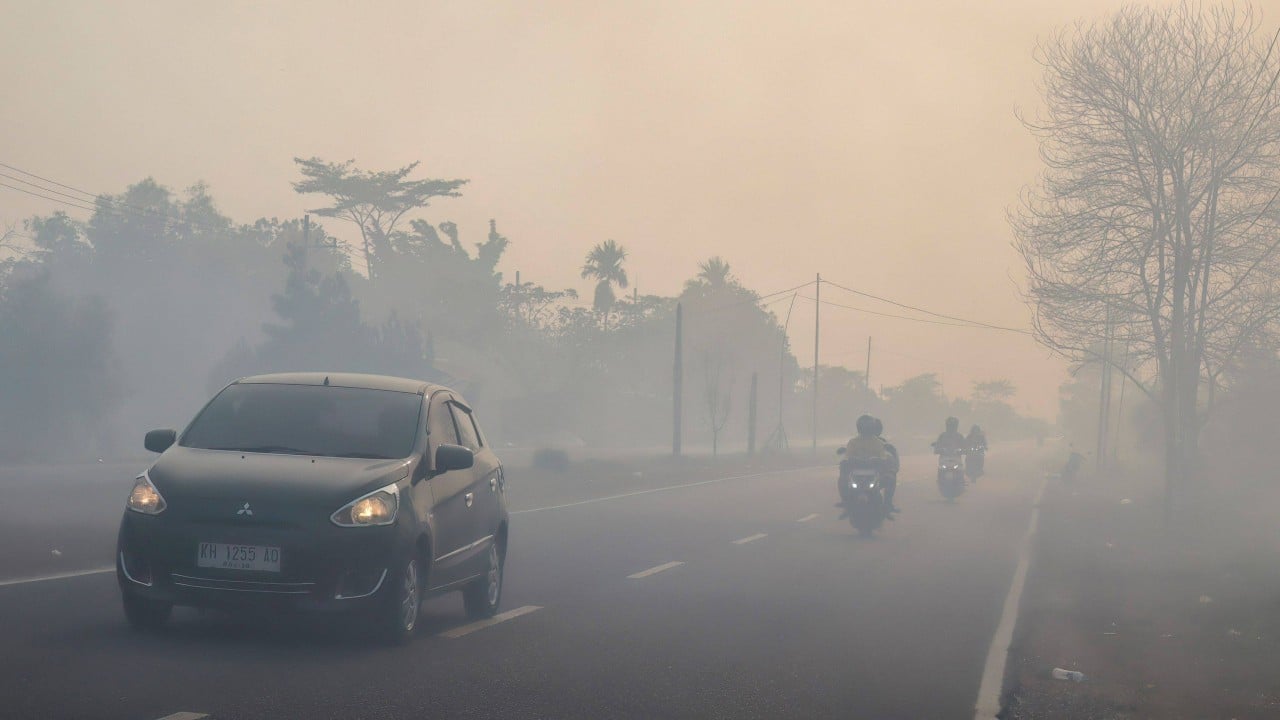
The morning did not break. It merely leaked into the room through a layer of coarse, yellowed gauze.
When Amina pushed open the window of her kitchen in Kuching, the familiar, vibrant green of the rain tree across the street was gone. It had been swallowed by a wall of dense, particulate soup that tasted of copper and burning peat. There was no wind. The air sat heavy on the tongue, thick enough to chew, carrying the ancient, heavy scent of earth that has burned too long in the dry season.
She closed the window quickly, but the smell had already slipped inside, settling into the upholstery, clinging to the curtains. On the kitchen table, the smartphone screen glowed with an emergency notification. Nearly six hundred schools across Sarawak had been ordered to shut their doors. Not because of a storm. Not because of a structural failure. But because the air itself had crossed an invisible, toxic threshold into what the authorities dryly call very unhealthy territory.
Numbers on a dashboard rarely capture the weight of a yellow sky.
To an official in an air-conditioned office miles away, the crisis is neatly quantified. Air Quality Index readings spike past two hundred, crossing into the red zone of hazard. Protocols are triggered. Spreadsheets are updated. The decision is handed down: close the classrooms, pull the children inside, tell the public to wear N95 masks if they must step outdoors.
For Amina, who spent her Tuesday morning listening to the anxious hum of her nine-year-old son, Danial, asking why his backpack was still sitting by the door, the numbers translate into a profound, suffocating disruption.
Danial does not care about indices or particulate matter fractions measuring less than 2.5 micrometers. He cares about the playground. He cares about the school football match that has been canceled for the third time this year. He cares about the strange, metallic taste in his throat whenever he forgets and takes too deep a breath near the hallway vent.
We live in an era where distant fires cast long, choking shadows over our daily routines. The haze is not a sudden act of god. It is a slow-motion catastrophe born of geography, weather patterns, and the relentless clearing of land across borders. It is an annual visitor that stays longer and grows heavier with every passing year, turning the horizon into a smear of grey.
Consider what happens when nearly six hundred schools go dark overnight.
Education stalls, fractured by a crisis that floats invisibly through open windows. Parents scramble. Shift workers pull double duty to watch children who should be sitting at wooden desks listening to lessons on geography and math. Healthcare clinics fill up with the wheezing coughs of the elderly and the rapid, shallow breaths of children whose lungs are still learning how to process the world.
The human body is remarkably resilient, yet it has limits. Lungs are designed to pull life from the atmosphere, not filter out the microscopic fallout of distant agricultural fires. When the air turns hostile, the body fights back with inflammation, watery eyes, and a dull, persistent headache that refuses to clear with ibuprofen.
We normalize it. That is the most dangerous part.
We check the air quality index the way our grandparents checked the morning weather forecast. We adjust our lives around the toxicity of our surroundings. We buy air purifiers that hum all night in dark bedrooms, casting small blue lights into the corners while the city outside sleeps under a heavy, suffocating blanket of smoke.
Step outside, and the world looks muted, as if drained of color by a sepia filter. Streetlights flicker on at ten in the morning because the sun cannot punch through the haze. The riverfront is empty. The usual vendors who sell warm snacks from metal carts are missing, their livelihoods paused because nobody is brave enough to walk the promenade.
There is an eerie quiet to a city wrapped in smoke. It is the silence of an emergency that has no sirens.
When the schools close, the burden falls heaviest on the invisible workforce of households—mothers, fathers, and grandparents who must juggle the demands of a working day with the reality of keeping children safe indoors. You cannot simply tell a nine-year-old to sit quietly in a sealed room for a week while the wind refuses to blow. You invent games. You pull out old board games with missing pieces. You watch the grey light press against the glass, waiting for a change in the weather that feels like it will never come.
The authorities speak of containment, of cloud-seeding operations to force rain from reluctant skies, of diplomatic channels meant to address the root causes of the burning lands far away. These are necessary conversations. They happen in high-ceilinged rooms with microphones and press releases, far from the smell of smoke stinging the back of the throat.
But policy changes slowly. Smoke moves fast.
As the afternoon dragged on, the yellow light outside Amina's kitchen window deepened into an bruised orange. Inside, Danial had finally stopped asking about school. He sat on the living room rug, building a towering structure out of plastic blocks, his breathing shallow and steady against the background hum of the air purifier.
Amina walked to the kitchen, poured a glass of water, and stared out at the invisible street. Somewhere out there, six hundred empty schoolyards sat silent under the ash, waiting for a cleaner wind, a clearer sky, and a morning that actually knows how to break.