The stone of Charles Bridge does not easily forget. It has felt the iron-shod boots of crusaders, the silent tread of plague processions, the heavy rumble of Soviet tanks, and the quiet footfalls of lovers stealing moments beneath slate-gray skies. But on a damp autumn afternoon, the ancient bridge bore witness to something entirely different.
Black leather. Combat boots. The unmistakable rustle of vintage tour merchandise.
Hundreds of people, strangers a moment before, stood shoulder-to-shoulder in the crisp Central European air, recreating a photograph frozen in amber nearly four decades ago. They were not there for a monument or a royal decree. They were there for Depeche Mode.
Let us roll the clock back to the fading days of the Cold War. It was 1988. The Iron Curtain still cast a long, frigid shadow across Eastern Europe, dividing families, economies, and cultures. In Czechoslovakia, life under a rigid communist regime was muted, tightly controlled, and starved of Western counterculture. Yet music has a way of slipping through mortar and rust.
Amidst this heavy atmosphere, Dave Gahan, Martin Gore, Andy Fletcher, and Alan Wilder found themselves standing on the cobblestones of Prague’s most famous landmark. They posed for a quick, unpretentious photograph. Four young Englishmen caught in the middle of a tour, looking out over the Vltava River with the Prague Castle brooding in the background. It was a simple image. To the casual observer, just another band posing in a historic European capital.
To the youth behind the Iron Curtain, however, that photograph was a lifeline.
Music from the West was contraband in spirit, if not always in strict physical fact. It represented an alternative reality—a world of emotional vulnerability, synthesized rebellion, and unapologetic self-expression. When Depeche Mode played, they did not just sing songs about personal Jesus or policy of truth; they spoke to a generation that felt trapped behind concrete and ideological walls.
Decades later, the wall is long gone. The regime that dictated what people could listen to, wear, or watch has dissolved into history. Yet the devotion has only deepened, mutating from clandestine tape-trading into a global, multi-generational pilgrimage.
Imagine walking onto Charles Bridge on that specific afternoon. The air smells of wet stone, roasted chestnuts, and old wool. A middle-aged man named Pavel stands near the spot where Martin Gore stood in 1988. Pavel is wearing a faded 1991 Violator tour t-shirt stretched tight over a life well-lived. He remembers listening to Music for the Masses on a crackling, bootleg cassette tape copied five times over until the treble hissed like an angry cat.
"If someone had told me back then that I would stand here openly, surrounded by thousands of people wearing the same band's logo, without a police car idling around the corner, I would have laughed until I cried," Pavel says, his eyes fixed on the Gothic tower ahead. "Back then, this music belonged to us in secret. Now, it belongs to the world. But it still feels like our secret."
That is the paradox of fandom. It starts as an intimate, isolating experience—headphones pressed against ears in a dark bedroom, convincing you that nobody else understands the particular flavor of your alienation. Then, it expands outward until it becomes a tribe.
The recreation of the 1988 photograph was not orchestrated by a massive corporate marketing department or a film studio looking for viral promotion. It was born in the digital underground, whispered across Facebook groups and fan forums until it gathered critical mass. A flash mob of devotion.
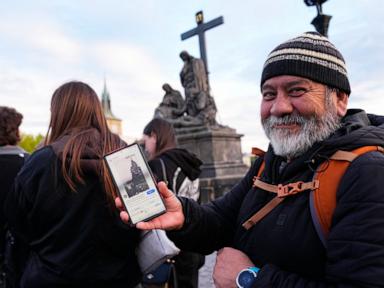
As the appointed hour arrived, the foot traffic on Charles Bridge ground to a curious halt. Tourists with selfie sticks paused, bewildered, as an army of black-clad individuals took their places. Someone pulled up the original 1988 photograph on a smartphone screen, holding it up like a map to buried treasure.
Adjusting angles. Matching postures. Replicating the exact slouch of Dave Gahan, the distinctive stance of Martin Gore.
Click.
In that single fractional second, time folded in on itself. The 1980s collided with the modern era. The ghosts of an oppressed city watched as their grandchildren—both literal and spiritual—celebrated the endurance of joy, sound, and survival. The Vltava kept flowing beneath them, indifferent to human nostalgia, yet carrying it all the same toward the sea.
We often look at pop culture as a disposable commodity, a churn of hits meant to last a summer before being discarded for the next shiny thing. But true fandom operates on a different geological timescale. It builds monuments out of melodies. It turns concrete bridges into cathedrals.
When the crowd finally dispersed, leaving the stones of Charles Bridge empty once more, the aura remained. The leather jackets walked away toward local pubs to debate the best tracks on Black Celebration, but the bridge remembered. It always remembers.
Long after the amplifiers are silent and the vintage tour shirts have frayed into threads, the music remains embedded in the mortar of the city, a quiet testament to the fact that walls can fall, but a good song will always find a way across.