The metal shutters of Buenos Aires do not usually roll down on a Tuesday morning. This is a city that thrives on friction, a relentless capital where street vendors shout over the roar of sputtering buses and economists check the black-market dollar rate with the frequency of a nervous tic. Survival here requires constant movement.
Then came the whistle.
Three sharp blasts from a referee thousands of miles away, and the friction ceased. The air itself seemed to thin. Across the standard wire-service reports that morning, the announcement read with a bureaucratic stiffness: the government had declared an official national bank holiday following Argentina’s victory over England. It was presented as a logistical necessity, a measure to handle the millions of ecstatic bodies expected to flood the avenues.
But bureaucracy is a lie we use to domesticate madness.
To understand why a country already wrestling with compounding economic fractures would willingly turn off its financial engines for twenty-four hours, you cannot look at a balance sheet. You have to look at the grease-stained radio in a car repair shop in Avellaneda. You have to look at the knuckles of an old man turning white as he grips a plastic table in a café that hasn't changed its decor since 1978.
For ninety minutes, football is not a game. It is a mirror. And when the opponent wears white with a red cross, that mirror reflects ghosts.
The Weight of the Invisible Jersey
Every Argentinian child learns to walk with a ball, but they also learn to carry an invisible weight. It is the weight of a complicated history, of promises unfulfilled by politicians, and of a geographic grievance that has lingered for generations. When the national team steps onto a pitch against England, the grass ceases to be mere turf. It becomes a courtroom.
Consider a hypothetical citizen named Mateo. He is forty-two, works in logistics, and his salary loses value between the time he receives his digital stub and the time he walks to the grocery store. His life is a series of compromises. He cuts back on beef. He patches shoes that should be thrown away.
When Argentina plays England, Mateo does not see twenty-two wealthy young athletes running on a television screen. He sees himself. He sees his late father, who watched the 1986 match with a fierce, quiet tears streaming down his face—not just because of Diego Maradona’s genius, but because that match took place four years after young conscripts died in the freezing mud of the South Atlantic.
Football did not bring those boys back. It never could. But what it did provide was a rare, intoxicating moment of cosmic justice.
When the news tickers flashed the official decree of the bank holiday, the international financial analysts winced. To the outside observer, shutting down banks and public offices because of a sporting triumph looks like reckless indulgence, an symptom of a society that prioritizes spectacle over substance. They argue that a fragile economy needs every hour of productivity it can muster.
They are wrong.
They misunderstand the utility of joy. In a society enduring chronic stress, collective euphoria is not a luxury. It is an essential social infrastructure. It is the glue that keeps the machinery from rattling itself to pieces.
The Geography of the Scream
When the decisive goal hit the back of the net, the sound did not travel horizontally. It exploded vertically.
If you stood on a balcony in Palermo or San Telmo at that exact microsecond, you did not hear individual cheers. You heard a singular, seismic groan of relief that morphed into a roar. It was the sound of a pressure valve releasing three stars' worth of historical anxiety.
Let us be vulnerable about what this sport does to us. It makes adults irrational. It makes us believe in superstitions we would otherwise mock. We wear the same unwashed socks for five consecutive matches because we genuinely believe our hygiene influences the trajectory of a leather sphere in Qatar or New Jersey. It is embarrassing. It is absurd.
And it is entirely beautiful.
The bank holiday was not a reward for the players; it was a concession to the reality on the ground. No one was going to show up to the office. No bank teller was going to focus on mortgage approvals while their chest was still vibrating from the stadium chants. The decree was merely the government signing a treaty with an emotion that had already conquered the streets.
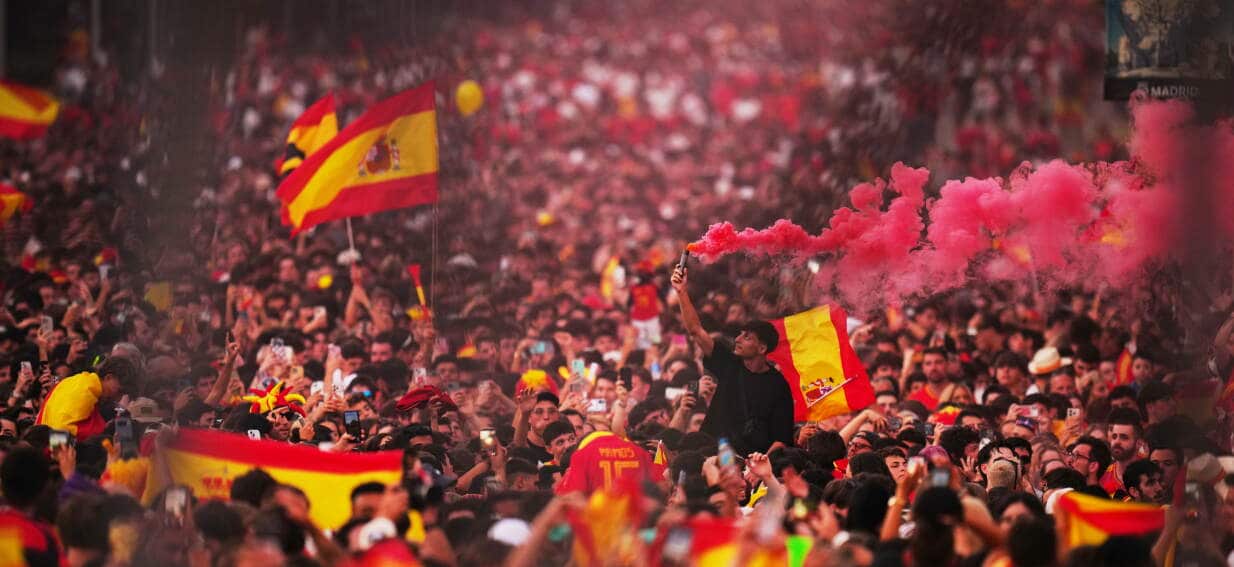
By noon, the Obelisco in the center of Buenos Aires was swallowed by a sea of light blue and white.
From above, it looked like a living organism, a human ocean undulating to the rhythm of drums and brass instruments. People who would normally cross the street to avoid each other were locked in sweaty, weeping embraces. The executive hugged the street sweeper. The teenager held the hand of the grandmother.
Joy. Raw and unadulterated.
The Anatomy of an Obsession
Why does a victory over England taste different?
To the English, the rivalry is often secondary. They look toward Germany or perhaps Scotland for their deepest sporting animosities. For them, Argentina is a dramatic chapter, a collection of historic grievances involving handballs and red cards.
But for Argentina, England is the ultimate standard. They represent the old empire, the architects of the railways that built the country's interior, and the historical adversary that occupies the islands they call the Malvinas. To beat them on the pitch is to overturn the traditional hierarchies of global power, if only until the sun goes down.
It is an exercise in beautiful defiance.
When the ball crosses the line against England, it feels like an assertion of identity against the cold indifference of the world. It says: We may have inflation, we may have political instability, we may be forgotten by the northern hemisphere, but we have this. We have this soul.
The competitor articles focused entirely on the mechanics of the day—the closure of financial institutions, the security deployments, the quotes from the presidential spokesperson. They treated the event as a strange curiosity, a colorful quirk of a passionate Latin nation.
They missed the point entirely.
The holiday was an act of national defiance against the tyranny of the everyday. It allowed a people who spend every waking hour worrying about the future to inhabit the absolute present. For twenty-four hours, the price of milk did not matter. The political scandals were paused. The only currency that held any value was the shared memory of a ball hitting the net.
The Silence That Follows
Eventually, the drums grow quiet. The sun dips behind the high-rises, casting long shadows over streets littered with plastic cups and discarded foam fingers. The flags are folded and placed back into closets, saved for the next cycle of hope and anxiety.
The next morning, the shutters roll back up.
The banks open their doors. The economists return to their monitors, tracking the inevitable slide of the currency. The magic has faded, replaced once again by the gray reality of the daily hustle. Mateo goes back to his logistics office, his throat hoarse, his muscles aching from hours of dancing on top of a bus shelter.
Nothing has fundamentally changed about his life. His salary is still too small, his future still too uncertain.
But as he sits at his desk, his eyes catch a glimpse of the front page of the newspaper on the breakroom table. The headline doesn't mention the economy. It shows a photograph of a million people singing together under a cloud of blue smoke.
He smiles. The weight is still there, but for one brief, brilliant day, the nation stopped breathing—and found its voice instead.